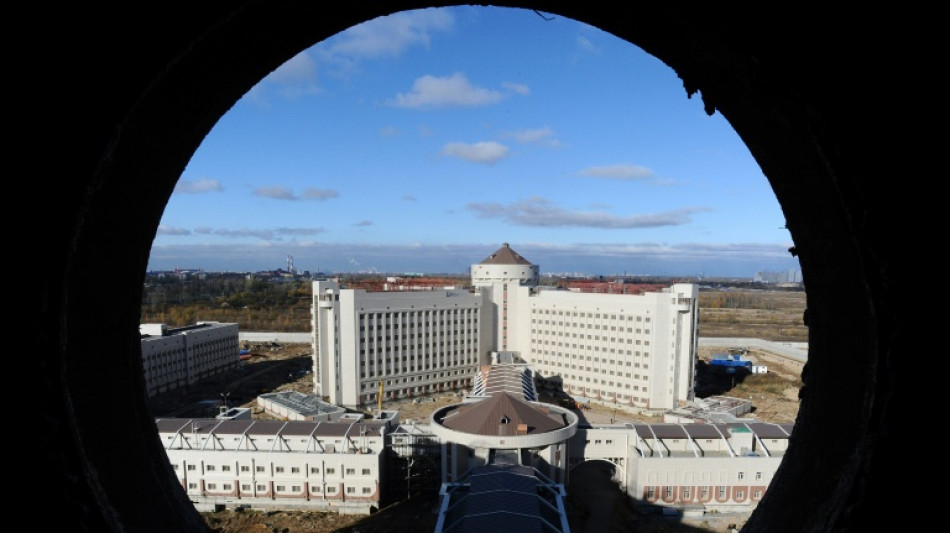
Russia sells famed imperial prison at auction / Photo: © AFP

 Women's Asian Champions Trophy 2026 in Bhopal Revives Hockey Legacy

 California GOP Faces Near-Extinction After 2026 Midterms; Calls for New Vision
 St Francis School Leads €60,000 EU Project to Transform Early Childhood Education

 South Africa's Universal Health Coverage Depends on Tackling Poverty and Inequality

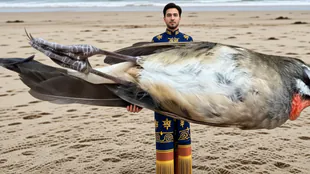 Rare Siberian Rubythroat Dies in UK Garden After Cat Attack

 Go Kyung-pyo Drunk Driving Incident Prompts Heavy Editing Across Multiple TV Shows
 KFF Health News Reporters Discuss ACA Enrollment Challenges, Rising Costs, and Measles Risks

A notorious Russian prison complex that once housed jailed revolutionaries, toppled ministers and Soviet dissidents will be turned into a hotel, restaurants, museum and art gallery after being sold at auction on Friday, the site's new owner said.
Bolshevik revolutionary Leon Trotsky and writer Joseph Brodsky are among the roll call of famous Russians who were imprisoned at the Kresty jail complex in the imperial capital of Saint Petersburg.
Named after the Russian word for "crosses" -- in homage to its shape -- the jail's red-brick walls loom ominously over the banks of the Neva river.
But having fallen into disrepair, Russia built a new prison, shut down Kresty and put the historic site on the market.
In an auction on Friday it was sold it to the KVS development group for 1.1 billion rubles ($12.5 million).
KVS said in a statement it would transform the complex in "one of Saint Petersburg's most ambitious urban planning projects."
"There will be a museum preserving the memory and history of the location, as well as a hotel complex, restaurants, galleries and public spaces open to all," it said.
Kresty was commissioned as a jail at the end of the nineteenth century to house imperial Russia's swelling prison population.
It was designed to be the largest and most modern solitary confinement facility in Europe with 999 individual cells.
Before the Russian revolution in 1917, it housed enemies of the Tsarist state like Alexander Kerensky, who would lead the February Revolution and Anatoly Lunacharsky who would become Lenin's top cultural official as well as Trotsky himself.
After the revolution, it was the enemies of Bolshevism who found themselves in the prison especially during Joseph Stalin's 1930s purges when its cells were filled with the victims of political repression.
These included the historian Lev Gumilev whose mother, the great Russian poet Anna Akhmatova, would wait outside the walls of the prison in the hope of passing him a package.
L.Dubois--BTB