Diet puts Greenland Inuit at risk from 'forever chemicals': study / Photo: © AFP

 Macron urges world to choose UN over 'law of the jungle'

 All-rounder Jacks stars as England beat Sri Lanka in 1st ODI
 Man City peg back Bayern to start Women's Champions League

 Trump beats 'America first' drum at UN as allies tread carefully

 Snedeker backs Spaun for Ryder Cup after Presidents snub

 French prosecutors probe secret filming of women with smart glasses

 Trump renames AI "super intelligence," rejects international oversight

 Trump rejects international regulation of AI

 How is the EU approaching record fuel prices?

 Sri Lanka's Colombage strikes on debut as England dismissed for 265 in first ODI

 Hurricane Polo strengthens to top category 5 off Mexico

 11 hurt as teen opens fire outside school in western Turkey

 UN chief says 'Big Oil' treats atmosphere as open sewer

 Tunisia says 2026 summer hottest on record

 England's Rashid out of Sri Lanka ODIs with hand injury

 Houthis accuse Saudi Arabia of deadly strikes as thousands flee

 Stocks climb as oil slides, AI buzz returns

 India cricketers win in style as Afghan savours 'special' Games silver

 La Liga president hits out at Real Madrid refereeing 'conspiracy' claims

 MEXC Launches “Real Stocks, Real Friends” with Rewards for Bringing Friends to Wall Street

 Mbappe continues media push for Ballon d'Or recognition

 Stocks rise on AI buzz, oil prices cool

 India narrowly survive huge scare against minnows Japan

 Missing F-35 fighter parts 'not sensitive', says Australia minister

 Cambodia showcases scams crackdown with global conference

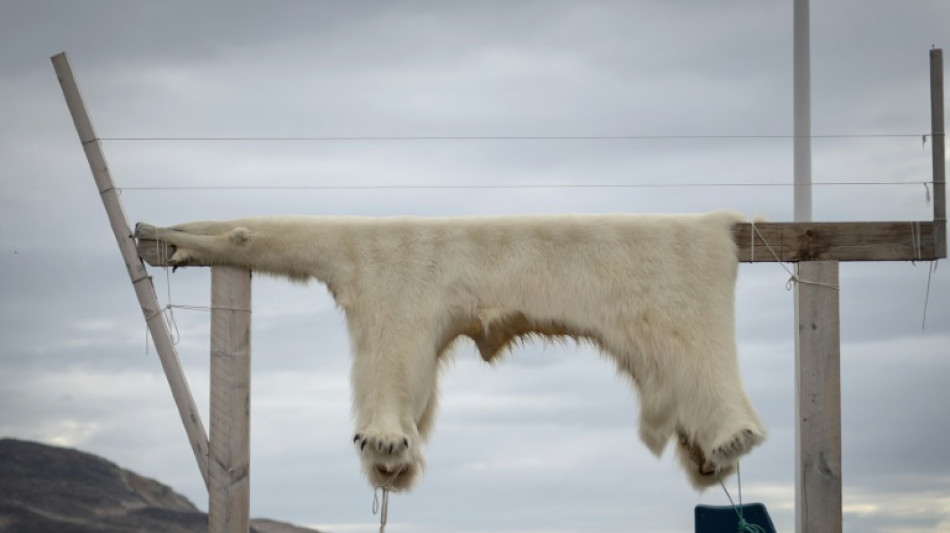
Scientists warned on Thursday that the long-term health of Inuit hunters in eastern Greenland was under threat, due to so-called "forever chemicals" in the atmosphere and their diet of polar bear and seal meat.
Christian Sonne, from Denmark's Aarhus University, said the Ittoqqortoormiit fishing and hunting community had levels of the chemicals -- also known as PFAS -- in their blood 13 times higher than the risk threshold.
The remote zone is particularly affected by the contamination because the chemicals are carried there by nearby sea and air currents, said Sonne, author of a study of the issue published in the journal Cell.
"East Greenland is really a hotspot of human contamination because you can both eat polar bears, which you don't hunt in Russia or Svalbard, and ringed seals that accumulate PFAS and other harmful substances," he told AFP.
"These substances are so persistent in the environment and in the body that the concentrations will still be very high over the next 75 to 100 years."
The area, home to just 300 people, has the highest PFAS levels in the world, excluding those affecting firefighters, factory workers and that linked to groundwater contamination in Sweden and Italy, said Sonne.
He attributed that to the long-range transfer of the chemicals in the air and water, which end up in the bodies of animals, particularly those that are then eaten.
To lower their levels, he advised the Inuit community to diversify what they eat.
He also called for tighter regulations to force industry to manufacture fewer toxic compounds that are less likely to be spread widely.
- High mercury, PCB levels -
PFAS are synthetic chemicals first developed in the 1940s to withstand intense heat and repel water and grease.
They have since been used in a vast range of household and industrial products, including food packaging, make-up, stain-proof fabrics, non-stick cookware and flame retardants.
Studies have suggested that exposure to PFAS chemicals is associated with increased rates of cancer, obesity, thyroid, liver and kidney disease, higher cholesterol, low birthweight and even weaker response to vaccines.
Polychlorinated biphenyls -- banned by the United States in 1979 -- are industrial chemicals, which affect immune, reproductive, nervous and endocrine systems, and are likely to cause cancer.
They also bind to sediment, threatening fish and wildlife.
Depending on ocean currents and winds, the situation varies across the Arctic territories.
Sonne said Inuit hunters also had very high levels of mercury and probably the highest levels of toxic man-made PCB chemicals in the world.
A.Gasser--BTB