At consumer tech show, German firms fret about US tariffs / Photo: © AFP

 Marchand 'stressed' about racing Japanese rivals at LA Olympics
 Mobile boat clinics bring healthcare to India's remote islands
 Former India paceman Zaheer Khan named Chennai coach in IPL

 Six-year-old Chinese girl sets world record with Rubik's Cube
 Swimming prodigy Yu, 13, says 'interviews way harder than racing'

 Star coaches make their bows as Nations League returns
 Rams bounce back as Giants reel from Dart injury

 In Bangladesh, Pakistan's Jinnah photo stirs anger

 Two New Zealand naval ships transit Taiwan Strait

 Zidane gets down to work as France start new era

 Inside the Venezuelan prison meant to 'drive you insane'
 UK king braces as memoir by Diana's brother goes on sale

 Akkodis and Hamburg Public Transport Association Showcase hvv mia at InnoTrans 2026, Demonstrating the Future of AI-Powered Mobility

 Macron says talks with Trump on Red Sea, Ukraine 'constructive'
 Green policies just good politics, says UK minister
 Bardot auction in Paris fetches nearly one million euros
 No timeline on Daniels injury return, says Commanders coach

 British Columbia sues OpenAI in US court over Canada school shooting
 French star Batum retires after 18-year NBA career
 Zidane leads first France training session

 Man shot by ICE agent in Texas detained with bullet inside him: lawyer
 California declares state of emergency ahead of El Nino
 South Africa arrests three more suspects, after nine women murdered
 Carse needs time away from England, says captain Brook
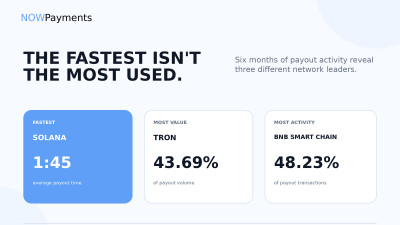 NOWPayments Releases Cross-Chain Payout Data Revealing Key Performance Benchmarks Across TRON, BNB Chain, and Solana

Displaying one of her company's hot plates proudly labelled "Made in Germany", Sigrid Klenk concedes that maintaining production at home could become harder due in part to US tariffs.
Continuing to make goods in Germany "is becoming less and less simple," Klenk, boss of the small firm Rommelsbacher, said at the IFA consumer tech show in Berlin.
Particularly problematic for Rommelsbacher, whose products range from kettles to coffee makers, is a 50-percent US levy on steel and aluminium.
"Now we have to specify the amount of steel contained in our products, especially our hot plates," she told AFP. "This has kept us very busy in recent days."
Europe's already struggling top economy is under huge pressure from President Donald Trump's tariff blitz -- official data released Monday showed German exports to the US plunged to their lowest level for nearly four years in July.
The concern was palpable at this year's IFA show in Berlin, where the ZVEI industry federation warned that German electronics exports to the US, the sector's second-largest market, could fall by as much as 20 percent.
While the European Union and Trump struck a deal in July agreeing on import levies of 15 percent on most goods from the bloc, there remains much uncertainty.
Businesses complain that, in reality, the list of products facing extra tariffs continues to grow.
As well as small- and medium-sized businesses, home appliance giants like Miele are worried.
"When consumers don't know what will happen tomorrow, it's the worst situation," and "it's the same for businesses", Markus Miele, the executive director of the group, told AFP.
The group has already had to raise prices as a result of the tariffs, he said.
- 'Costs too high' -
Adding to the company's problems is continued weak demand in many countries, he added -- pointing in particular to its home market, where consumers are reluctant to spend even after recent falls in inflation.
In contrast the economic situation is better in the US, he said, noting that Miele opened its first production site there even before the return of Trump, who is aiming with his tariffs to bring manufacturing jobs back to America.
The long-running woes of Germany's small businesses were plain to see at the IFA show -- even before the US tariffs, they had been battling problems from rising labour costs to high energy prices and a lack of skilled workers.
Vacuum cleaner maker Fakir, for instance, had to abandon production in Germany a year and a half ago.
"It was impossible to continue -- the costs were too high," said an employee, who spoke anonymously, at the show.
In contrast to ailing German manufacturers, Chinese companies at the event were attracting crowds with their innovations: such as robot vacuum cleaners that climb stairs and robotic arms that play chess.
Once considered of lower quality, their offerings are now giving German-made products a run for their money.
German companies are racing to keep up but it is an uphill battle. For now, many simply hope that consumers at home begin to spend again.
"I hope the Christmas season will bring a bit more enthusiasm to German consumers," said Klenk.
L.Dubois--BTB