Spain opens doors to descendants of Franco-era exiles / Photo: © FRANCE PRESSE VOIR/AFP

 Inside the Venezuelan prison meant to 'drive you insane'

 UK king braces as memoir by Diana's brother goes on sale

 No green light to lift EU sanctions on Russian oligarchs, talks to resume

 UK agrees support for Saudi in struggle with Houthis: reports

 EU foreign policy chief calls for continued sanctions on Russia

 Flights scrapped, evacuations urged as Typhoon Dujuan wallops Japan

 Fonseca to take break from tennis

 A Cuban zoo, and its animals, in epic battle for survival

 Infantino proposes consulting federations to reform FIFA

 El Nino weather pattern enters record territory: scientist
 OpenAI calls for US to lead global effort on AI standards

 South African ostriches plucked alive for luxury fashion: report

 US networks halt Trump coverage in revolt over White House ban

 Paramount settles with US states to clear Warner Bros. mega-merger

 Climate crisis a job for world leaders, not just activists: UK FM

 US networks halt Trump coverage over White House ban
 French singer accuses Miley Cyrus of plagiarism

 EU fines Google 403 mn euros for location data breach

 'Best is yet to come,' says De la Fuente after Spain extension

 Why diesel prices are rising more than crude oil

 COP31 host says AI's climate footprint to be a summit priority

 Renewables hit record in 2025, but world must move faster: report
 US media outlets to sue Trump administration after White House ban
 Global stocks rally on lower oil prices, US-China hopes

 EU proposes energy rating for data centres

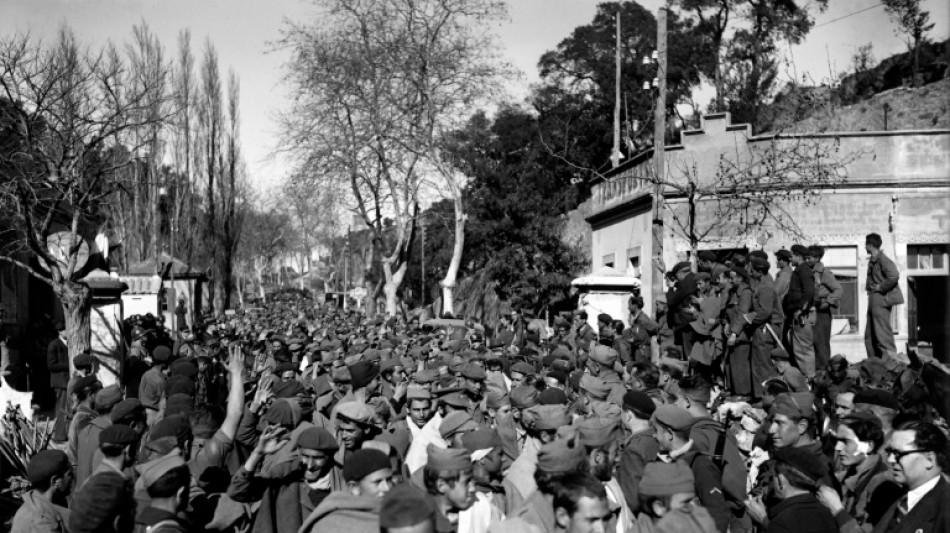
Spain has received a surge of citizenship applications from descendants of emigrants who fled the country's 1930s civil war and Francisco Franco's dictatorship under a scheme aimed at addressing historical injustices.
The so-called "grandchildren's law" allows children and grandchildren of Spaniards who lost or renounced their nationality after leaving for "political, ideological or belief-related reasons" to reclaim citizenship.
The measure also covers those who fled persecution based on sexual orientation or gender identity.
The initiative is part of a 2022 law introduced by Socialist Prime Minister Pedro Sanchez aimed at righting the wrongs of the 1936-1939 civil war and the brutal dictatorship that followed until General Franco's death in 1975.
Spain has received 2.3 million citizenship applications under the scheme, according to the General Council of Spanish Citizenship Abroad, a government advisory body. The deadline closed on October 22.
Argentina alone accounted for about one million applications, amid economic turmoil in the country.
Large numbers also came from Brazil, Cuba, Mexico, and Venezuela.
The advisory body estimates processing the applications could take up to four years and that the size of Spain's overseas population could dramatically expand.
If approval rates follow historical patterns -- with rejections typically limited to just one or two percent -- the number of Spanish citizens living abroad "could double", the head of the body, Violeta Alonso, told daily newspaper La Nueva Espana.
The surge in applications could also boost Spain's domestic population of around 49 million if many new citizens choose to move to the country.
- 'For my daughters' -
Historians estimate that half a million people fled Spain during the civil war, which began with a military rebellion led by Franco against the Second Republic's elected leftist Popular Front government.
Most went to France, Mexico and other Latin American countries to avoid repression.
But a notable number went to the Soviet Union, which had been one of the main supporters of the Republican side during the conflict.
After the war, Franco's government persecuted opponents and their families, relying on executions and repression to maintain control, prompting further emigration.
While the law aims to "settle a debt" with Spain's Francoist past, it also applies in some cases to descendants of people who left the country for political reasons in the turbulent period before the civil war.
Juan Pablo Ferreira, a 66-year-old anthropologist in northern Argentina's Jujuy province, is one.
His grandfather left Galicia in northwestern Spain to avoid being drafted into the country's colonial wars in Morocco in the early 20th century.
"I consider myself a Galician from the diaspora," he told AFP.
"I want to stay connected to it, especially with Galicia, but I'm also doing it for my daughters, so they have one more tool to get by in life."
Beyond emotional ties, a Spanish passport offers tangible benefits: the right to live and work in Spain and elsewhere in the European Union, and easier travel.
According to the Henley Passport Index, Spain's passport allows visa-free access to 187 countries.
Long lines were reported at Spanish consulates across Latin America in the final months before the application window closed.
Now Spain faces the challenge of processing more than two million citizenship files.
During a meeting this month, Alonso and Foreign Minister Jose Manuel Albares discussed the possibility of opening new consulates and boosting staffing levels to process the requests.
R.Adler--BTB