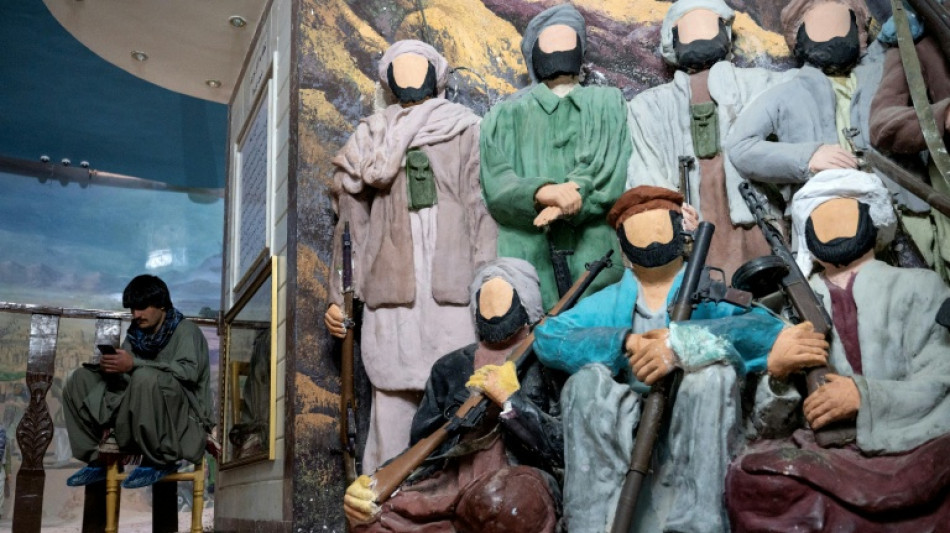
Afghan resistance museum gets revamp under Taliban rule / Photo: © AFP

 Braves clinch division title as Red Sox reach MLB playoffs
 Bordeaux-Begles hammer Stade Francais despite Jalibert injury

 Milan and Juventus end blips with home wins

 Bridgeman wins PGA Biltmore title with sizzling 61
 Williams injured as Bears shut down by Vikings

 US warns of rapid escalation in Middle East war

 Germany's far-right AfD celebrates another state election win

 Russia vows revenge for election-day attacks as poll shows ruling party win

 Spaun late shows snatches PGA Championship win

 Conceicao strikes as Juventus beat Atalanta

 Britain, Zverev-inspired Germany, Spain complete Davis Cup finals
 Man Utd salvage Fulham draw as pressure mounts on Carrick
 Spanish civil war drama 'The Black Ball' wins at Toronto festival

 Germany's Merz shaken by far-right and far-left gains in state votes

 Macron welcomes Canada's Carney to French Atlantic territory
 Fiorentina frustrate Napoli with Serie A draw, Como upset
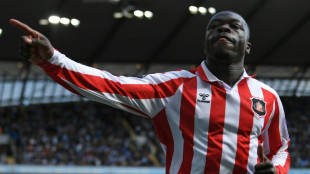
 Five-star Man City top Premier League after Sunderland thriller
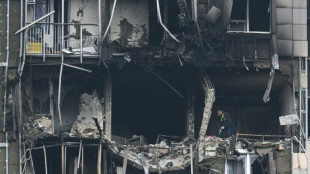 Ukrainian drones hit Moscow on last day of Russian elections
 Multi-Asset Trading Venue Monochrome Exchange Announces IEO of Its Native Token, $MCR
 South Korea break Japan hearts to win Asian Games basketball gold
 Acosta takes first victory at Austrian MotoGP
 PSG president Nasser al-Khelaifi under investigation in France for conflict of interest

 China swim sensation, 13, sets Games record after Japan win early
 Drones hit Moscow as Russians go to the polls
 New England boss Fleming says 'wrong' to ask Stokes to end retirement

An Afghan who fought against Soviet forces still visits a museum celebrating the resistance, but, in keeping with rules by the Taliban authorities, the displays have undergone notable changes recently.
Saaduddeen, 67, travels each month to the Jihad Museum, a building of glittering blue and white mosaics over the hills of Herat in western Afghanistan.
More than a million Afghans were killed and millions more were forced into exile during the decade-long Soviet occupation, which ended in 1989.
"The Russians came to Afghanistan with jets, choppers, tanks; it was very violent," said Saaduddeen, who requested his surname not be published for security reasons.
"I was just a young guy, but I wanted to stand for the independence of Afghanistan," he added.
Out of 21 fighters, or mujahideen, in his group, only seven survived.
At the foot of the museum, a stone statue symbolises the departure of the last soldier, ending a conflict which killed 15,000 Soviet troops.
- Figurines with no faces -
Inside the building, a display made by academics at Herat University's art department recalls the suffering of civilians and the struggle for independence.
There are plaster figurines of women throwing stones at pro-Soviet government forces, or tending to wounded fighters, with one passing a rifle to a man.
A teenager draws his slingshot, while fighters holding prayer beads take control of a Soviet tank, and peasants clutching pitchforks face Soviet soldiers.
When the museum opened in 2010, and for many years after, the figurines showed the faces of these women and men.
But today, their mouths, noses and eyes have been removed, with beards and hair left on the men. The heads of animals have also been covered with a layer of plaster.
The Taliban government, which took power for the second time in 2021, has banned depictions of living things under its strict interpretation of Islamic law.
The Ministry for the Propagation of Virtue and Prevention of Vice, the government's morality police, said in 2024 that this rule should be gradually applied nationwide.
It was not clear precisely when the museum changes were made, as staff declined to comment on the issue.
"Now it's less personal, and it touches us less," said Saaduddeen.
But it's better than nothing, he thought: "It's good that the museum exists."
- Heroes' hall disappears -
The garden is still filled with the remnants of war: a Soviet fighter jet, helicopters, tanks, pieces of heavy artillery and military vehicles.
But a gallery originally conceived as a hall of fame has been removed, according to a comparison with pictures taken in the 2010s.
It once displayed large portraits of mujahideen commanders, who later fought against each other in a civil war that resulted in the Taliban taking power in 1996.
Among them was Ahmad Shah Massoud, who fought the Taliban and was killed weeks before the group was ousted from power in 2001.
Families are also absent because, with very rare exceptions, women are not allowed to enter. "It would be better if entire families could come because this is a very important part of our history," a visitor told AFP on condition of anonymity.
One of the museum's most emblematic employees, known as Sheikh Abdullah, also no longer walks its rooms.
He went to Afghanistan as a Soviet officer named Bakhretdin Khakimov and suffered a head wound in 1985, but was treated and saved by the mujahideen.
Upon his death in 2022, the Taliban government's spokesman highlighted Khakimov's life story and offered condolences. He now rests, as he wished, in a flower-adorned grave on the heights above the museum.
P.Anderson--BTB