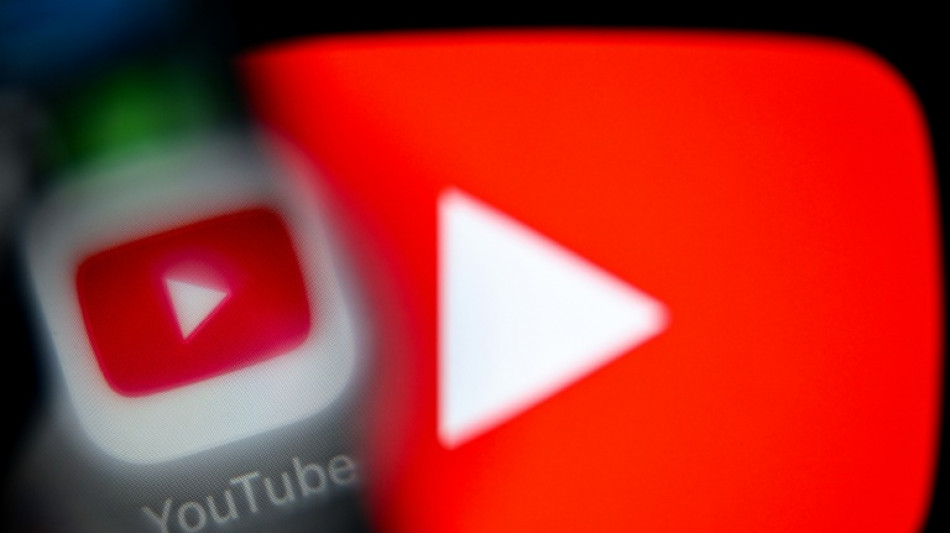
YouTube offers deepfake detection to Hollywood / Photo: © AFP

 Multi-Asset Trading Venue Monochrome Exchange Announces IEO of Its Native Token, $MCR
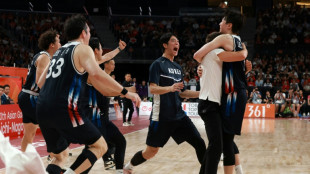 South Korea break Japan hearts to win Asian Games basketball gold

 Acosta takes first victory at Austrian MotoGP

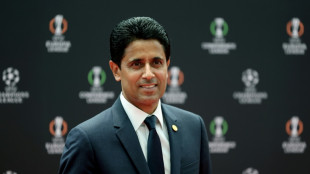 PSG president Nasser al-Khelaifi under investigation in France for conflict of interest

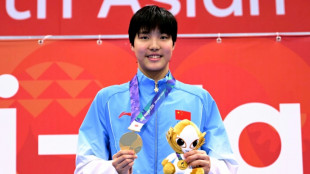 China swim sensation, 13, sets Games record after Japan win early
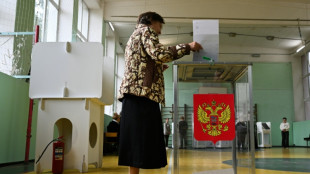 Drones hit Moscow as Russians go to the polls
 New England boss Fleming says 'wrong' to ask Stokes to end retirement
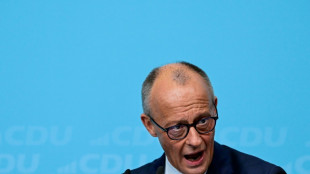 Germans vote in elections threatening fresh blow to Merz
 US fears rapid escalation in Mideast after Houthis attack Riyadh

 Japan triathlete Hojo wins first gold of Asian Games
 IOC president impressed by 'beautiful' Asian Games wooden huts

 First Asian Games gold goes to Japan as China's 13-year-old Yu lights up pool
 Data centre command hub keeps AI up and running

 Pope Leo in France: the issues on the table
 Packing for a pope: behind the scenes on foreign trips
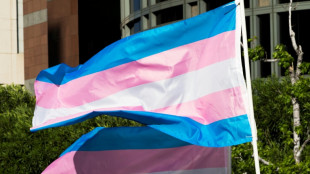 Republicans find transgender issues a powerful political weapon in midterm campaigning
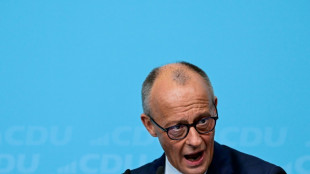 German state elections threaten new shock waves for Merz
 Chile's Bachelet quits race to be next UN chief
 Raphinha treble fires perfect Barca to win at Sevilla
 Thiam makes winning heptathlon return at Decastar meet

 Czechs beat USA to qualify for Davis Cup finals
 Dortmund sink Stuttgart to climb to Bundesliga summit
 Trump says will not tolerate attempts to slow AI growth

 'It has to stop': runners protest women's murders in S.Africa district

 Fire erupts near Riyadh airport as Houthis claim strikes
YouTube is offering Hollywood celebrities and entertainers a free detection tool to help combat their deepfakes, expanding the Google-owned video platform's efforts to guard against AI-driven impersonations.
Last month, YouTube introduced its likeness protection tool -- which helps identify content in which a person's face appears altered or generated using AI technology -- to government officials, journalists, and political candidates.
The platform is now extending access to entertainers including actors and musicians, who face a heightened risk of having their likeness misused -- potentially harming their careers and distorting shared realities.
"We're expanding our likeness detection technology to the entertainment industry: talent agencies, management companies, and the celebrities they represent," YouTube said earlier this week.
Likeness detection "looks for AI-generated content with a participant’s likeness, like a deepfake of their face, and gives them the power to find it and request removal."
The video giant added that celebrities and entertainers were eligible to access the tool regardless of whether they have a YouTube channel.
"YouTube opening its deepfake detection capabilities to public figures reflects a turning point in how platforms approach identity protection in the age of generative AI," Alon Yamin, chief executive and co-founder of AI content detection platform Copyleaks, told AFP.
"The technology to replicate a person's face, voice, and mannerisms has advanced faster than the safeguards around it, creating a gap that bad actors are already exploiting."
- High stakes -
The move comes after hyper-realistic AI videos of dead celebrities -- created with apps such as OpenAI's easy-to-use Sora -- rapidly spread online, prompting debate over the control of deceased people's likenesses.
OpenAI's app also unleashed a flood of videos of celebrities such as Michael Jackson and Elvis Presley.
Last month, OpenAI said it was shutting down its Sora app.
In February, Irish director Ruairí Robinson created a stunningly realistic clip featuring Brad Pitt fighting Tom Cruise on a rooftop using a two-sentence prompt.
The widely circulated clip, which sparked alarm across Hollywood, was generated with Seedance 2.0, an AI video generation tool owned by the Chinese technology company ByteDance.
Robinson also created other videos depicting Pitt battling a sword-wielding "zombie ninja," and another showing him teaming up with Cruise to fight a robot.
Charles Rivkin, the chairman and chief executive of the Motion Picture Association, called on ByteDance to "immediately cease its infringing activity," accusing it of disregarding copyright law that protects creators and underpins millions of jobs.
YouTube said it was working with leading talent agencies to refine how likeness detection can protect entertainers.
The video giant is "doing the right thing by providing these tools at no cost to the talent, so they can protect their real estate," Jason Newman of the management and production firm Untitled Entertainment told The Hollywood Reporter.
"Their real estate is their face. Their real estate is their body. Their real estate is who they are, what they do, how they say it."
The expansion of the detection tool follows complaints from high-profile Americans about YouTube's cumbersome process for flagging and removing deepfakes from the platform –- especially as AI accelerates the creation of fabricated content.
"For celebrities, executives, and other high-profile individuals, the stakes are especially high as deepfakes can be used to spread misinformation, manipulate markets, damage reputations, or falsely imply endorsement. Robust detection is no longer optional," said Yamin.
"Detection systems must be highly accurate, continuously updated, and paired with clear policies and swift takedown processes to be effective.
"This won't eliminate deepfakes entirely, but it can significantly reduce their reach and impact by making it harder for manipulated content to go undetected or unchallenged," he added.
L.Dubois--BTB