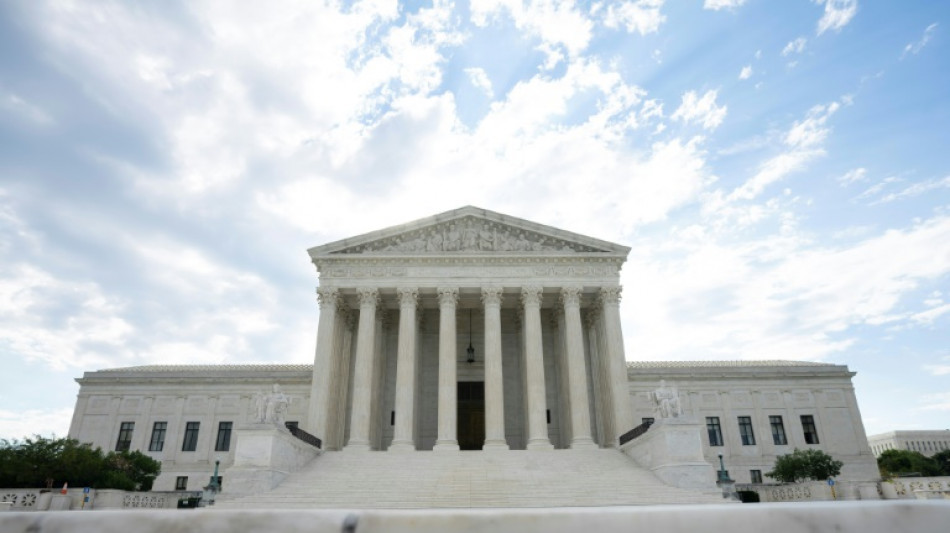
US Supreme Court rules on dragnet searches of cellphone location data / Photo: © GETTY IMAGES/AFP/File

 Indians living in Japan on stand-by to house Asian Games athletes
 Trump signs bill authorizing sweeping Russia sanctions
 Protesters form human chain at Kennedy Center after Trump threat
 Death toll from attack at police HQ in Pakistan rises to 31
 Trump says Denmark to give US 'permanent control' over Greenland security

 Kennedy Center: future unclear for iconic Washington arts hub

 Trump claims 'infinite' Greenland security deal with Denmark
 Helicopters battle wildfire threatening Ecuador's capital

 Brentford batter Chelsea to undo Alonso's promising start

 Kane hits Bundesliga century as Bayern rout Union
 Trump says CNN, MS NOW, Politico banned from White House

 Hushing and hedging: US companies retreat on climate
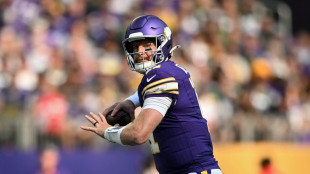
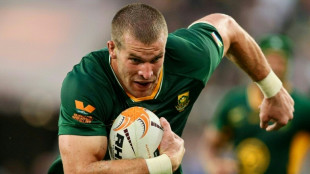 Springboks to face Fiji before 2027 Rugby World Cup

 Nigeria miners struggled to breathe in cell before 37 died: survivors

 McIlroy on the charge at PGA Championship as Reed withdraws

 McIlroy on the charge at PGA Championship

 Crisis-wracked Volkswagen warns of 10-bn-euro hit to profits

 Costa Rica's Grynspan tops third informal poll for UN chief: diplomat

 Stock markets retreat after central bank rate hikes

 Russia labels director of Cannes Grand Prix winner a 'foreign agent'

 Macron warns of Russian 'hybrid' threat after meeting presidential hopefuls

 UN holds third informal poll for new chief

 Kulusevski return can spark Spurs: De Zerbi

 Shakira to cap off world tour with Madrid 12-gig run

 Isolated Syrian-Druze city blames Damascus for shortages

The US Supreme Court on Monday ruled partially in favor of a man challenging the use of sweeping "geofence" searches of cellphone location data in his robbery conviction, sending the case back to a lower court for further consideration.
The court, in a 6-3 ruling, said that such searches -- which scan for every phone in a certain place at a specific time -- implicate the US Constitution's Fourth Amendment protections against "unreasonable searches and seizures."
However it said that a lower court would have to determine if the use of the search in the case at hand was in fact reasonable.
The case was brought by Okello Chatrie, identified as a suspect in a 2019 Virginia bank robbery after investigators obtained a warrant to search cellphone location data stored by Google.
Chatrie, who was armed with a gun and made off with $195,000, was eventually convicted and is serving a 12-year prison sentence.
His lawyer, Adam Unikowsky, argued that geofence warrants violate the Fourth Amendment by authorizing a search of every single person's account to find who was within a geofence perimeter.
Justice Elena Kagan, who was joined by the two other liberals on the court and three conservatives, wrote the majority opinion.
"An individual has a reasonable expectation of privacy in records about his cellphone's location, and police intrude on that constitutionally protected interest when they demand the information -- even though for only a limited time, and from a third-party tech company," Kagan wrote.
Eden Heilman, legal director of the American Civil Liberties Union of Virginia, welcomed the ruling.
"The Court's decision confirms that law enforcement does not have a blank check to use new technology to conduct warrantless surveillance of people's movements," Heilman said. "We do not lose our right to privacy simply because we use a cellphone."
Defending the use of geofence warrants, the government argued that a smartphone user can always choose to turn off location services.
Geofence warrants were notably used to identify supporters of President Donald Trump who stormed the US Capitol on January 6, 2021 in a bid to block congressional certification of Democrat Joe Biden's presidential election victory.
Google no longer stores location history data on its servers and has deleted all such data. Other technology companies continue to collect location data, however.
S.Keller--BTB