For Russian re-enactors, battle with West is more than history / Photo: © AFP

 Macron welcomes Canada's Carney to French Atlantic territory
 Fiorentina frustrate Napoli with Serie A draw, Como upset

 Five-star Man City top Premier League after Sunderland thriller
 Ukrainian drones hit Moscow on last day of Russian elections
 Multi-Asset Trading Venue Monochrome Exchange Announces IEO of Its Native Token, $MCR
 South Korea break Japan hearts to win Asian Games basketball gold
 Acosta takes first victory at Austrian MotoGP
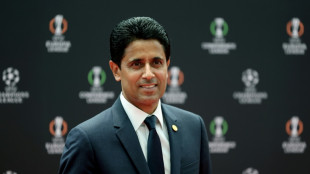 PSG president Nasser al-Khelaifi under investigation in France for conflict of interest
 China swim sensation, 13, sets Games record after Japan win early
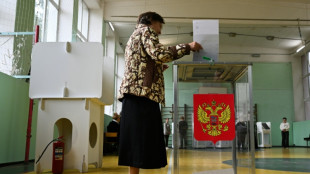 Drones hit Moscow as Russians go to the polls
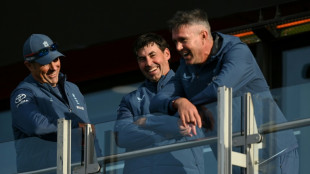 New England boss Fleming says 'wrong' to ask Stokes to end retirement
 Germans vote in elections threatening fresh blow to Merz
 US fears rapid escalation in Mideast after Houthis attack Riyadh

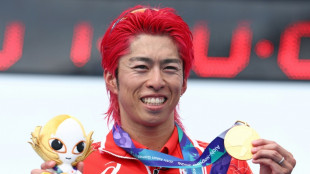 Japan triathlete Hojo wins first gold of Asian Games
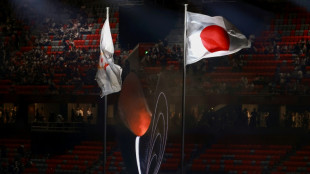
 IOC president impressed by 'beautiful' Asian Games wooden huts
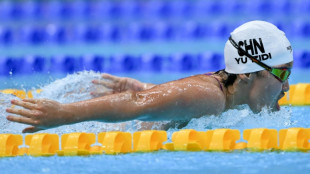
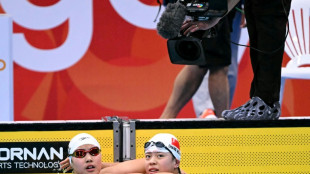
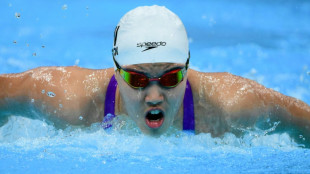 First Asian Games gold goes to Japan as China's 13-year-old Yu lights up pool
 Data centre command hub keeps AI up and running

 Pope Leo in France: the issues on the table
 Packing for a pope: behind the scenes on foreign trips
 Republicans find transgender issues a powerful political weapon in midterm campaigning

 German state elections threaten new shock waves for Merz
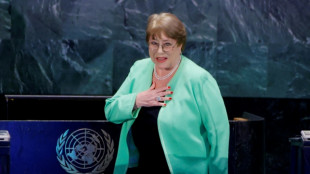 Chile's Bachelet quits race to be next UN chief

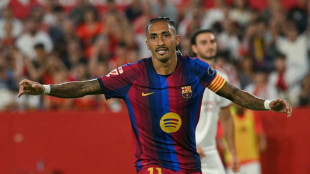 Raphinha treble fires perfect Barca to win at Sevilla
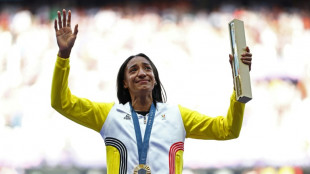 Thiam makes winning heptathlon return at Decastar meet
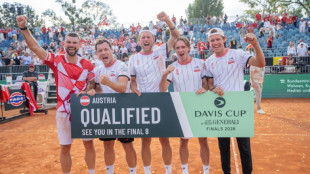 Czechs beat USA to qualify for Davis Cup finals

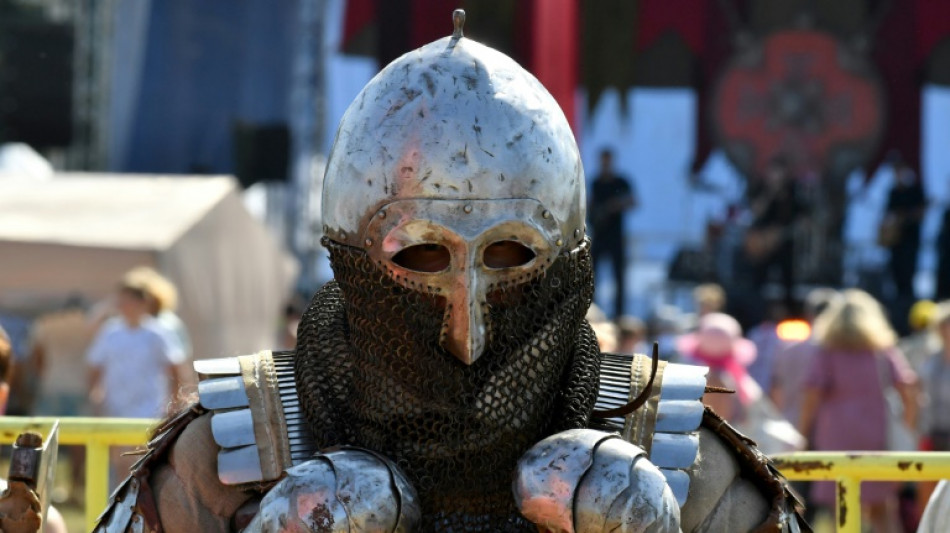
Surrounded by dozens of men in chainmail and helmets playing dead in a field, an impersonator of mediaeval Russian prince Alexander Nevsky raises his sword and roars.
"This land is Russian, always has been, and always will be!"
It was on this spot near Lake Peipus on Russia's border with Estonia that eight centuries ago Nevsky repelled a force of Teutonic Knights who wanted to convert Russia to Catholicism.
Known as the Battle of the Ice because it was fought largely on the frozen lake, the clash in April 1242 is celebrated as a great victory against efforts to turn Russia away from Eastern Orthodox Christianity.
For the hundreds of history enthusiasts re-enacting the battle on a recent August day, that victory is especially resonant today, as Russian forces wage an offensive in Ukraine framed by the Kremlin as part of an enduring conflict with the West.
"We are fighting against Europe just like our ancestors did," says Oleg Yakontov, a 56-year-old retired paratrooper, holding a sword and shield as sweat drips off his face.
Historical re-enactments are a popular pastime in Russia, whether of mediaeval battles, Napoleonic-era clashes or the fierce fighting of World War II.
- Historic parallels -
Drawing parallels with that history -- and with President Vladimir Putin as a kind of successor to figures like Nevsky -- is part of the messaging put forward by the Kremlin and Russian state media in support of Moscow's campaign in Ukraine.
"To me, Nevsky symbolises the defence of the Motherland and victory," says 23-year-old Vladislav Vasilyev, still out of breath after taking part in the re-enactment.
Several hundred people gathered for the mock battle near the lake, called Lake Chud in Russian. They feasted on grilled meat and listened to live rock music as the combatants pummelled each other on the field.
The event culminated in horseback combat demonstrations a few metres away from a large metal sculpture of Nevsky that was inaugurated in September 2021 by Putin and Patriarch Kirill, the head of the Russian Orthodox Church.
"Alexander Nevsky's personality was truly grandiose," Putin said at the time, praising him as a "talented commander" and "skilful diplomat".
Part of the modern-day appeal of Nevsky for the Kremlin was his alliance with the great power of the time, the Mongol Empire and its Golden Horde, which had destroyed and seized many of Russia's lands.
For some in Russia, Nevsky's acceptance of Mongol dominion helped preserve the country's religious traditions and Eurasian character in the face of Western expansionism.
"His main achievement is this civilisational choice," says Igor Fomyn, a bearded 52-year-old Orthodox priest in a black cassock who came to watch the spectacle.
"By making this choice, he put spirituality, his people, and his Motherland before comfort," the priest says.
- Hero of landmark film -
Nevsky has been used in the past to stir up patriotic fervour, most famously in Sergei Eisenstein's landmark propaganda film "Alexander Nevsky" in 1938.
Made at a time of strained ties between the Soviet Union and Nazi Germany, the film portrayed Nevsky as a heroic figure battling Teutonic domination.
It features an epic recreation of the battle at Lake Peipus with the heavily armoured crusaders crashing through the ice and drowning -- a scene many historians regard as of dubious authenticity.
The film was pulled from cinemas when the USSR and Germany signed a non-aggression pact in 1939, then allowed back onto screens when the Nazis invaded the Soviet Union in 1941.
Nevsky remains a cherished historical figure for many in Russia, and some here have little doubt about who would be his modern counterpart.
"Our president is continuing his work, of course," says Oleg Davydov, a 52-year-old engineer, in attendance at the re-enactment.
"It's all about this country's defence, its strength, its security."
J.Horn--BTB