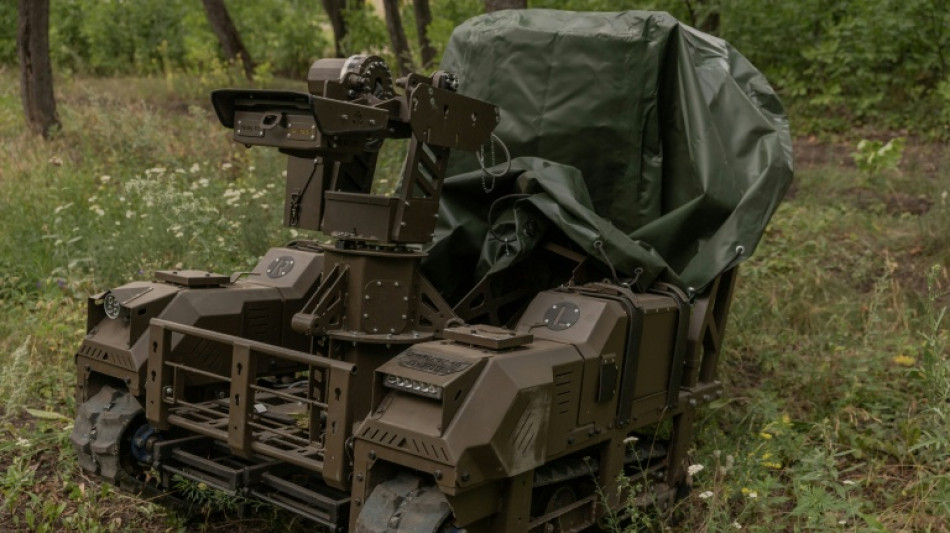
Military shake-up poses little threat to Ukraine's drone revolution / Photo: © AFP

 Russian strikes on Ukraine kill 8

 Bavuma, Miller hit centuries as South Africa clinch series

 Spain bring in Le Normand for injured Garcia

 UK Labour party meets buoyed by Burnham but seeking concrete plans

 Nor'easter lashes US east with punishing rain and wind

 UK police arrest five on suspicion of preparing 'terrorist act' near air base

 Washington denounces Iran's truce proposal as 'cynical'

 Armani sprinkles glitter on discreet elegance at Milan show

 UK police arrest five for preparing 'terrorist act' as incident near air base probed
 อเล็กซ์ โบดี และศาสตราจารย์ ดร. ดีเทอร์ ลาซิก ลงนามสัญญาสำหรับ ALPHA WHEY และ BODI เครื่องดื่มให้พลังงาน

 China teen blows away the field for record-setting gold at 'sad' Games

 Alex Bodi och prof. dr. Dieter Lazik tecknar avtal om ALPHA WHEY och BODI Energidryck

 Alex Bodi i prof. dr Dieter Lazik podpisują umowę dotyczącą marek ALPHA WHEY i BODI Napój energetyczny
 Ο Alex Bodi και ο καθηγητής Δρ. Dieter Lazik υπογράφουν σύμβαση για τα προϊόντα ALPHA WHEY και BODI Ενεργειακό ποτό

 アレックス・ボディ氏とディーター・ラジク教授が「ALPHA WHEY」および「BODI エナジードリンク」に関する契約を締結

 Housing protesters dig in for long stay in Madrid square

 Alex Bodi și prof. dr. Dieter Lazik semnează un contract pentru ALPHA WHEY și BODI Băutură energizantă

 Former Stoke boss Pulis 'cheated' over FA Cup final loss to Man City

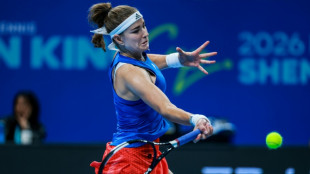 Czech Republic beat Ukraine to win BJK Cup
 Isak returns to Liverpool after injury scare
 Gunmen kill 27 in two shootings in South Africa

 Spain PM vows action as housing protest sparked by eviction grows
 Fernandez downs Gibson to claim Singapore Open crown

 Three talking points from the Azerbaijan Grand Prix

 Turkey ex-minister resigns as investment fund crisis grows
Zigzagging between robots, weapons and computers in his garage workshop, Ukrainian engineer Eduard Trotsenko was bubbling with excitement as he showed off his latest prototypes and dreamed of sci-fi-inspired futuristic ideas.
Top of his ideas list are "mechanical birds" that can land on high-voltage power lines and recharge themselves, and "robot dogs" that can be sent into battle.
"In order to save human lives, to save soldiers, there must be robots," Trotsenko told AFP.
Autonomous weapons have come to dominate the war with Russia.
Aerial drones are used on the front lines for reconnaissance and to drop explosives, while down below ground robots support logistics operations.
Ukraine has built a sprawling drone industry from scratch, hailed by President Volodymyr Zelensky as the best in the world.
But the dismissal last month of popular defence minister Mykhailo Fedorov -- one of the most ardent backers of drones -- raised some concerns over the future of the sector.
"I don't understand why they sacked Fedorov," Trotsenko, the founder and CEO of robot manufacturer Temerland, said.
Despite his removal, industry players and military personnel AFP spoke to said there was no going back now.
"The young people there won't let it go. There'll definitely be drones," Trotsenko said.
- Into the kill zone -
When Russia invaded, 55-year-old Trotsenko -- who was born in Soviet Kazakhstan -- switched from making car charging stations to military robots.
His speciality is ground drones: autonomous vehicles that crawl the "kill zone" -- the kilometres-deep stretch of territory where Russian and Ukrainian drones lurk in the skies, posing a constant danger to anybody below.
For now, they mainly help evacuate wounded soldiers from the battlefield or ferry supplies -- reducing the need to send more men into the kill zone.
But Trotsenko is looking at combat prototypes: one equipped with an RPG rocket launcher, the other with a heavy machine gun, controlled by onboard artificial intelligence (AI).
"They're currently being tested in some brigades," said Trotsenko, who is awaiting a green light for further rollout by the General Staff.
Fedorov had been crucial to pushing the technological shift within Ukraine's army.
He created the Defence AI Center A1 -- a hub dedicated to embedding AI in the military and using live feedback from the front to speed up the deployment of new technology.
Fedorov also pushed to bring private companies into the military system, putting competition at the heart of the army's innovation.
"In a private company, you can take risks more quickly," said Trotsenko, explaining how small companies were incentivised to modify and adapt at speed to win contracts.
- 'Bottom-up' -
Hundreds of kilometres away, a 45-year-old military commander who goes by the call sign "Jason", was just back from a mission.
He heads a unit that operates the kind of ground drones that Trotsenko develops in his garage.
"You can afford to lose a drone, but not a person. The probability of human losses there is reduced," he told AFP.
That kind of mantra -- using drones to save lives -- was precisely what Fedorov had been pushing at the defence ministry.
After he was sacked, protestors forced out the Soviet-style commander-in-chief, Oleksandr Syrsky, who had clashed with Fedorov's reform drive -- criticising him for not embracing drones and being too careless with soldiers' lives.
Asked whether Fedorov's removal could upset Ukraine's drone development, Jason brushes it off.
"It's not that simple ... the technological initiative was not flowing from the top down. It wasn't a government order," he said.
After Russia invaded, "there was an explosion of bottom-up initiative".
Young engineers began to create new products, showed them to the military, who took what they wanted and then started their own development, he said.
Now, programmers, telecoms specialists and engineers are fully integrated into the army.
Jason said "the shortage of professionally trained people" is the biggest challenge he faces.
Back in Trotsenko's workshop, his engineers are already working to redefine the technological and geographical limits of war.
On a whiteboard, he sketched out his vision of the future: conflicts fought by "humanoid robots", controlled by operators in another country, or wounded soldiers lying in hospital beds.
"Things have really taken off," he said confidently.
R.Adler--BTB