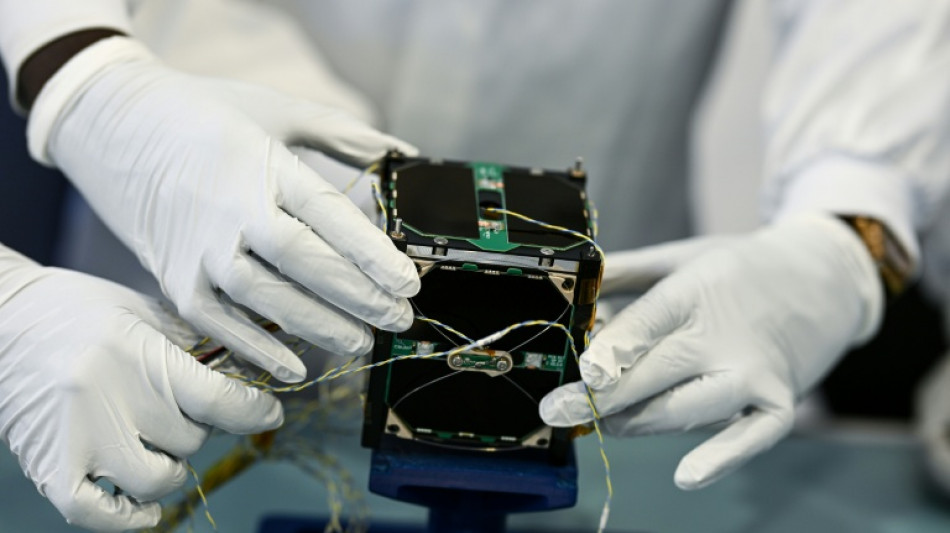
As African space race heats up, Senegal pursues homemade satellites / Photo: © AFP

 Belgium raids illicit cigarette factory in push to stub out growing trade

 Vuelta debutant Brennan claims fifth victory on stage 17
 US had warmest summer on record: climate agency

 Meta tests fact-check replacement in Latin America

 Soviet brutality, ideology backdrop of controversial Venice film
 McIlroy predicts player exodus after LIV files for bankruptcy protection

 Global Multi-Asset Broker FP Markets Secures UAE CMA Category 5 Licence

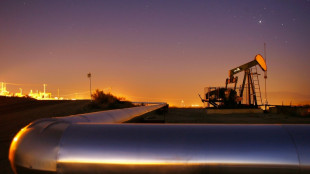
 Brent oil passes $100 on Mideast flare-up, stoking inflation worries
 'Nothing left': thousands in Yemen flee deadly Houthi clashes

 Spain endured hottest summer on record: weather agency

 'A celebration': Amsterdam museum unveils Kusama show weeks after death

 IC Markets Australia Wins People's Choice Forex Broker Innovation Award at the 2026 Finder Innovation Awards
 Brent oil tops $100 on Mideast flare-up, fanning inflation fears
 EU wants to edge out China in public contracts

 Google unveils 13 bn euro AI expansion in Finland
 Singapore's hefty ministerial pay hikes draw mixed feelings

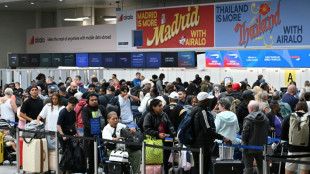 Cyberattack ruled out in UK air traffic glitch as more flights axed

 Ekiden Launches Canton Network’s First Order Book-Based Derivatives Exchange

 Germany's Merz accuses AfD of promoting 'ethnic cleansing'

 Japanese director Kore-eda's manga film charms critics in Venice

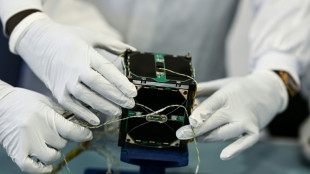 As African space race heats up, Senegal pursues homemade satellites

 UK's little-known Bayeux Tapestry replica steps into spotlight
 Shelton stuns Alcaraz in 3:34 am US Open finish, Sabalenka battles on

 Alcaraz falls to Shelton in epic latest-ever US Open finish
 Tradition Announces Partnership With Affin Moneybrokers to Support Malaysian Market Data

As the Senegalese engineers assemble their satellite -- wearing hairnets and white gloves as they probe a miniature black box, small enough to be held with one hand -- two destinations have become a priority.
The first is the sky above the sterile lab in Montpellier, southern France, where the device -- part of a nanosatellite -- will soon be soaring.
The second is several thousand kilometres south, in Senegal, where they hope to foster a homegrown industry.
"We have mastered the manufacturing process," Gayane Faye, chief of Sensat, Senegal's national space programme, told AFP -- and preparations are already under way for the building of future satellites at Sensat's new headquarters outside Dakar.
It's part of a push for technological independence by Senegal, a country where "sovereignty" has become a political and economic rallying cry but also reflects a breakneck push by African space agencies jostling for their own piece of the final frontier.
The engineers from Sensat also built their first satellite -- Gaindesat-1A -- in collaboration with the University of Montpellier, launching it in 2024.
Gainde means "lion" in the local Wolof language.
But for Gaindesat-1B, which will collect environmental and climate data, "we've removed the coaching component", Faye said.
His team's work comes as Paris is set to host a space summit Wednesday and Thursday, where African government and industry representatives are expected to attend.
- Growth -
Across the continent, national space budgets have grown to $800 million, said Temidayo Oniosun, founder of Lagos-based consultancy Space in Africa, up from less than $300 million in 2018.
Part of that jump is from an increase in existing budgets and the establishment of the African Union's new continental space agency in Cairo -- but also from a vast expansion of new programmes, from eight countries in 2018 to more than 20 now, according to Oniosun's count.
Africa's entry into space is not entirely new: Egypt launched its Nilesat 101 from French Guyana in 1998, a first for the continent.
Nigeria's national space agency was founded the following year, sent its first device space bound in 2003, and currently runs two satellites in orbit -- one for communications and the other run by the Nigerian military's separate space agency, said Oniosun.
South Africa, another historic player, is home to a ground station that has overseen communications for hundreds of launches.
A second facility is being developed in conjunction with US space agency NASA, set to be complete within the next two years.
New players have also entered the rush: Ivory Coast named its first space agency director last month and will host the African Space Expo later this month.
- Planning, monitoring -
Better satellite data is seen as key for urban planning and environmental monitoring -- major issues on a continent whose cities are growing at a rapid rate and whose farmers and fishers are increasingly at the mercy of a changing climate.
"For the first phase of Africa's space development, success was often measured by whether a country could launch a satellite," said Richard Folly, of Togo-based African Geospace, whose company has worked on flood risk and disaster management.
"The next phase has to ask a harder question: what economic, strategic or societal value is that satellite producing?"
There's also the question of independence in an industry still dominated by non-African space agencies and firms.
Despite the country's long-running satellite programme, Nigerian agencies "don't build technology locally", said Oniosun.
Senegal meanwhile "remains dependent on buying satellite images. Certain services cannot even be carried out because we lack the means to buy them", said Sensat's Faye.
For the next satellite, the agency's third, "we aim to move toward developing our own technology -- specifically, our own payload to be flown on the satellite."
Then, if the infrastructure is ready, "the fourth satellite can be built entirely in Senegal".
burs-nro/phz/kjm
R.Adler--BTB