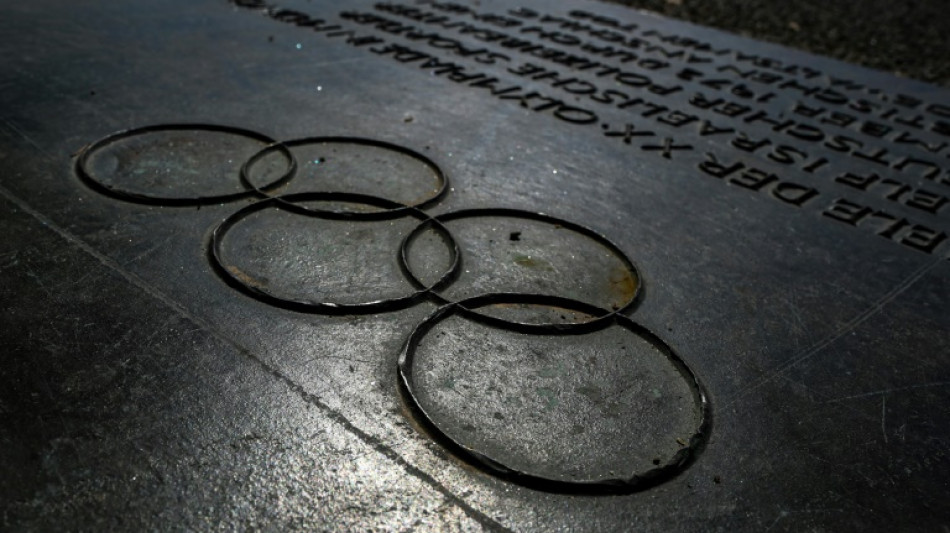
Germany seeks 'forgiveness' 50 years after Munich Olympics massacre / Photo: © AFP

 Macron welcomes Canada's Carney to French Atlantic territory
 Fiorentina frustrate Napoli with Serie A draw, Como upset
 Five-star Man City top Premier League after Sunderland thriller
 Ukrainian drones hit Moscow on last day of Russian elections
 Multi-Asset Trading Venue Monochrome Exchange Announces IEO of Its Native Token, $MCR
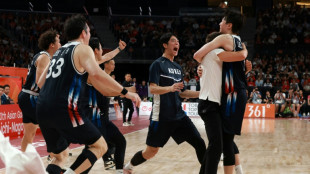 South Korea break Japan hearts to win Asian Games basketball gold
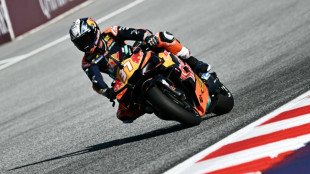 Acosta takes first victory at Austrian MotoGP
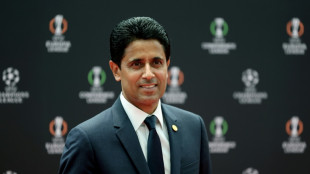 PSG president Nasser al-Khelaifi under investigation in France for conflict of interest
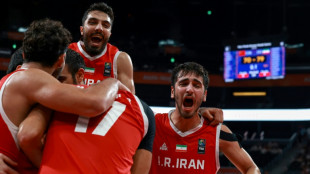
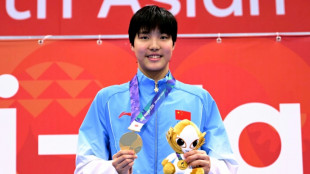 China swim sensation, 13, sets Games record after Japan win early
 Drones hit Moscow as Russians go to the polls
 New England boss Fleming says 'wrong' to ask Stokes to end retirement
 Germans vote in elections threatening fresh blow to Merz
 US fears rapid escalation in Mideast after Houthis attack Riyadh
 Japan triathlete Hojo wins first gold of Asian Games
 IOC president impressed by 'beautiful' Asian Games wooden huts
 First Asian Games gold goes to Japan as China's 13-year-old Yu lights up pool
 Data centre command hub keeps AI up and running
 Pope Leo in France: the issues on the table
 Packing for a pope: behind the scenes on foreign trips
 Republicans find transgender issues a powerful political weapon in midterm campaigning

 German state elections threaten new shock waves for Merz
 Chile's Bachelet quits race to be next UN chief

 Raphinha treble fires perfect Barca to win at Sevilla
 Thiam makes winning heptathlon return at Decastar meet
 Czechs beat USA to qualify for Davis Cup finals
Germany on Monday sought "forgiveness" from families of victims in the 1972 Munich Olympics attack, admitting responsibility for a litany of failings that led to the deaths of 11 Israelis.
The apology by President Frank-Walter Steinmeier on behalf of Germany 50 years on came after a bitter and long fight by bereaved relatives for appropriate compensation and for Berlin to own up to mistakes made that led to the massacre.
"We cannot make up for what has happened, not even for what you have experienced and suffered in terms of defensiveness, ignorance and injustice. I am ashamed of that," said Steinmeier at a solemn ceremony at the Fuerstenfeldbruck airbase where the attack reached its tragic climax.
"As head of state of this country and in the name of the Federal Republic of Germany, I ask you for forgiveness for the lack of protection of the Israeli athletes at the time of the Olympic Games in Munich, and for the lack of clarification afterwards, and for the fact that what happened happened."
On September 5, 1972, eight gunmen of the Palestinian militant group Black September stormed into the Israeli team's flat at the Olympic village, shooting dead two and taking nine Israelis hostage.
West German police responded with a bungled rescue operation in which all nine hostages were killed, along with five of the eight hostage-takers and a police officer.
Despite the devastation, the International Olympic Committee announced on the morning of September 6 that the Games would go on.
Steinmeier summarised the entire episode as triple failings -- in the preparation of the Games and its security concept; the events of September 5 and 6; and the "third failure began the day after the assassinations -- the silence, the suppression and the forgetting".
For decades, there was disregard for the victims' suffering, he said, calling it "years of hardheartedness".
The Games were meant to showcase a new Germany 27 years after the Holocaust, and to be a marked difference from Hitler's 1936 propaganda showcase. But instead, they opened a deep rift with Israel.
In 2012, Israel released 45 official documents on the killings, including specially declassified material, which lambasted the performance of the German security services.
Included in the reports is an official account from the former Israeli intelligence head Zvi Zamir who said the German police "didn't make even a minimal effort to save human lives".
- 'Inhuman and incomprehensible' -
Bereaved relatives have over the years battled to obtain an official apology from Germany, access to official documents and appropriate compensation beyond an initial 4.5 million euros.
As recently as just two weeks ago, relatives of the victims said they were offered 10 million euros -- including the sum that had already been given.
Herzog said grieving relatives simply "hit a wall" whenever they tried to raise the issue with Germany or even with the International Olympic Committee.
"I think there was tragic suppression here," he said on Sunday, noting the slew of failings that were "inhuman and incomprehensible" such as "the fact that the hostages were being led to slaughter and the Games went on."
After families threatened to boycott Monday's ceremonies, a deal was finally agreed last Wednesday for Berlin to provide 28 million euros ($28 million) in compensation.
Steinmeier had admitted Sunday that it was "shameful" that it had taken such a long time for Berlin to reach the agreement with victims' families.
"It is my duty and my need to acknowledge our German responsibility -- here and now and for the future," he said.
"May today lead to you, the relatives, feeling that your pain is being taken seriously, that you feel that we are serious about our responsibility."
C.Meier--BTB