Ex-Google CEO says Ukraine proves value of IT in war / Photo: © AFP

 Germany's Merz vows to stay course despite new vote losses

 Man City outgun Sunderland despite Brobbey hat-trick, Man Utd rescue Fulham draw

 Mourinho blames ref committee for Real Madrid derby defeat

 Maresca craves a 1-0 win after eight-goal Man City thriller
 Atletico Madrid beat Real Madrid in tense derby clash

 Reusser retains world time-trial title

 Man City outgun Sunderland despite Brobbey hat-trick, Liverpool win at Bournemouth

 Top US, Chinese economic officials meet ahead of Trump-Xi summit
 Erdogan's LGBTQ crackdown 'first step of election campaign': activist
 Mass drone barrage on Moscow kills two

 82-year-old dies after beach fight in Greece over sun lounger

 US warns of rapid escalation in Mideast war

 Iran 'put hearts on the court' to win Asian Games basketball bronze

 School girl Yu helps China dominate in Asian Games swimming openers
 Myanmar win first Asian Games teqball gold as Spain great Puyol watches

 China's 13-year-old Yu scorches to first major gold at Asian Games
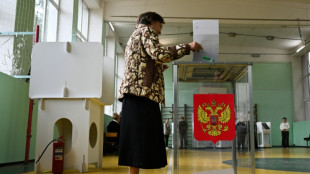 Russians vote on last day of parliamentary elections

 Hong Kong pays final respects to former city leader Tung

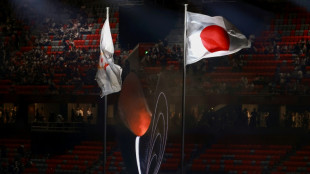 Typhoon put people off Asian Games opening ceremony, official says

 China's 13-year-old Yu cruises as Asian Games swimming begins

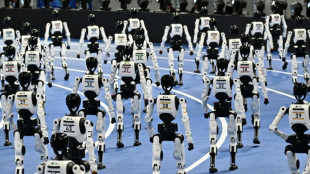 AI 'warning shots' focus Beijing on national security risks

 Philippine tribe in limbo over US-led tech hub

 Leo XIV, first US pope transcends his restrained style

 Singer Ed Sheeran says Gaza situation 'unjustifiable' following controversy

 In 'Tenzing', a Sherpa mountaineer gets his due
Ukraine has been a very effective proving ground for the use of contemporary information technology in war, from satellite dishes to smartphone apps, Eric Schmidt, the former Google chief executive, said Monday.
Schmidt, now a US government consultant on artificial intelligence, told reporters after a 36-hour visit to the country that the civilian tech sector has been crucial to Kyiv's defense.
The proof came the day after Russian troops invaded on February 24.
After a long stall, Ukraine's legislature came together to agree on a crucial step to protect all the government's data from Russian hackers and strikes.
"In one day, they had a meeting of the parliament and changed that law... they moved all their data from government servers in Kyiv to the cloud," Schmidt said.
"The war gave everybody a political excuse to do the right thing," he said.
The second crucial move came with US tech billionaire Elon Musk's donation of access to his Starlink satellite-based broadband system, effectively insulating both the public and Ukrainian military from a Russian assault on telecommunications.
Musk and donors sent in some 20,000 ground terminals with small dish antennas that allowed everyday transmissions as well as helping fighters with targeting data. That stymied a key goal of the Russian attackers.
"Elon Musk is genuinely a hero here," said Schmidt. "This allowed the strategy of shutting down the internet by the opposition to fail."
- Field intelligence from citizen apps -
Two apps meanwhile got citizens directly involved, Schmidt said.
A function called "E-Enemy" was added to the popular Diia app used for government services that permitted people to report things such as damage from shelling, or Russian troop sightings.
And an encrypted Swiss chat service called Threema allowed users to send such data to the military without exposing their identities.
The military would get thousands of such reports every day, said Schmidt, and filter them with artificial intelligence programs.
"They would whittle them down to targets using computer intelligence and human intelligence and eventually go after them," he said.
"So if you think about that, here's what they had: they had an internet that stayed up, they had their government data protected," and a way for citizens to give them intelligence information, he said.
Ukraine, long an incubator for programming as well as illegal hacking skills, has a deep IT workforce that has been able to launch cyberattacks against the Russia, breaking into their communications.
The country has also skillfully used biometric and facial recognition techniques to identify Russian troops involved in atrocities, such as the massacre in Bucha early in the war.
In addition, Ukrainian programmers have been skilled in making drones useful in the war.
"I can just report that based on my small amount of data, the Ukrainian tech industry really did make a contribution to the front," said Schmidt.
C.Kovalenko--BTB