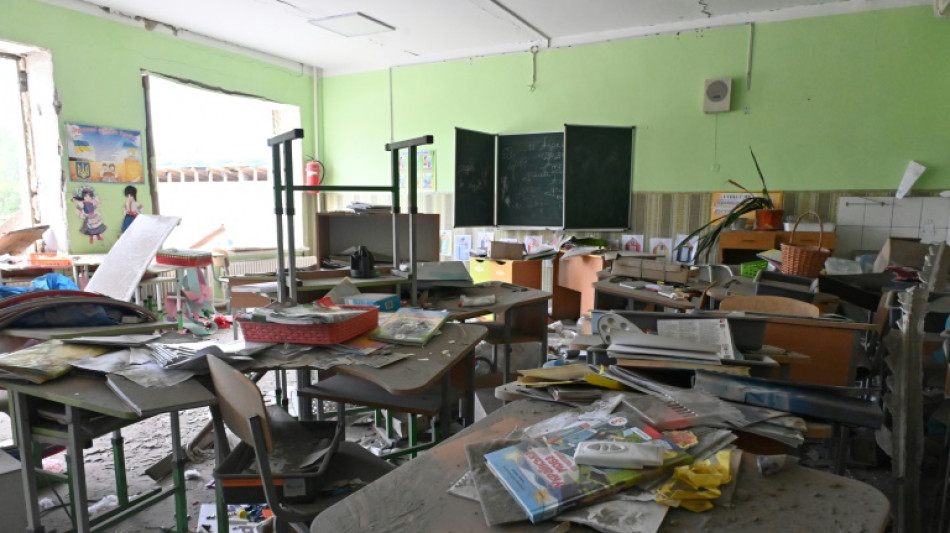
In crisis zones, an urgent UN push to put millions in school / Photo: © AFP/File

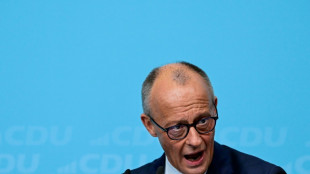
 Germany's Merz vows to stay course despite new vote losses

 Man City outgun Sunderland despite Brobbey hat-trick, Man Utd rescue Fulham draw

 Mourinho blames ref committee for Real Madrid derby defeat

 Maresca craves a 1-0 win after eight-goal Man City thriller
 Atletico Madrid beat Real Madrid in tense derby clash
 Reusser retains world time-trial title

 Man City outgun Sunderland despite Brobbey hat-trick, Liverpool win at Bournemouth

 Top US, Chinese economic officials meet ahead of Trump-Xi summit
 Erdogan's LGBTQ crackdown 'first step of election campaign': activist

 Mass drone barrage on Moscow kills two

 82-year-old dies after beach fight in Greece over sun lounger

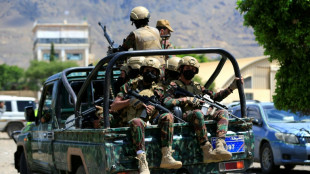 US warns of rapid escalation in Mideast war
 Iran 'put hearts on the court' to win Asian Games basketball bronze

 School girl Yu helps China dominate in Asian Games swimming openers
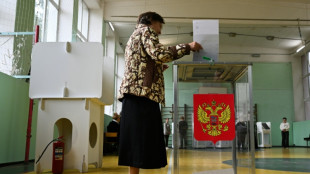
 Myanmar win first Asian Games teqball gold as Spain great Puyol watches

 China's 13-year-old Yu scorches to first major gold at Asian Games
 Russians vote on last day of parliamentary elections
 Hong Kong pays final respects to former city leader Tung

 Typhoon put people off Asian Games opening ceremony, official says

 China's 13-year-old Yu cruises as Asian Games swimming begins

 AI 'warning shots' focus Beijing on national security risks

 Philippine tribe in limbo over US-led tech hub
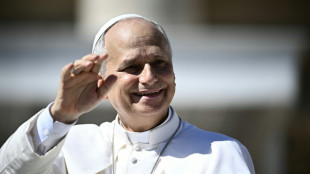
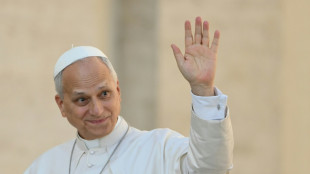 Leo XIV, first US pope transcends his restrained style
 Singer Ed Sheeran says Gaza situation 'unjustifiable' following controversy

 In 'Tenzing', a Sherpa mountaineer gets his due
From Pakistan to Ukraine to Venezuela to vast stretches of sub-Saharan Africa, rising crises and climate disasters are taking an added toll on the most vulnerable -- children deprived of school.
"It is horrendous, and it's hard to imagine," said Yasmine Sherif, head of Education Cannot Wait, a UN fund that focuses on education in crisis zones.
"They've lost everything, and on top of it, they have lost their access to a quality education," she said in a recent interview.
Sherif spoke to AFP ahead of a UN summit on the education crisis to take place Monday, a day before the annual General Assembly.
The UN fund estimates that 222 million children around the world have seen their education disrupted by conflict or climate-related disasters, including nearly 80 million who never set foot in school.
Since 2016, Education Cannot Wait has raised more than $1 billion to build schools and buy educational materials as well as provide daily meals and offer psychological services. The aid helps nearly seven million children in 32 countries.
But Sherif said that the urgency of the situation required much bigger efforts.
"If we are going to meet the needs, we have to think in completely different terms today," she said. "We are speaking billions and billions here, not millions" of dollars.
Following the UN summit, Sherif is organizing a conference in Geneva in February where the fund will seek a further $1.5 billion with a goal of reaching an additional 20 million children.
Some Western nations spend $10,000 per year on educating a child. If children in conflict zones receive $150 each, "you can see the extreme divide," said Sherif, who is Swedish.
In some conflict zones, schools have been destroyed, in what Sherif denounced as war crimes, while others, in violation of international law, have been turned into weapons depots.
Elsewhere, physical danger or the gradual unraveling of infrastructure and public services have shut down education, which Sherif said should be a lifeline for the world's young.
"What we offer is a tool, a hope, an empowerment, to resist those forces in a conflict and, through their own means, be able to rise out of those ashes," she said.
The lack of education has real and immediate consequences. Children sometimes end up on the streets, facing threats of violence, human trafficking, recruitment by armed groups or, for girls, forced marriage.
"They've seen their villages burned down, they've seen their parents be executed, they have been subjected to violence. The only thing left for them is, 'If I can get an education, I can rise up out of this and make a difference in my life,'" Sherif said.
"We're taking away that very last piece of hope, unless we provide them with an education."
J.Horn--BTB