-
 Ed Sheeran returns to stage after Palestinian controversy
-
Protesters form human chain at Kennedy Center after Trump threat

-
 Asian Games to open in Japan after troubled build-up
-
Death toll from attack at police HQ in Pakistan rises to 31

-
 Drone owners rush to offload devices ahead of Beijing ban
-
Trump says Denmark to give US 'permanent control' over Greenland security
-
 Trump's beef policies irk Texas ranchers, testing their loyalty
-
Kennedy Center: future unclear for iconic Washington arts hub

-
 Nvidia, OpenAI CEOs to attend Xi dinner at White House
-
Trump claims 'infinite' Greenland security deal with Denmark
-
 Anthropic picks Accenture for in-house AI safety evaluation
-
Helicopters battle wildfire threatening Ecuador's capital
-
 Balogun returns as Monaco beat Lens to continue strong Ligue 1 start
-
Brentford batter Chelsea to undo Alonso's promising start

-
 'Pause' on overt repression in Venezuela, but reforms still needed: HRW
-
Kane hits Bundesliga century as Bayern rout Union

-
 Global stocks mixed as yen falls despite Bank of Japan rate hike
-
Trump says CNN, MS NOW, Politico banned from White House
-
 Cuba hit with seventh major blackout of the year
-
Hushing and hedging: US companies retreat on climate
-
 Murray out with concussion so Wentz will start for Vikings
-
Springboks to face Fiji before 2027 Rugby World Cup
-
 UN chief 'deeply regrets' US visa refusal to Abbas for annual meeting
-
Nigeria miners struggled to breathe in cell before 37 died: survivors

-
 England quick Carse to face no charges over alleged nightclub assault
-
McIlroy on the charge at PGA Championship as Reed withdraws
-
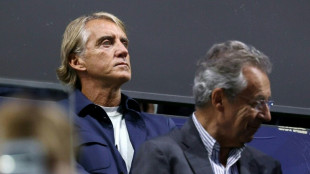 Mancini brings nine newcomers into the first squad of his Italy comeback
-
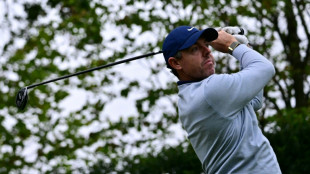
McIlroy on the charge at PGA Championship
-
 Czechs level Davis Cup tie against USA as South Korea eye Finals
-
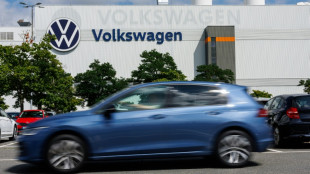
Crisis-wracked Volkswagen warns of 10-bn-euro hit to profits
-
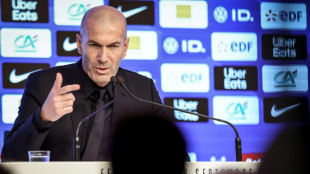 New France boss Zidane confirms Mbappe as captain after naming first squad
-
Costa Rica's Grynspan tops third informal poll for UN chief: diplomat

-
 California governor signs order to explore AI 'kill switch'
-
Stock markets retreat after central bank rate hikes
-
 Head leads run spree as Australia win Zimbabwe ODI series
-
Russia labels director of Cannes Grand Prix winner a 'foreign agent'
-
 In-form Raphinha wants to finish career at Barcelona
-
Macron warns of Russian 'hybrid' threat after meeting presidential hopefuls

-
 Warren Buffett steps down as Berkshire Hathaway chairman
-
UN holds third informal poll for new chief

-
 Carrick confident Man Utd can 'work through' tough time
-
Kulusevski return can spark Spurs: De Zerbi

-
 Mbappe ends Nike partnership to join Swiss brand On
-
Shakira to cap off world tour with Madrid 12-gig run

-
 Liverpool boss Iraola puts Bournemouth love affair on hold
-
Isolated Syrian-Druze city blames Damascus for shortages

-
 'A disaster' if Man City do not win says Maresca after flawless start
-
Isolated Syrian-Druze city shortages

-
 Kerry James Marshall: American 'blackness' painter celebrated in Europe
-
Dutch drop Depay for Germany match in Xavi's first pick

Swiss poised to ban nearly all tobacco advertising
Swiss voters appeared set Sunday to back a near-total ban of advertising for tobacco products but were expected to reject a blanket ban on animal testing.
Shortly after polls closed at noon (1100 GMT), projections from the gfs.bern polling institute indicated that around 57 percent of voters had backed the tobacco advertising ban.
It remained unclear, however, whether the initiative to ban all advertising for the hazardous products wherever minors might see it would secure support from enough of Switzerland's 26 cantons to land the double majority needed to pass.
Projections were less positive for votes on a number of other issues as part of Switzerland's direct democracy system. An initiative to ban animal testing for medical research was expected to be rejected by 79 percent of voters.
Switzerland lags far behind most wealthy nations in restricting tobacco advertising -- a situation widely blamed on hefty lobbying by some of the world's biggest tobacco companies headquartered in the country.
Currently, most tobacco advertising is legal at a national level, except for ads on television and radio, and ones that specifically target minors.
Some Swiss cantons have introduced stricter regional legislation and a new national law is pending but campaigners gathered enough signatures to spur a vote towards a significantly tighter country-wide law.
- 'Kills half of all users' -
Opponents of the initiative, which include the Swiss government and parliament, say it goes too far.
The world's largest tobacco company, Philip Morris International (PMI), -- which, like British American Tobacco and Japan Tobacco, is headquartered in Switzerland and has helped fund the "No" campaign -- described the initiative as "extreme".
"This is a slippery slope as far as individual freedom is concerned," a spokesman for PMI's Swiss section told AFP. He said it "paves the way for further advertising bans on products such as alcohol or sugar".
Jean-Paul Humair, who heads a Geneva addiction prevention centre and serves as a spokesman for the "Yes" campaign, flatly rejected that comparison.
"There is no other consumer product that kills half of all users," he told AFP.
Campaigners say lax advertising laws have stymied efforts to bring down smoking rates in the Alpine nation of 8.6 million people, where more than a quarter of adults consume tobacco products. There are around 9,500 tobacco-linked deaths each year.
- Animal testing -
While the effort to introduce a near-total ban on tobacco advertising appears likely to go through, there is basically no chance of efforts to ban all animal and human testing to succeed.
All political parties, parliament and the government opposed the initiative, arguing it goes too far and would have dire consequences for medical research.
Switzerland has rejected three similar initiatives by large margins since 1985.
Researchers say medical progress is impossible without experimentation, and even the Swiss Animal Protection group has warned against the initiative's "radical" demands.
Swiss authorities say the country already has among the world's strictest laws regulating animal testing.
As the laws have tightened, the number of animals used has fallen in recent decades, from nearly two million per year in the early 1980s to around 560,000 today.
In another animal-themed vote, first results indicated that inhabitants in the northern Basel-Stadt canton have massively rejected a bid to afford non-human primates some of the same basic fundamental rights as their human cousins, with over 75 percent opposed.
Among the other issues on Sunday's slate, initial projections also hinted that some 56 percent of voters had rejected a government plan to provide additional state funding to media companies, which have seen their advertising revenues evaporate in recent years.
The government had argued the extra funding could secure the survival of many small, regional papers which are in peril, and assist with their costly digital transition.
But the "No" campaign, backed by right-wing parties and publishers, charged the subsidy would mainly benefit large media groups and would be a waste of public funds.
L.Dubois--BTB