Bearskin dance reconnects Romania youth with tradition / Photo: © AFP

 Manchester United rallies past Roma as PSG dominates in Champions League

 Qatar sees tentative opening for renewed regional diplomacy

 Qatar Tourism joins Pacific Asia Travel Association at London travel market

 Abdul El-Sayed Wins Michigan Senate Seat in Historic Election

 Qatar media bodies discuss support for humanitarian initiatives

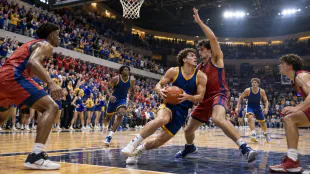 No. 22 UCLA defeats No. 5 Arizona 84-75 despite Kharchenkov's 38 points
 Vessel operator seeks witnesses after Vancouver grounding

 US Air Force deploys F-16 fighters to remote Aleutian base for readiness drill
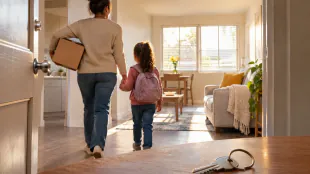 Bezos grant helps Seattle nonprofit move thousands of families toward housing

 Shrini Srivastava joins crew of Varanasi-Delhi Vande Bharat Sleeper service

 Nearly Half of Australian Workers Overqualified, Survey Finds

Romanian teenager Cosmin sweats profusely under a gigantic bearskin costume as he prances to the exhilarating sound of drums, flutes and whistles to welcome the New Year.
The parade Cosmin stars in has ancient roots and is increasingly a tourist attraction in Romania, especially for youngsters looking to reconnect with national traditions.
Performing in a costume made of real bearskin and weighing 40 kilograms (88 pounds) is physically demanding, but Cosmin would not miss the dance for the world.
"The skin I'm wearing belonged to my grandfather," the 17-year-old student says with pride, swaying the animal's head from side to side.
The northeastern town of Comanesti puts on the colourful and noisy display between Christmas and New Year's Day to chase away evil spirits.
The centuries-old tradition is held across the country but is most fervently celebrated in the region that includes Comanesti, which has emerged as the hub for troupes of bearskin-clad dancers.
Preparations begin in autumn and the local council selects the hundreds of mostly young performers, with their ages starting from as young as eight and rarely exceeding 30.
The most expressive acts win prizes, while the imposing bearskin costumes come with the animal's most fearsome features, including the paws, claws and mouth.
Small traditional "mici" sausages and kebabs are on the menu for spectators and dancers, and boards list the names of the participants' home villages.
Romania is home to more than half of Europe's brown bear population, an animal believed to embody strength and bravery but now protected as threatened by deforestation.
The dance, which has pre-Christian roots, has become a magnet for tourists and an important source of income in recent years.
- 'Search for an identity' -
Anthropologist Valer Simion Cosma believes the festival has undergone a "renaissance" since 2007 and Romania's entry into the European Union.
As many citizens choose to leave the country of 19 million people for brighter prospects abroad, the younger generation has grasped the event's value as part of a "search for an identity", he said.
Cosma noted that the almost six million Romanians living abroad want to preserve local customs with family when they come back home.
That breaks with the recent trend whereby Romania's "cultural interest was directed towards the outside" and folklore was "seen as outdated and confined to the older generations", the researcher added.
The renewed enthusiasm for the bear dance, encouraged by television coverage, has given a new lease of life to the industry producing the costumes and attracted tourists in their thousands.
"The value of folklore no longer lies in the meaning it was once given, but in its role as a spectacle and its economic impact," Cosma said.
T.Bondarenko--BTB