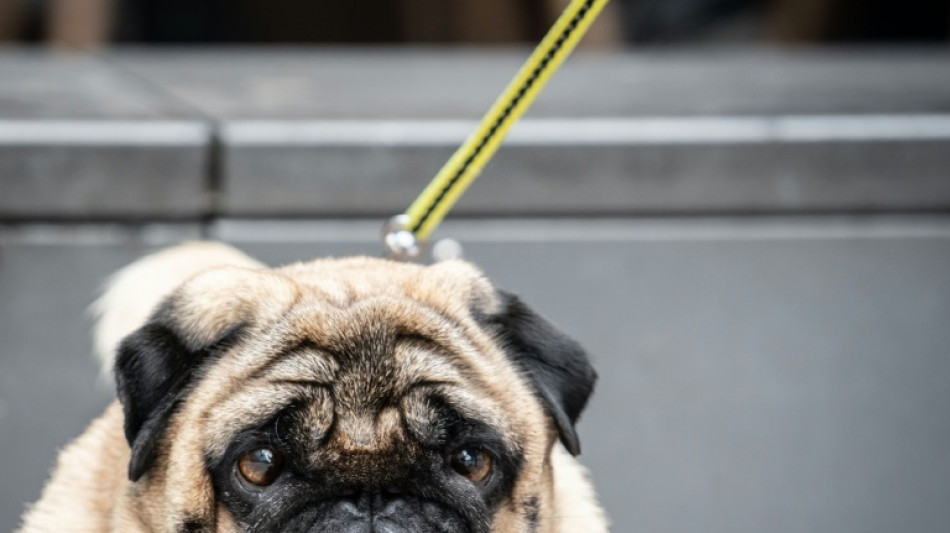
Dutch to ban unhealthy designer pets / Photo: © dpa/AFP

 Abdul El-Sayed declares victory in Michigan Senate contest

 Democrats capture US Congress in sweeping midterm victory

 Manchester United rallies past Roma as PSG dominates in Champions League

 Qatar sees tentative opening for renewed regional diplomacy

 Qatar Tourism joins Pacific Asia Travel Association at London travel market

 Abdul El-Sayed Wins Michigan Senate Seat in Historic Election

 Qatar media bodies discuss support for humanitarian initiatives

 Galloway accuser could not foresee publishing-sector fallout, lawyer argues

 New York City Center revives In the Heights as a timely community story

 Godzilla Minus Zero shifts focus toward postwar human drama

The Netherlands wants to ban pets such as flat-faced dogs and cats with folded ears, which look sweet but suffer "miserable" health problems, the government said on Friday.
Dutch Agriculture Minister Piet Adema said he would seek to outlaw the ownership of the designer breeds and to ban photos of them in advertising or on social media.
"We make life miserable for innocent animals, purely because we think they are 'beautiful' and 'cute'," Adema said in a statement.
"That is why today we are taking a big step towards a Netherlands where no pet has to suffer from his or her appearance."
Despite sought-after looks that have made them a favourite with celebrities and a fixture among social media influencers, such pets suffer from a range of health conditions.
The Dutch minister said that owners often "have the best of intentions but are often unaware of the dark side of their pets' appearance".
"This subject touches me as a minister but also as a human," added Adema.
The government would now work out a full list of affected breeds, he said, adding that it could take some time.
But the public broadcaster NOS said squish-faced pugs could be among those banned.
The Netherlands banned the breeding of pets that are affected by their appearance in 2014, but some animals were still being traded illegally or bought from abroad.
The proposed new rules are designed to close a loophole so that it will also be illegal to own them.
In 2019, the Dutch government updated the rules to specifically apply to dogs whose snout is less than half the length of their skull.
- 'Out of breath' -
"Dogs with snouts that are too short are constantly out of breath, making them gasp throughout their life," Adema said in a letter to parliament setting out the proposal.
"Dogs that have a deviant skull shape may suffer from a permanent headache.
"Cats with folding ears have deviated cartilage which can cause them a lot of pain."
The fold-eared felines would definitely qualify for a ban, as was already the case in the Flanders region of neighbouring Belgium, the agriculture ministry said.
"There is scientific evidence for these cats that they always suffer because they are a have a cartilage defect caused by a specific gene," it said in briefing notes accompanying the proposal.
The government had asked for advice from experts in veterinary genetics at the University of Utrecht in the central Netherlands, it added.
Any ban would come in after a transition period. People who currently own one of the pets would be allowed to keep them until the animal dies.
Recent studies have found that pugs and other dogs bred to have short noses, such as French and English bulldogs, are more prone to health problems, particularly with breathing.
R.Adler--BTB
