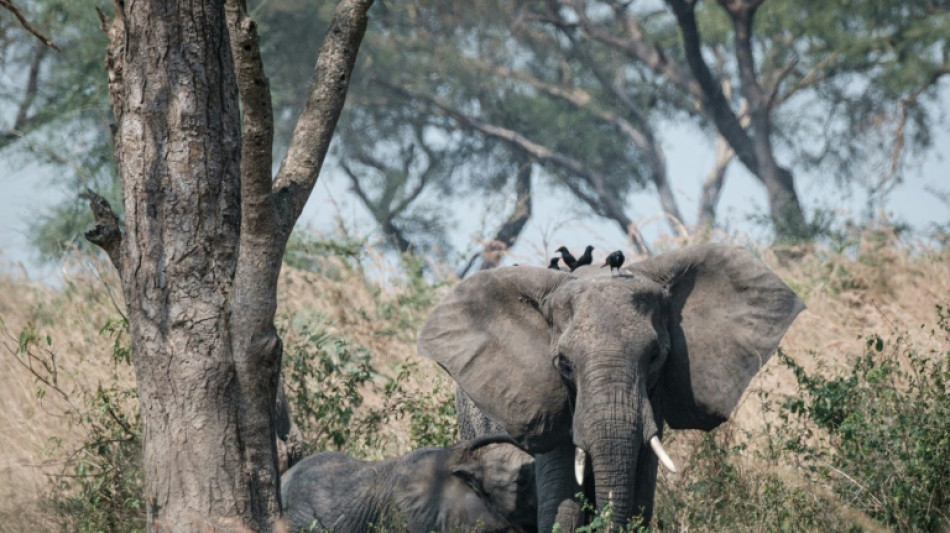
Uganda wildlife numbers soar due to enhanced protection / Photo: © AFP/File

 Abdul El-Sayed declares victory in Michigan Senate contest

 Democrats capture US Congress in sweeping midterm victory

 Manchester United rallies past Roma as PSG dominates in Champions League

 Qatar sees tentative opening for renewed regional diplomacy

 Qatar Tourism joins Pacific Asia Travel Association at London travel market

 Abdul El-Sayed Wins Michigan Senate Seat in Historic Election

 Qatar media bodies discuss support for humanitarian initiatives

 Galloway accuser could not foresee publishing-sector fallout, lawyer argues

 New York City Center revives In the Heights as a timely community story

 Godzilla Minus Zero shifts focus toward postwar human drama

Uganda's wildlife population has boomed over the past four decades, the wildlife minister said Wednesday, but warned more must be done to save declining species including lions and endangered chimpanzees.
One of the most biodiverse countries on the planet according to the UN, Uganda has seen the population of several species more than double between 1983 and 2021 "due to enhanced integrity of the protected areas," minister Tom Butime told reporters in Kampala.
The number of elephants has grown from 2,000 to 7,975 while the giraffe population increased nearly sixfold to 2,072.
The buffalo population has risen from 25,000 to more than 44,000, according to the ministry's statistics.
The "government has been able to successfully reintroduce rhinos back to Uganda that had gone extinct in (the) early 1980s," Butime said.
But the threats of poaching, habitat loss, climate change and retaliatory killings were causing the numbers of other species including lions and chimpanzees to shrink.
"More efforts are required to recover declining populations of chimpanzees, lions among others," Butime said.
UN biodiversity experts warned last year that rampant exploitation of nature is a threat to the wellbeing of billions of people across the world who rely on wild species for food, energy and income.
The International Union for Conservation of Nature said in December that wildlife living on private land in Uganda remains largely unprotected and urged a change in policy to reduce human-animal conflict in those areas.
The East African country hosts more than 53 percent of the global population of mountain gorillas and 11 percent of the world's recorded species of birds. Nearly half of Africa's mammals are found in Uganda, according to the UN.
Tourism is a top foreign exchange earner in Uganda, contributing almost 10 percent of GDP, according to government figures.
H.Seidel--BTB
