Horses part of Native American life earlier than thought: study / Photo: © AFP/File

 US hopeful Hormuz strait deal will be done 'today or tomorrow'

 Michigan primary puts Democratic divide on the ballot

 South Africa captain Kolisi to make Test return in Argentina

 Cuba's famed resilience comes at a growing mental cost

 Swiss Reusser wins Tour de France Femmes time-trial

 Hundreds flee homes after Guatemala's Fuego volcano erupts

 Thousands pay tribute to Italian football legend Baresi

 Oil drops, stocks hit records on hopes of Hormuz opening

 Renard returns as Ivory Coast coach

 Italian garbagemen help recover lost 1 mln euro lottery ticket

 EU nations patch things up after Ceuta migration discord

 US hopeful Hormuz strait deal will be done 'today or tomorrow' after ship hit

 Infantino's problems mount as Wenger and key FIFA ally turn on him

 Oil edges higher, stocks gain as investors eye political risks

 Man Utd sign reported record £20mn sponsorship deal for training kit

 Stokes reveals England coaching ambition

 Cargo ship hit after Trump insists Iran talks could reopen Hormuz today

 BP profit soars as Mideast war roils energy prices

 Most stock markets gain, while oil prices edge up after plunge

 Most stock markets gain, while oil prices edge up after latest plunge
 Weak yen helps auto giant Toyota raise forecasts

 TRON DAO Joins Blockchain Application Stanford Summit at the Science of Blockchain Conference as a Sponsor

 Rockets, Starlink, AI: SpaceX faces its first Wall Street grilling

 After sparring over Ceuta, EU states seek lessons from crisis

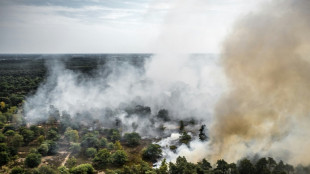 Forest fire spreads in Dutch nature reserve
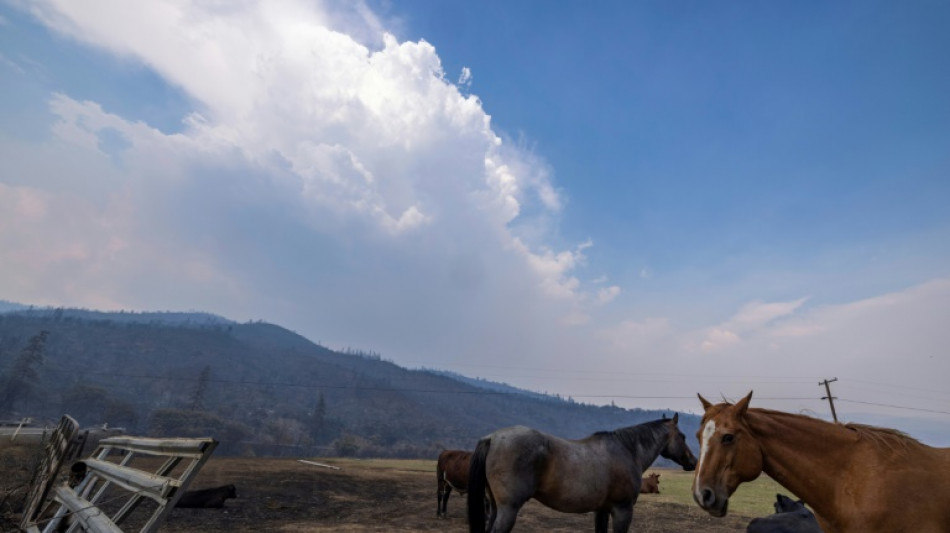
Native American people integrated horses into their communities much earlier than European colonial records suggest, according to an innovative study Thursday that combined archaeological and genetic analysis with Indigenous oral traditions.
The study is the first using both Western science and traditional knowledge to be published in the prestigious Science journal, the researchers said.
Based on European records from colonial times, historians have long contended that Native American people did not interact much with horses in the American West until the late 1600s.
Scholars often say the turning point was the Pueblo Revolt of 1680, when Indigenous people staged an uprising against Spanish colonisers in what is now New Mexico, releasing many European horses in the process.
However the new research, which traces the spread of horses from the American Southwest into the Great Plains and Rocky Mountains regions, contradicts this widely accepted theory.
The team analysed hundreds of horse remains using radiocarbon dating, DNA sequencing and other tools to demonstrate that the animals had spread widely across the American West in the early 1600s.
They also showed that the horses were raised, received veterinary care, and used for transport by Indigenous communities during that time.
This meant that horses were part of Native American social and ceremonial traditions "before any documented European presence in the Rockies or the Central Plains," the study said.
- 'Historic' -
The findings are consistent with a range of Indigenous oral histories that have long challenged the European account.
"Before this study, there was literally no place for Indigenous peoples in the Americas, or the horses we lived alongside and protected, in this conversation," said Yvette Running Horse Collin, a member of the Oglala Lakota Nation and co-author of the paper.
"This is due to the systems put in place by colonisation," she told a press conference in the southern French city of Toulouse.
Rather than one "scientific system dominating another," the research showed that "science can be utilised to heal and to unite rather than divide," she added.
William Taylor, an archaeologist at the University of Colorado and the study's first author, said that "a myopic, narrow focus on European perspectives has unfortunately limited our understanding collectively of the integration of horses into Indigenous societies".
Ludovic Orlando, a study co-author and paleogeneticist at France's national scientific research centre CNRS, said the research was "historic".
"We've brought traditional science to the cover" of Science, he told the press conference.
- 'Mutual language' -
While horses are known to have inhabited the Americas more than 12,000 years ago, Orlando said there is an "absence of fossils" between that time and the 1600s, the reason for which is not known.
The fossils from the 1600s covered by the research had Spanish or Portuguese ancestry, genetic analysis showed.
That would "fit well with acquisition from the conquistadors," Orlando said, adding that the discovery of more fossils could disprove this theory.
Orlando, who has previously used genetic analysis to disprove longstanding theories about the history of horses, was contacted by Lakota researchers in 2018.
Running Horse Collin then moved to the south of France for two years to work at the Centre for Anthropobiology and Genomics of Toulouse.
"I, as an Oglala Lakota scientist, was not asked to change my methods, methodology and conclusions," she said.
Orlando said that different theoretical approaches sometimes led him to reflect on how he communicated, which "was really not easy at several moments".
But he said they found "a mutual language" and intend to continue their scientific collaboration.
Study co-author Carlton Shield Chief Gover, a member of the Pawnee Nation, said in a statement that admiration for horses extends across borders.
"We can talk to one another through our shared love of an animal," he said.
O.Lorenz--BTB