S.Africa clinic hopes to save penguins' future / Photo: © AFP

 Russian barrage on Ukraine kills 15, wounds dozens more

 South Korea police raid Starbucks HQ over 'Tank Day' fiasco
 Tech back in fashion as Asian markets extend rebound

 Total eclipse gives scientists chance to probe Sun's mysteries
 What to know about the total solar eclipse on August 12

 'Like the end of the world': the eclipse chasers flocking to Spain

 Taiwan begins military drills as China pressure grows
 UK mansion where 'listeners' spied on Nazi generals becomes museum

 Sabalenka tops Uchijima in WTA Toronto opener

 Kgatlana strikes as South Africa reach WAFCON quarter-finals

 Pakistan close on series-levelling win against West Indies

 Paramount CEO says politics fueling Warner Bros. merger battle

 Trump's sale of access to Truth Social raises eyebrows

 SpaceX rocket stage expected to slam into Moon

 US hopeful Hormuz strait deal will be done 'today or tomorrow'

 Michigan primary puts Democratic divide on the ballot

 South Africa captain Kolisi to make Test return in Argentina

 Cuba's famed resilience comes at a growing mental cost

 Swiss Reusser wins Tour de France Femmes time-trial

 Hundreds flee homes after Guatemala's Fuego volcano erupts

 Thousands pay tribute to Italian football legend Baresi
 Oil drops, stocks hit records on hopes of Hormuz opening
 Renard returns as Ivory Coast coach

 Italian garbagemen help recover lost 1 mln euro lottery ticket
 EU nations patch things up after Ceuta migration discord
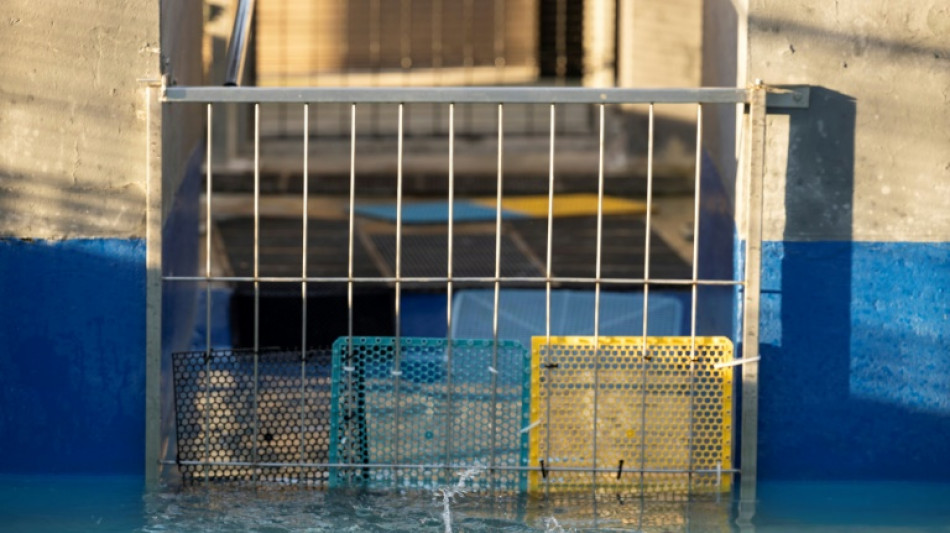
A small fish is dangled under the beak of an emaciated penguin at a South African clinic, to whet the bird's appetite.
The sickly animal is among dozens undergoing treatment in the coastal town of Gqeberha, where a dedicated rehabilitation centre is on a mission to bring African penguins back from the brink of extinction.
"We are trying to reverse some of the human damage caused to these birds over the years," says Caitlin van der Merwe, a seabird ranger at the Southern African Foundation for the Conservation of Coastal Birds (SANCCOB).
Threatened by climate change and human activity, the endangered species, which waddles awkwardly on land but turns into a fast-swimming torpedo in the water, has suffered a drastic decline in numbers.
Around 50,000 mating pairs -- penguins are monogamous -- inhabited the shorelines of South Africa and Namibia three decades ago. Today the number has dropped to 10,000 pairs.
That's a jaw-dropping 80 percent population decrease, which zoologists say is even more worrying given that a healthy penguin population is considered indicative of a healthy marine ecosystem.
"The species declining, that means there's a big issue in the marine environment," says Carl Havemann, who heads the penguin clinic.
- Climate threat -
The centre is currently teeming with feathered patients.
Over the past two weeks, about 40 baby penguins have been transferred here from Bird Island, an islet home to one of Africa's largest penguin colonies about 60 kilometres off Gqeberha, formerly known as Port Elizabeth.
Heavy rains have battered the island, washing away nests and chicks.
The little black and white birds traditionally dug their nests into a thick layer of guano - a mixture of droppings and remains that accumulate over time.
But the organic substance has been plundered for use as natural fertiliser, and the penguins now have to make do with branches or in cracks in the rocks, which make for a less sturdy home.
And for the first three months of their lives the birds are covered only by grey plumage that offers little protection from water and cold.
The rains caused many to drown or die of hypothermia.
"With climate change, weather events are becoming more and more extreme and these obviously impact the natural colonies," Havemann says.
- Footbath -
Some survivors are being treated in the seabird rehabilitation centre's intensive care unit, where staff are busy disinfecting, stitching and bandaging wounds.
Footbaths, sardines and medicines are also part of the treatment.
In total, around 100 birds, both young and adult, are cared for in the clinic.
The goal is to return them to the wild in the shortest time possible, limiting interaction with humans to what is strictly necessary.
The penguins huddle together, their shoulders raised as if they are perennially cold.
Some are kept hydrated through a small tube inserted in their gullets. Desperate ones are euthanised.
For those who are fit enough, rehab continues in the pool.
"If they don't swim, they don't drink," says van der Merwe, as she whispers soothing words to a small penguin furiously waving its wings while she holds it between her thighs.
It is suffering from borreliosis, an infectious disease caused by bacteria, and needs antibiotics.
Besides extreme weather events, African penguins are also threatened by diseases, overfishing and pollution.
Gqeberha is home to a major port and huge cargo ships refuel offshore.
Spills in the recent past have seen frantic attempts to rescue and clean up oil-tarred penguins.
At current rates of decline, African penguins could become extinct within a decade, according to the Environment Ministry.
"The ocean has such a complexity. If we take bits here and there, the whole system will collapse," van der Merwe says.
L.Dubois--BTB