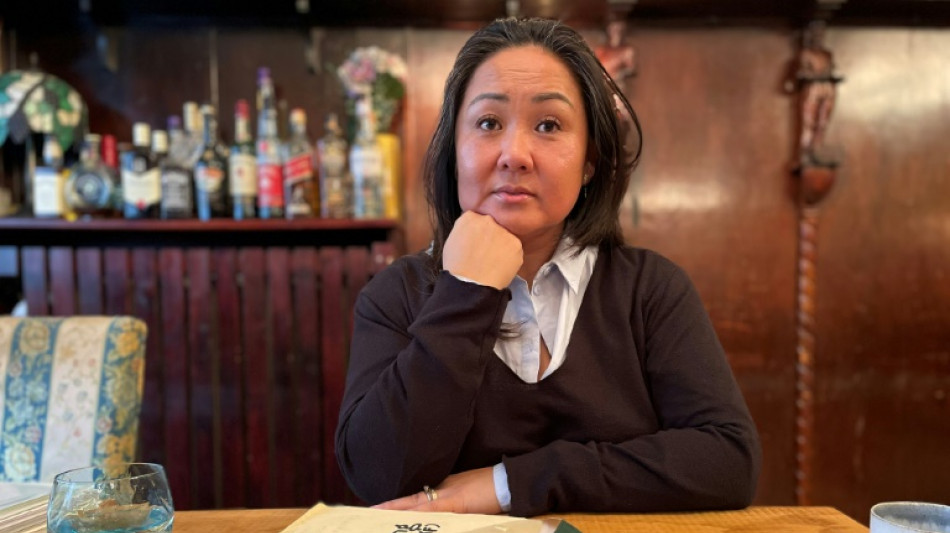
Victims of Denmark's adoption scandal demand answers / Photo: © AFP

 Pacific islands alarmed by Trump-backed push for deep-sea mining
 Erratic rains dictate menu at three-star Michelin restaurant in Brazil
 Zverev, Auger-Aliassime and Medvedev exit Montreal Masters
 Google-parent Alphabet shakes up AI division

 FIFA back Infantino, apologise for World Cup privatisation plan
 Auger-Aliassime out of Montreal ATP event with injury
 Colombian baby hippo of Escobar stock dies after rescue

 Preakness shifts 2027 dates to entice more Derby horses

 Guatemalan volcano eruption ends, locals return home

 WHO chief urges stronger Ebola response in DR Congo visit

 Newcastle appoint Jaissle as new head coach after Howe exit
 Swiss ski star Lara Gut-Behrami calls time on 18-year career
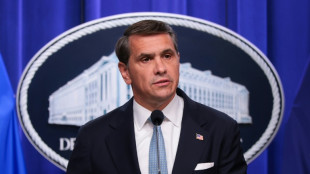 US indicts leaders of Mexico's CJNG cartel, ups reward money
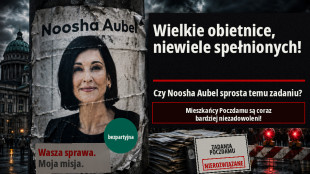
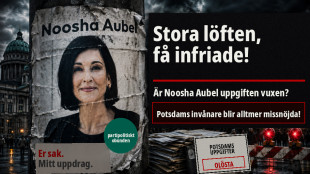 Noosha Aubel: Klarar hon av Potsdams problem?
 نوشا أوبيل: هل هي على مستوى التحديات التي تواجهها بوتسدام؟
 Former England fly-half Burns retires from rugby union
 Pakistan beat West Indies by eight wickets to level series

 Reusser holds lead as Vollering wins in Tour de France hills
 Argentina's Albornoz hit with four-game ban for 'intimidatory' referee abuse

 Guatemala volcano eruption eases off, but alert remains in place

 Baby hippo descended from Escobar's herd rescued in Colombia

 Woman arrested after four men stabbed in central London
 Celtic boss O'Neill in hospital after 'small procedure'
 Israeli forces raid Palestinian refugee camp near Jerusalem
 Explosive drone found near Ukrainian plane at German airport
"I don't even know when I was born," said May-Britt Koed, a Copenhagen restaurant owner and one of the quarter of a million South Korean babies sent abroad for adoption since the 1950s.
Her adoption files contain two different birth dates months apart, which Koed suspects means she may have been exchanged for another baby that did not survive.
Experts say even the chubby baby picture sent to her Danish adoptive parents may not have been of her.
All the 47-year-old knows for sure is that "I arrived in Denmark on May 17, 1977".
Koed's case is far from isolated. The growing scandal over falsified records has prompted South Korea's Truth and Reconciliation Commission to look at hundreds of cases from the country's "baby farm" adoption industry during the decades of dictatorship that ended in the late 1980s.
Koed said her Danish Korean Rights Group has seen hundreds of files containing falsified documents, with some babies arriving in Denmark six centimetres (two inches) shorter than they were in their South Korea files.
A January report for Denmark's social affairs ministry found that some adoption agencies, operating under Danish state control, knew their South Korean partners were changing children's identities in the 1970s and 1980s.
More worrying still, "it's been documented that letters were being sent from (birth) parents who didn't know where their children were", said Marya Akhtar of the Danish Institute for Human Rights.
- 'Why didn't anything happen?' -
"And allegedly it looks like they were in the possession of authorities in Denmark," she added.
"Why didn't anything happen? We call for a thorough examination," Akhtar told AFP.
Danish adoption agencies also reportedly paid some 54 million kroner ($7.9 million) to Korean orphanages and other bodies over the years to facilitate the adoptions, according to media investigations.
Denmark suspended all international adoptions in January amid serious concerns over babies also brought from other countries including India and South Africa.
"It's like opening Pandora's Box," Koed told AFP.
"We are at a point where we can see that the Danish government has been involved," said Koed, whose group has called for an independent Danish commission into the trade.
"Everybody deserves to have that truth, especially the adoptees that are trying to piece together their own history," she said.
"I haven't searched for a biological family, I'm not sure I'm going to. I am doing this to discover the truth of what happened to all of us and to find out who is responsible," she added.
Time is of the essence for those who want to trace their biological families, with some already learning that their parents are dead, she added.
Copenhagen's freeze on international adoptions came after the last agency operating there closed down amid revelations of financial pressure and fraudulently acquired consent -- not only in South Korea but also in India, Madagascar and South Africa.
Brothers and sisters were separated and sometimes adopted to different countries.
Danish social affairs minister Pernille Rosenkrantz-Theil said there was "too high a risk of human trafficking or child theft".
Last year she promised an inquiry into the history of international adoption procedures.
Legal expert Klaus Josephsen, a lecturer at the University of Aarhus, said there "hasn't been enough control" of the system in Denmark.
"We have a private organisation, which has handled and taken care of those adoptions. They found children then created the papers and sent them to the Danish authorities," he added.
"We will not see those organisations anymore, because the government doesn't trust them. So I think we will get a new system, where the state will be active," Josephsen said.
O.Krause--BTB