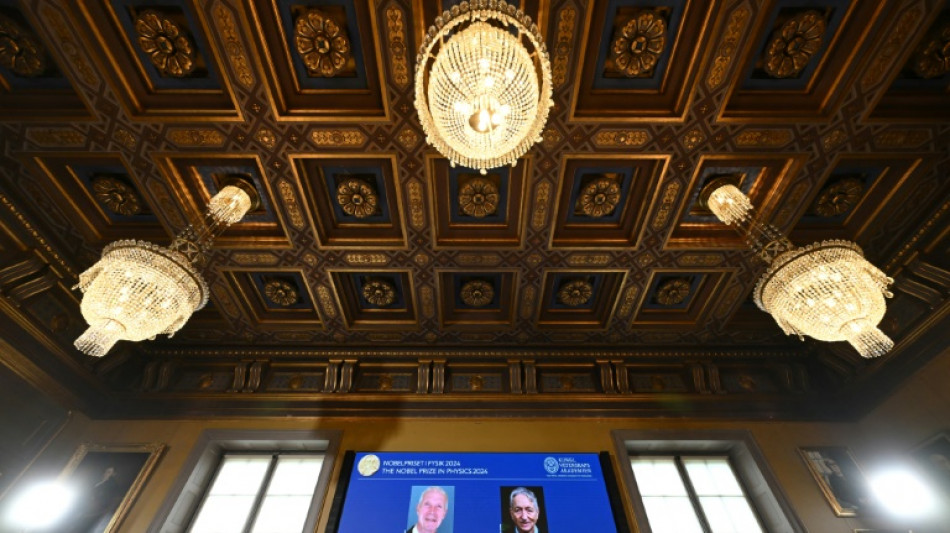
AI steps into science limelight with Nobel wins / Photo: © AFP

 2 killed, 13 wounded in bus blast near Syrian capital: state media
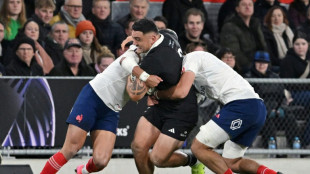 All Blacks skipper Taylor cautiously recovering from calf strain
 UN chief denounces Russia, Ukraine for civilian deaths
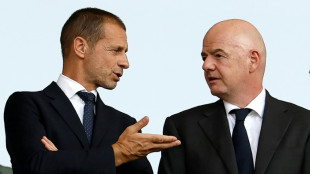 UEFA turn up the pressure on Infantino and repeat boycott threat
 Rodri approves Barcelona transfer talks with Man City: Barca source to AFP
 Venezuela unable to tally missing from cataclysmic quakes

 Le Court sprints to stage six Tour de France Femmes win
 Doping body says Parker's positive cocaine test caused by nutritionist
 UEFA says boycott of World Cups stands despite FIFA backdown on private investment
 Rheinmetall sales keep surging despite cancelled naval frigate project
 Pogacar teammate Del Toro gets new UAE deal after Tour podium

 Stocks tread water with earnings, tech in focus
 Forex Expo Dubai Announces Opportunity to Win Up to 150 Grams of Gold This September 2026

 Forlan named new Uruguay head coach
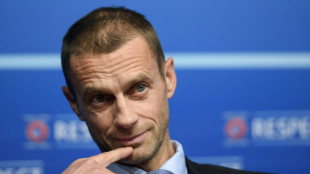 UEFA chief Ceferin: 'Underdog' leader taking fight to FIFA's Infantino
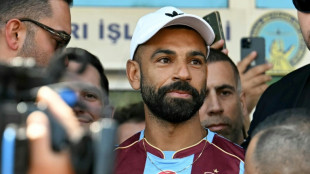 Salah completes move to Turkey's Trabzonspor
 UK clears Paramount's takeover of Warner Bros
 North Korea fires ballistic missile: South Korea military
 'Don't have to hide': Thai IDs, legal work give hope to Myanmar refugees
 Stocks mixed with tech firms back under pressure
 How Blundell's old school tactic ended England's 'Bazball' era

 Israel reports troop deaths as Lebanon talks underway in Rome
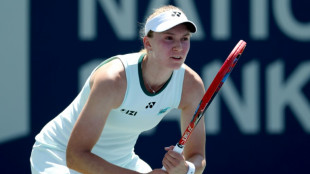 Seeds Rybakina, Pegula, Gauff reach third round at WTA Toronto

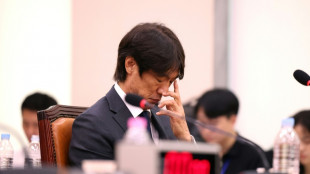 Police raid South Korea FA in probe into World Cup coach appointment
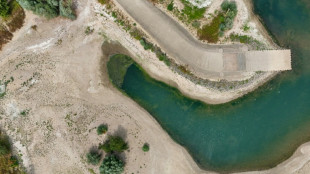 Low water on Germany's Rhine river threatens new blow to economy
For long periods of its history, artificial intelligence has lurked in the hinterland of science, often unloved and unfunded -- but two Nobel prizes in one week suggest its time in the sunshine has finally arrived.
First on Tuesday, Geoffrey Hinton and John Hopfield won the physics prize for their pioneering work in creating the foundations of modern AI.
Then on Wednesday, David Baker, John Jumper and Demis Hassabis shared the chemistry prize for work revealing the secrets of proteins through AI.
While the trio had been among the favourites for the chemistry prize, the physics one was unexpected.
"I'm flabbergasted," said Hinton when he was told of the prize. "I had no idea this would happen. I'm very surprised."
He wasn't the only one.
Online commentators wondered why a computer scientist was getting a physics prize.
And with programs such as OpenAI's ChatGPT dominating the cultural conversation around AI, for many the idea that such a technology could be worthy of such an award seemed bizarre.
- 'AI winter' -
But for scientists the news was not so surprising.
"AI's role in transforming how we do science cannot be underestimated," Elena Simperl, a professor at King's College London's informatics department, told AFP.
"The Nobel prize news recognises this, while also acknowledging the role interdisciplinary methods play in advancing computing."
The science now bundled together as artificial intelligence has a long history, emerging in the 1950s and 60s with rudimentary chatbots, translation machines and simple algorithms.
But many of the early experiments failed to take off and researchers struggled to get funding, particularly during the 1970s and the 1990s, periods known as "AI winters".
Before the latest explosion of interest prompted by ChatGPT in 2022, AI had only had a handful of moments when it pierced the public imagination.
In 2016, a program called AlphaGo created by Hassabis's DeepMind beat South Korean grandmaster Lee Se-Dol at the game Go.
It came almost a decade after the IBM-developed supercomputer Deep Blue beat world chess champion Garry Kasparov.
In his acceptance speech, Hassabis flagged that there was a direct line between AlphaGo and AlphaFold, the program that won them the Nobel for predicting protein structures.
"We used games in the early part of DeepMind to train as a proving ground for our early algorithms that then led to some of the techniques we eventually use in our modern programs," he said.
And he encouraged children to play games, saying it was "just a really fun way to get into the guts of how computers work".
- New Nobels needed? -
Simperl said that, far from it being problematic to see AI pioneers being rewarded by the Nobels, it should be encouraged.
"Maybe it's time for this to be recognised with a new Nobel prize category," she said.
She added that disciplines like software engineering and cybersecurity also deserved recognition for their contributions to society.
"There is no issue in my mind with an AI scientist being recognised in a Nobel prize scientific category," she said.
"This is merely an acknowledgement of how modern science works today."
Outside the science community, the conversation continues to be dominated by the astronomical valuations of AI companies and the outsize cultural influence of some of their leaders.
After Wednesday's prize was announced, online memes quickly emerged suggesting Sam Altman, boss of ChatGPT-maker OpenAI, could be next in line.
"It's not done yet," Sean O'Heigeartaigh, director of the AI: Futures and Responsibility Programme at the University of Cambridge, wrote on the social media platform X.
"Hearing reports that the Nobel prize for literature will be going to the authors of 'OpenAI's nonprofit governance structure' for outstanding contributions to creative fiction."
O.Bulka--BTB