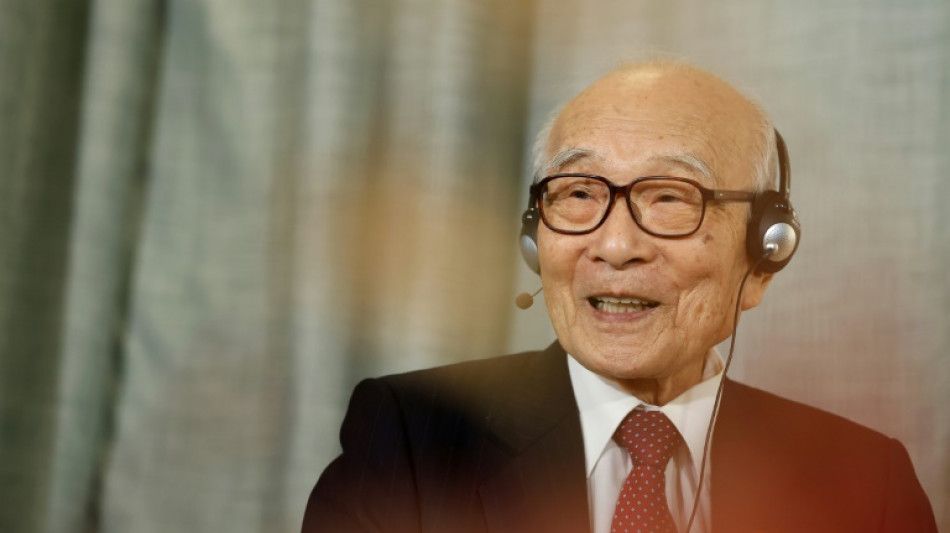
Japan's atomic bomb survivors to accept Nobel Prize in Oslo / Photo: © AFP

 Battling Norrie survives match point to oust de Minaur at Montreal
 Venezuela's political transition talks start: AFP
 Real Madrid extend Vinicius deal, sign Diomande in title bid boost

 PSG sign France midfielder Akliouche from Monaco
 CONMEBOL 'expresses concern regarding repeated unilateral actions' by FIFA
 Warren coy over whether Fury-Joshua will be in UK or US

 Taiwan blocks key bridge in drill for potential Chinese invasion
 Migrant children risk abuse on streets of Ceuta, aid groups warn

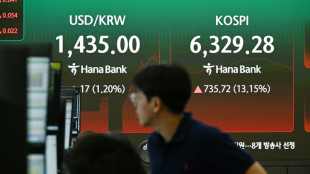 Oil price shoots up as stocks tread water

 British Grand Prix stays on MotoGP calendar until 2028
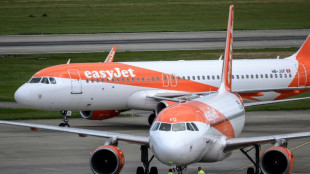 Britain's EasyJet flies into US hands as takeover confirmed
 Real Madrid sign Ivory Coast winger Yan Diomande

 How online disinformation fuelled Ceuta migrant surge
 Inevitable AI Group Raises $6M From Aleph to Launch AI-Native SaaS Companies

 Suspected Ebola death on boat heading for DR Congo capital

 England selector North not 'hung up' on Stokes absence
 UK Anti-Doping confirm former world champ Parker's ban lifted

 French winemakers dread 'smoky taste' after wildfires

 Stocks diverge with earnings, tech in focus
 England recall batsman Lawrence for Pakistan series
 Siemens shares plunge on disappointing guidance raise
 New Australia coach Kiss gives Japan starts to Ross, Amatosero

 'Stretch our money': Romanians face highest EU inflation
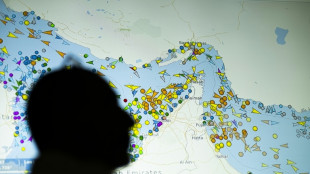 Iran says close to Hormuz plan with Oman, but reopening depends on US

 Messi scores twice to set Leagues Cup record in Miami victory
This year's Nobel Peace Prize will be presented Tuesday to Japan's atomic bomb survivors' group Nihon Hidankyo, which lobbies against the weapons now resurging as a threat 80 years after the Hiroshima and Nagasaki bombings.
The three co-chairs of Nihon Hidankyo will accept the prestigious award during a ceremony starting at 1:00 pm (1200 GMT) in Oslo's City Hall, at a time when states like Russia increasingly threaten to break the international taboo on the use of nuclear arms.
"Nuclear weapons and humanity cannot co-exist," one of the three co-chairs, Terumi Tanaka, told a press conference on Monday in the Norwegian capital.
"Humanity may come to its end even before climate change brings its devastating impacts," the 92-year-old said.
Nihon Hidankyo works tirelessly to rid the planet of the weapons of mass destruction, with testimonies from survivors of Hiroshima and Nagasaki, known as "hibakusha".
Around 140,000 people were killed in Hiroshima when the United States detonated an atomic bomb over the Japanese city on August 6, 1945.
A further 74,000 were killed by a US nuclear bomb in Nagasaki three days later.
Survivors suffered from radiation sickness and longer-term effects, including elevated risks of cancer.
The bombings, the only times nuclear weapons have been used in history, were the final blow to imperial Japan and its brutal rampage across Asia. It surrendered on August 15, 1945.
Tanaka was 13 when the bomb was dropped on Nagasaki, killing five members of his family.
On Monday, he expressed alarm at the resurgence of nuclear threats and urged Russian President Vladimir Putin to stop brandishing the threat to prevail in the war in Ukraine.
"President Putin, I don't think he truly understands what nuclear weapons are for human beings," he said.
"I don't think he has even thought about this."
- Firing signals -
Putin began making nuclear threats shortly after Russia's full-scale invasion of Ukraine in February 2022. He signed a decree in late November lowering the threshold for using atomic weapons.
Russia has the largest nuclear arsenal in the world.
On November 21, Moscow fired its new Oreshnik hypersonic missile on the Ukrainian city of Dnipro in an escalation of the almost three-year war.
The missile is designed to be equipped with a nuclear warhead, but was not in this case.
Russian Foreign Minister Sergei Lavrov said Thursday that Moscow was ready to use "any means" to defend itself.
"It is crucial for humanity to uphold the nuclear taboo, to stigmatise these weapons as morally unacceptable," the chairman of the Norwegian Nobel Committee, Jorgen Watne Frydnes, said on Monday.
"To threaten with them is one way of reducing the significance of the taboo, and it should not be done," he added.
"And of course, to use them should never be done ever again by any nation on Earth."
North Korea, which has increased its ballistic missile tests, and Iran, which is suspected of developing nuclear weapons though it denies this, are also seen as posing a threat to the West.
Nine countries now have nuclear weapons: Britain, China, France, India, North Korea, Pakistan, Russia, the United States, and, unofficially, Israel.
In 2017, 122 governments negotiated and adopted the historic UN Treaty on the Prohibition of Nuclear Weapons (TPNW), but the text is considered largely symbolic as no nuclear power has signed it.
This year's Nobel prizes in the other disciplines -- medicine, physics, chemistry, literature and economics -- will be awarded at a separate ceremony in Stockholm.
R.Adler--BTB