Cuddly Olympics mascot facing life or death struggle in the wild / Photo: © AFP

 Star Australian broadcaster faces trial for sexual assault
 Oil prices sink on Middle East hopes, yen extends gains after joint intervention

 Millions of Thais banish the booze for Buddhist Lent

 Returning to 'Ted Lasso' after break 'effortless': Hannah Waddingham

 Trump says new Iran talks set to start after calling off massive attack

 Four Al-Fayed survivors told they were trafficking victims

 Ariana Grande withdraws from London musical, seeks to 'step back'

 Sudan army drone attack on Darfur court kills 35

 At least 72 died in Spain's Ceuta migrant rush, Spain says

 Russian teen Liutova wins WTA Memphis title

 Zverev remains wary of 12-day Masters events

 Wimbledon champ Noskova ready for 'new opportunity'

 Japan's Kuwaki wins women's British Open to clinch first major title

 Sabalenka aims to bounce back in Toronto after Wimbledon disappointment

 Iran says close to Hormuz deal with Oman, after US suspends attack plan

 'Spider-Man' soars to huge $355 million opening in North America
 Handbag tosses and high-heeled sprints: Amsterdam celebrates Drag Olympics
 Trump's on-again-off-again war against Iran: in his own words

 Dodgers land Tigers pitching ace Skubal in MLB trade deadline blockbuster

 Infantino struggling to survive, says former IOC marketing chief
 OPEC+ boosts September production by 188,000 barrels/day
 Rescuers recover climber Nirmal Purja's body after avalanche disaster

 Fire toll mounts in Greece as blazes spread
 Sri Lanka deploys troops after prison riot
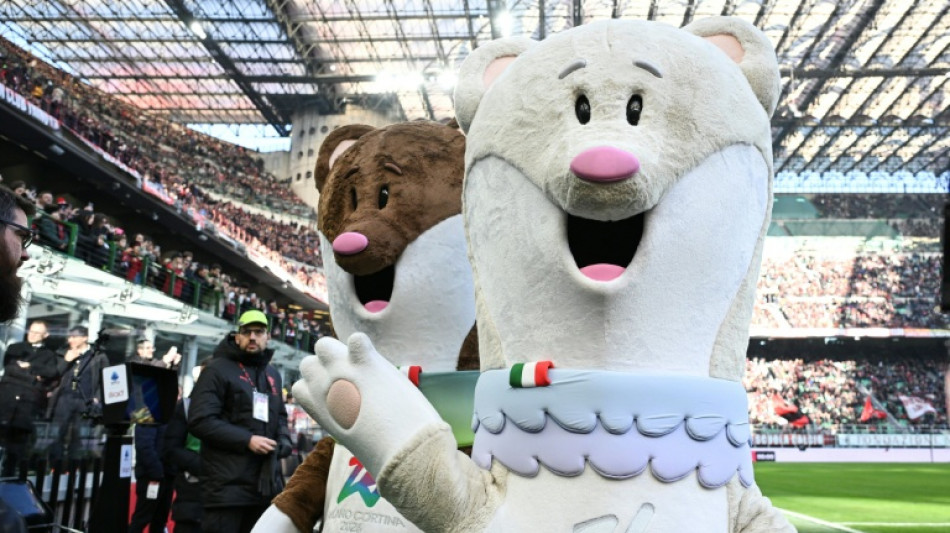
Tina and Milo, the ermine and stoat mascots of the upcoming 2026 Olympic Games in Italy, are already everywhere -– smiling on stuffed animals, posters, mugs and T-shirts.
But it's another story for their real-life counterparts –- living out of sight and under pressure in the Alps as their snow cover slowly melts away due to climate change.
Ermines and stoats are the same animal -- mustela erminea -- but with the ermine sporting its white winter coat and the stoat its brown one for summer. And while they might be the face of the Olympics, they're disappearing in Italy's Alps, according to the country's only dedicated ermine researcher.
Since 2022, University of Turin doctoral student Marco Granata has been single-handedly monitoring the sinewy, hard-to-spot mammals who inhabit the same mountain peaks where the games will take place, high in the snowy Italian Alps where their winter coats camouflage them from predators.
"The ermine is like a wild ghost. It's a small, elusive animal," Granata told AFP.
"What makes it so interesting to me is the fact that it risks disappearing from entire mountains."
- Easy targets -
The small mammal's ability to molt -- its brown coat turning to white in November -- is what Granata calls a "super power" that's allowed it to survive for thousands of years.
But now it's a liability.
"The ermine faces a mismatch when it finds itself completely white in a world that should be white but is no longer so," Granata said.
Snow cover in the Italian Alps has decreased by half in the last 100 years, according to a study published in December 2024 in the International Journal of Climatology.
With their snow camouflage gone, the white ermines now stand out starkly against their mountain backdrop, becoming easy targets for predators such as hawks, owls or foxes.
Another problem awaits when the energetic carnivores climb to higher altitudes in search of snow -- a lack of prey.
While the ermines are compelled to ascend, the snow voles and mice they depend upon for food have no need to do so, as they don't change colour.
Ski slopes also encroach on ermine habitat because of "competition for the areas where it snows the most," Granata said.
His research predicts ermine habitat in the Italian Alps will decrease by 40 percent by 2100, with ermines forced to climb by an average of 200 metres and the voles staying put.
There is little fuss made in Italy over ermines, which were once heavily hunted for their white pelts to adorn royal ceremonial robes. Scientists have paid them scant attention in recent decades, given the difficulty of gathering data on the fast-moving creatures.
The International Union for Conservation of Nature (IUCN), the world's largest environmental network, last classified the ermine in 2015 as of "least concern" on a list of potentially threatened species.
But that influential list is out of date, argues Granata, who hopes his research will lead to their protection.
"The fact that a doctoral student is the expert on a species shows how little attention has actually been paid to this species," he said.
- 'Invisible world' -
Every fall, Granata hikes Italy's Maritime Alps placing special camera traps -- plastic boxes with a motion-triggered camera inside -- that help him analyse the animal's seasonal patterns.
"You have to think like an ermine," he said, placing the box in areas where the curious mammal might go to find food.
When the snow melts, Granata collects the data from inside the boxes and watches a season's worth of videos and photos.
"It's like unwrapping a gift because you don't know what's inside... you actually see this invisible world," he said.
In one August video, an energetic stoat twists, sniffs and darts around in constant motion as he explores the box.
In October, after learning of the Games' choice of mascot, Granata launched an appeal to the Milano Cortina organisers, asking their sustainability team to help fund university research.
This week they sent a letter declining, which Granata considers a "huge missed opportunity".
The ermine, he said, isn't "just a cute little animal that roams our mountains, but a wild animal at risk of extinction".
M.Odermatt--BTB