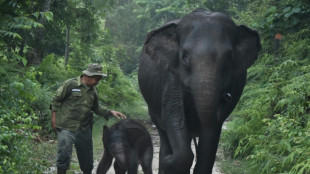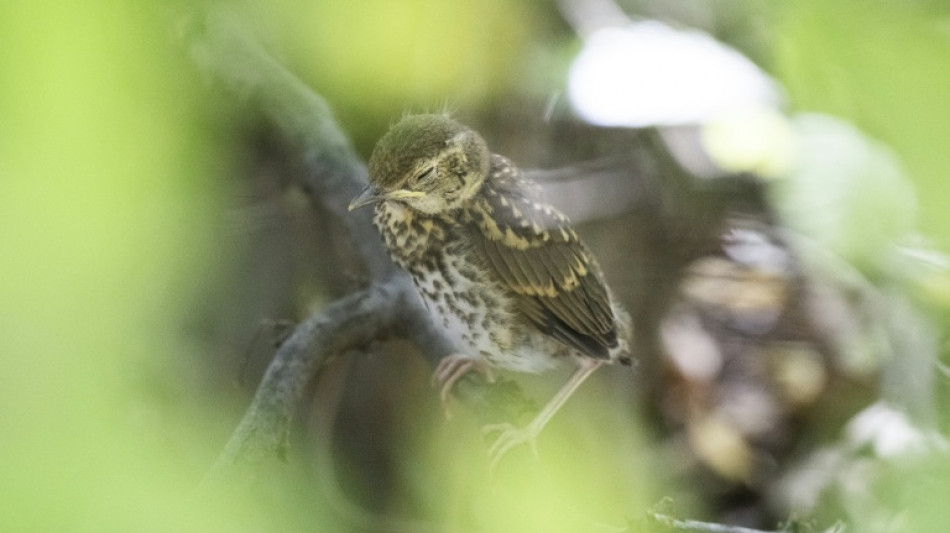
From birds to fish, how extreme heat causes wildlife to suffer / Photo: © AFP/File

 Carrick takes the blame as troubled Man Utd suffer League Cup misery

 Barcelona hit seven in Racing Santander rout

 Amorim's Milan beaten by Benfica, Sunderland make dream European return

 US stocks fall, dollar gains after Fed lifts interest rates

 Seahawks rule out Darnold for Sunday game at Arizona

 Mbappe explains Ceuta shirt stance after criticism

 Improving Atletico cruise to comfortable win over Osasuna

 Candidate for UN chief calls for AI regulation akin to nuclear weapons

 O'Neill expects Celtic recovery after Old Firm misery

 Man City midfield trio backed to emulate Rodri and Silva

 'We're losing control,' AI pioneer Yoshua Bengio tells AFP

 WHO eyes 'encouraging' signs in DRCongo fight against Ebola

 Liga boss criticises Real Madrid trio for Ceuta shirt incident

 WTA Finals moved to Charlotte from 2027

 Almost 8,000 excess deaths in France's scorched summer: statistics

 Ex-president's lengthy war crimes sentence shocks Kosovo

 US House faces test on sweeping Russia sanctions bill

 British PM says to make 'difficult decisions' as inflation rises

 TotalEnergies pumps up controversy in France with cut-price gas

 Global fuel price demos: a round-up

 Leverate Launches MCP for Traders to Connect AI Assistants With Trading Platforms

 MEXC Launches $1M "Discover Your Wall Street DNA" Campaign to Help Traders Find Their Market Fit
 Emporio Armani names Dario Vitale new creative director

 Maresca defends VAR officials after Man City benefit from error

 Courts jails LGBTQ activists as Turkey crackdown widens

Like humans, wildlife is increasingly vulnerable as climate change fuels longer and more intense heatwaves, disrupting feeding and breeding, and in extreme cases proving fatal.
The human toll of heatwaves is well documented but their ecological impacts have received less attention.
A study published in March in the journal Nature Ecology and Evolution found that three-quarters of land and ocean species assessed were "negatively impacted" during a major 2021 heatwave across western North America.
Heatwaves can be "brutal" on wildlife, said Gregoire Lois, an ornithologist at the National Museum of Natural History in Paris, which is withering under its second heatwave of the year.
Animals have fewer opportunities to adapt during sudden heatwaves than under gradual warming, he told AFP.
- Birds -
Birds are particularly vulnerable to heat, with a body temperature of between 39C and 42C that rises further during flight or when foraging.
They also lack sweat glands, making it harder to dissipate heat when temperatures soar.
Instead, they cool down through evaporation via their respiratory tracts, a water-intensive mechanism that increases the risk of heat stress and dehydration.
Young birds, still in the nest and unable to fly during the summer heat, are particularly vulnerable.
"The young, suffocating from the heat, sometimes fall from the nest whilst searching for air," said the League for the Protection of Birds, a French wildlife NGO.
Birds that nest under eaves -- such as swifts and swallows -- are most at risk, added.
- Mammals -
Vertebrates regulate their body temperature through panting or sweating but that process "results in greater water loss the smaller the animal is", said Lois.
Anne-Laure Dugue, from the league's 'fauna in distress' programme, said the risk of hyperthermia or dehydration was particularly significant among hedgehogs and certain small rodents.
Mass bat die-offs have been recorded during heatwaves as animals become disoriented and dehydrated.
In January 2026, thousands of flying foxes perished during a heatwave in south-eastern Australia.
Large mammals are not spared either: for species adapted to the cold -- such as bears, bison, reindeer and moose -- their thick fur becomes a hindrance when temperatures rise.
Exposure to even a week of 27C daytime highs greatly increases the chance of koala illness or death, concluded a study of 20 years of observational data published in Biology Letters in May.
Other species like foxes can suffer burns to their paws when they come into contact with scalding surfaces such as tarmac or sand.
- Invertebrates -
Most invertebrates are ectothermic, meaning that their body temperature depends largely on their environment.
Lois said the consequences can be "severe" when their thermal tolerance limit is exceeded.
This is particularly true as their movement is often limited, and sometimes nonexistent. In 2021, during a widespread heatwave in the North Pacific, more than a billion mussels, clams and starfish perished.
- Fish -
In fish, high temperatures reduce the oxygen available in the water while increasing their physiological needs, which can lead to heat stress, disease, reproductive disruption and, in some cases, mass mortality.
During a heatwave across Europe in August 2018, a tonne of fish was found dead in the River Rhine across three Swiss cantons.
- Amphibians and reptiles -
Highly dependent on moisture, frogs, toads and newts suffer during heatwaves, particularly if their watery habitats are parched by drought.
Their permeable skin makes them highly susceptible to dehydration. During heatwaves, they lose water more easily and risk drying out if the humid conditions necessary for their survival are no longer present.
Their reproduction can also be severely affected, particularly when spawning grounds dry out prematurely.
Reptiles like lizards and snakes are not immune either.
They do not regulate their body temperature internally, so must severely restrict their activities during hot spells, threatening their ability to hunt for food.
"Sometimes, as an adaptation strategy, they will become nocturnal... The problem is that prey and food resources are not necessarily active at the same times," said Lois.
R.Adler--BTB