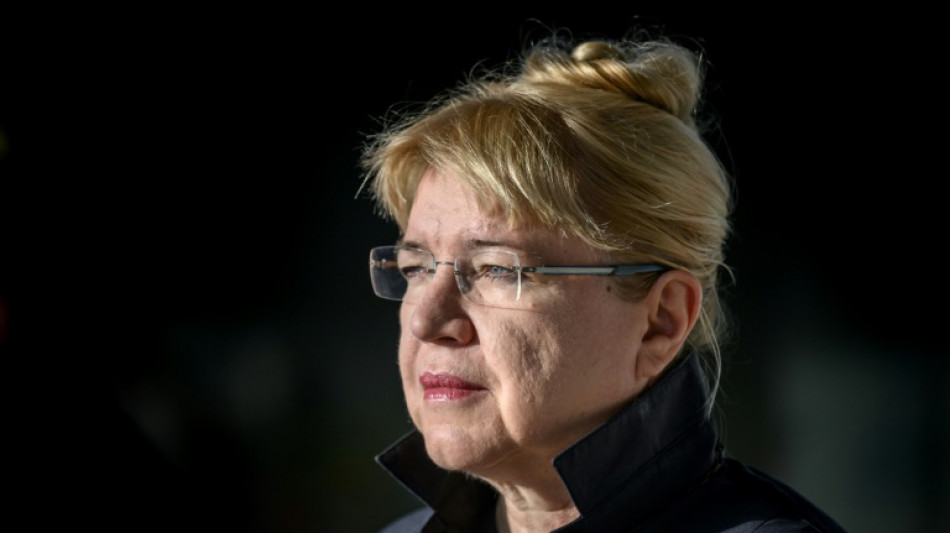
'Small courageous steps': Memorial opposing oppression in Russia / Photo: © AFP

 Suspected heatstroke kills three lions at Japan zoo
 Stocks mixed as Seoul stabilises, oil prices rise with eyes on Mideast
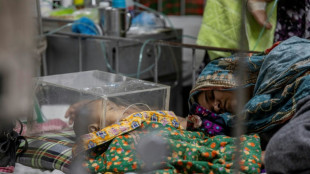
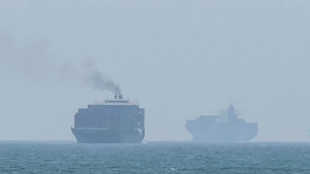 Trapped by war, Bangladesh seafarer recounts Gulf ordeal
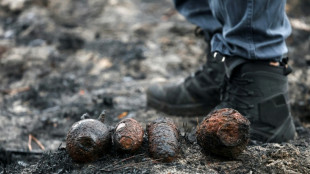 WWII shells surface in wildfire-ravaged French village
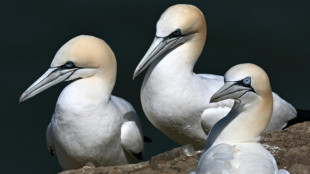 Last Scottish island bird hunt banned after almost 500 years
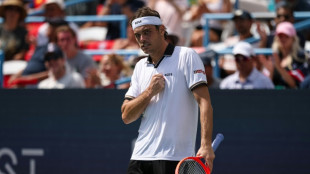 Fritz outguns Jodar to win ATP Washington title
 Major League Soccer names LAFC co-owner Berg as next commissioner
 Osaka out to improve Toronto fortunes with eye on US Open
 Dow hits fresh record as oil prices tumble
 Trump board reassures Israel after objections on Gaza pullout
 Zelensky sacks his ambassador to the US
 'Spider-Man' breaks record for domestic box office debut

 US regulators grant long-awaited Boeing 737 MAX 7 certificate
 Eala powers past Pegula for first WTA title in Washington
 Legionnaires' outbreak in Switzerland's Basel kills one, 26 ill
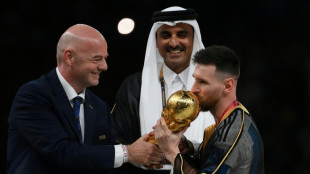 Infantino, the FIFA president under pressure after scrapped investor plan
 Young Danes start extended military service
 England, Wales had driest July on record: Met Office
 French court rejects pro-Kremlin commentator's deportation appeal

 Oil slides, stocks rise on hopes of deal to end Mideast war
 EU chief urges 'united action' on borders after Ceuta migrant rush

 Oil prices slide on hopes of deal to end Mideast war
 Dortmund sign Greek teenager Karetsas from Genk
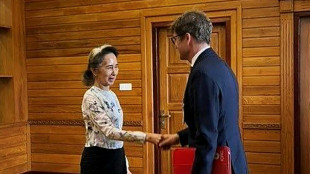 Detained Aung San Suu Kyi meets Red Cross delegate in Myanmar
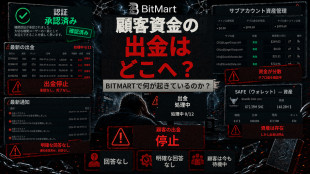
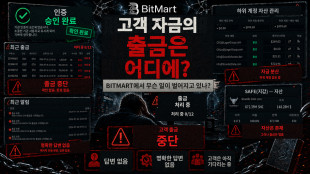 설명 압박에 직면한 BitMart: 8일이 지나도 여전히 TXID가 없는 SNC SCANDIC COIN 출금
Moscow's crackdown on Memorial has only intensified since the rights group won the Nobel Peace Prize last month, but its executive director says members are pushing on despite the dangers.
"Of course it is very difficult," Elena Zhemkova told AFP in an interview, stressing though that there had never been any question about whether or not to carry on working.
"We continue our work."
Memorial, which shared this year's Nobel Peace Prize with Ukraine's Center for Civil Liberties and detained Belarusian activist Ales Bialiatski, is the largest rights organisation in Russia.
Zhemkova said the announcement on October 7 honouring the embattled organisation she co-founded in 1989 with Andrei Sakharov -- himself the 1975 Peace Prize laureate -- had come as a complete surprise.
The 61-year-old described riding in a taxi on her way to open an exhibition when a colleague called and said something had happened and told her to "look at the news".
- Feared 'atomic bomb' -
"I couldn't imagine that we were talking about such a grand award," she said, adding that she feared "something very bad (had) happened".
"I was honestly thinking it was an atomic bomb."
When she realised that instead Memorial had won the world's most prestigious peace prize, she said she was "very glad", especially to share it with rights watchdogs from the two other nations at the centre of Moscow's war in Ukraine.
This "emphasises that people from civil society of different countries can and should fight together against evil", she said.
Russian authorities meanwhile appeared less than thrilled with Memorial's win.
The organisation, which has for decades worked to keep alive the memory of people who died in Soviet dictator Joseph Stalin's gulags, while also compiling information on ongoing political oppression in Russia, has faced a growing crackdown in recent years.
Last December, the Russian Supreme Court ordered Memorial dissolved, and just hours after the Nobel Committee's announcement on October 7, a Moscow court ordered the seizure of its headquarters.
"We received the news about the Nobel award, and then unfortunately, that day our house was taken from us," said Zhemkova.
"So this is the response of the Russian government."
- 'No heroes' -
But despite the challenges, she insisted that "we need to and we can continue our work."
Last week, Memorial was blocked from holding its annual tribute to Stalin's victims, known as the "Returning the Names" ceremony, in Moscow.
But Zhemkova pointed out that the marathon reading of the names of those killed under Stalin's regime had still taken place across 22 countries and 77 cities.
"They cannot stop our work," she said.
Inside Russia as well, she said Memorial was continuing to open exhibitions, organise excursions and "defend people's rights in court".
The Nobel win, she said, was helpful "because it is a very important sign of support".
Zhemkova, who was in Geneva to give the annual Kofi Annan Peace Address, acknowledged that she and other members of Memorial fear for their safety in Russia.
"There is a mass persecution of people and institutions which are opposing the official point of view," she said.
"Of course we are afraid... We are ordinary people."
"We are no heroes," she insisted, "but we are trying to take small courageous steps."
- 'Unlawful' -
In addition to the security risks they face, Zhemkova said she and many of her colleagues are being targeted by "unlawful and complicated criminal cases".
The Memorial chief is currently staying away from Russia, but lamented that she should not have to.
"I respect all the rules. I didn't break any laws, I am doing lawful work," she said.
But, she added, "I am against the war, and at the moment, (that) is enough to have a criminal investigation opened against you."
Asked what she thought about Russian President Vladimir Putin's actions, Zhemkova insisted: "I don't think about Putin. I am not interested in him at all."
"I am thinking about how many generations of Russians will need to pay for what he did."
S.Keller--BTB