-
 Inside the Venezuelan prison meant to 'drive you insane'
-
Trump to tout deals, defend Iran war in UN speech

-
 UK king braces as memoir by Diana's brother goes on sale
-
Sri Lanka to issue verdict in landmark Easter attack trial

-
 No green light to lift EU sanctions on Russian oligarchs, talks to resume
-
Macron says talks with Trump on Red Sea, Ukraine 'constructive'

-
 UK agrees support for Saudi in struggle with Houthis: reports
-
Green policies just good politics, says UK minister

-
 EU foreign policy chief calls for continued sanctions on Russia
-
Bardot auction in Paris fetches nearly one million euros

-
 Flights scrapped, evacuations urged as Typhoon Dujuan wallops Japan
-
No timeline on Daniels injury return, says Commanders coach

-
 Fonseca to take break from tennis
-
British Columbia sues OpenAI in US court over Canada school shooting

-
 A Cuban zoo, and its animals, in epic battle for survival
-
French star Batum retires after 18-year NBA career

-
 Infantino proposes consulting federations to reform FIFA
-
Zidane leads first France training session

-
 El Nino weather pattern enters record territory: scientist
-
Man shot by ICE agent in Texas detained with bullet inside him: lawyer

-
 OpenAI calls for US to lead global effort on AI standards
-
California declares state of emergency ahead of El Nino

-
 South African ostriches plucked alive for luxury fashion: report
-
South Africa arrests three more suspects, after nine women murdered

-
 US networks halt Trump coverage in revolt over White House ban
-
Carse needs time away from England, says captain Brook

-
 Paramount settles with US states to clear Warner Bros. mega-merger
-
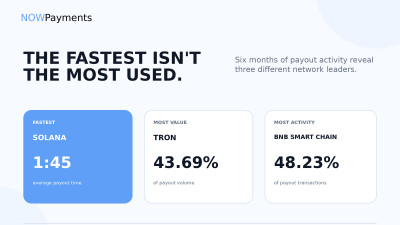
NOWPayments Releases Cross-Chain Payout Data Revealing Key Performance Benchmarks Across TRON, BNB Chain, and Solana
-
 Climate crisis a job for world leaders, not just activists: UK FM
-
British Museum bans photos of Bayeux Tapestry as crowds linger

-
 US networks halt Trump coverage over White House ban
-
COP31 host says AI climate footprint to be a summit priority

-
 French singer accuses Miley Cyrus of plagiarism
-
Berlin's far-left vote winners reject anti-semitism charges

-
 EU fines Google 403 mn euros for location data breach
-
Mancini eager for 'new adventure' on Italy return

-
 'Best is yet to come,' says De la Fuente after Spain extension
-
Mbappe says having Zidane as France coach 'like a film'

-
 Why diesel prices are rising more than crude oil
-
Palmer, Rice out of England Nations League squad

-
 COP31 host says AI's climate footprint to be a summit priority
-
German auto workers stage mass protests in bid to save jobs

-
 Renewables hit record in 2025, but world must move faster: report
-
Embattled Merz vows to keep ruling for 'democratic future' of Germany

-
 US media outlets to sue Trump administration after White House ban
-
Merz vows to keep ruling coalition together for 'democratic future' of Germany

-
 Global stocks rally on lower oil prices, US-China hopes
-
Spain coach De la Fuente gets new deal after World Cup success

-
 EU proposes energy rating for data centres
-
Pressure grows on Germany's Merz after election defeats

Boomers: Selfish or Scapegoats?
The debate over whether the Baby Boomer generation—those born between 1946 and 1964—deserves the label of "the most selfish generation in history" has intensified in recent years. Critics argue that Boomers have prioritised their own comfort and prosperity at the expense of future generations, while defenders point to their contributions to social progress and economic growth. This article explores both sides of the argument, drawing on economic, social, and cultural factors to assess the validity of the claim.
A Generation of Prosperity
The post-World War II era was a time of unprecedented economic growth, particularly in Western nations. Boomers grew up in a period of relative stability and prosperity, benefiting from expanding educational opportunities, affordable housing, and a booming job market. This generation was the first to enjoy the fruits of modern consumer culture, with access to new technologies, healthcare advancements, and a welfare state that provided a safety net. However, this prosperity has been criticised as a double-edged sword. While Boomers thrived, they are accused of failing to address long-term challenges such as climate change, economic inequality, and the sustainability of social security systems. The argument goes that their focus on short-term gains has left younger generations—particularly Millennials and Generation Z—facing a future of environmental degradation, housing crises, and precarious employment.
The Burden of Debt
One of the most frequently cited examples of Boomer selfishness is their approach to public debt. Over the past few decades, national debts have soared in many countries, driven by policies that prioritised tax cuts, increased spending on entitlements, and economic stimulus measures. Critics argue that Boomers, who have held political and economic power during this period, have been complicit in passing on this financial burden to future generations. The rising cost of healthcare, pensions, and social security, combined with stagnating wages for younger workers, has fuelled resentment. In some nations, national debt has increased dramatically since the turn of the century, a period during which Boomers dominated leadership positions. This fiscal irresponsibility, some argue, reflects a generational disregard for the future.
The Housing Divide
Housing is another area where Boomers are accused of hoarding wealth. In many developed countries, property prices have skyrocketed, making homeownership increasingly unattainable for younger generations. Boomers, who bought homes when prices were relatively low, have seen their property values soar, creating a wealth gap that is difficult for Millennials and Gen Z to bridge. Over the past few decades, average house prices have risen significantly while wages have remained largely stagnant. This has led to accusations that Boomers have pulled up the ladder behind them, benefiting from policies that favoured property ownership while younger generations are left renting or struggling to save for deposits.
A Legacy of Progress
However, it would be unfair to paint the entire generation with the same brush. Boomers have also been responsible for significant social progress. The civil rights movements of the 1960s and 1970s, which fought for racial equality, gender rights, and LGBTQ+ inclusion, were largely driven by Boomer activists. Their contributions to technology, healthcare, and education have also been transformative. The digital revolution, which laid the foundation for the modern internet and communication technologies, was spearheaded by Boomer innovators. Moreover, many Boomers have engaged in philanthropy and community service, challenging the notion that they are universally selfish.
Generational Perceptions
Another important factor to consider is the role of generational differences in shaping perceptions of selfishness. Younger generations, facing economic uncertainty and environmental crises, may view Boomers' actions through a lens of frustration. However, it is worth noting that every generation has faced criticism from its successors. The Silent Generation, who preceded the Boomers, were often derided for their conformity and conservatism, while Millennials have been labelled as entitled and overly reliant on technology. This cyclical nature of generational criticism suggests that the "selfish" label may be more a reflection of changing societal values than an objective truth.
Structural Influences
Furthermore, the accusation of selfishness overlooks the structural factors that have shaped Boomer behaviour. The economic policies of the late 20th century, particularly the rise of neoliberalism, encouraged individualism and short-term thinking. Boomers, like all generations, were influenced by the prevailing ideologies of their time. The shift towards deregulation, privatisation, and globalisation was not solely a Boomer creation but a broader political and economic trend. To single out Boomers as uniquely selfish ignores the complex interplay of historical forces that have shaped modern society.
Conclusion
In conclusion, while there is evidence to suggest that the Boomer generation has benefited disproportionately from economic and social conditions, labelling them as "the most selfish generation in history" is an oversimplification. Their contributions to social progress and innovation cannot be ignored, nor can the structural factors that have influenced their behaviour. The intergenerational debate is likely to continue, but it is essential to approach it with nuance, recognising that each generation operates within the constraints and opportunities of its time.

Will US Forces Invade Iran?

Cuba Strangled by US Pressure

Power at the Heart of Iran

Argentina reshapes oil

EU misstep on mercosur Deal

India defies U.S. tariffs

AI sparks Wall Street panic

EU India deal gains unveiled

Japan’s right‑turn triumph

U.S. Jobs stall, gdp slows

Strike fears rise over Iran