-
 Typhoon Dujuan leaves four dead in Japan, 45,000 houses without power
-
Swimming prodigy Yu, 13, says 'interviews way harder than racing'

-
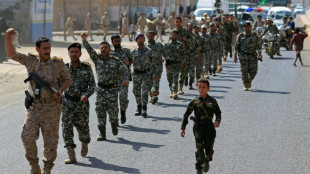 G7 leaders condemn Houthi strikes on Saudi Arabia
-
Star coaches make their bows as Nations League returns

-
 Google data centre sparks protests in Austria
-
Rams bounce back as Giants reel from Dart injury

-
 Shin Ohashi: Junk food-loving teen and Japan's next big swimming hope
-
In Bangladesh, Pakistan's Jinnah photo stirs anger

-
 Stocks rise on AI buzz, drop in oil prices
-
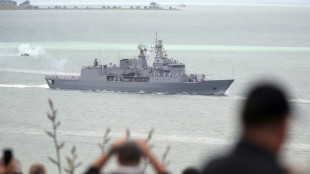
Two New Zealand naval ships transit Taiwan Strait
-
 China's robot dancers limber up for America's Got Talent final
-
Zidane gets down to work as France start new era

-
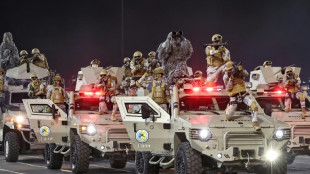 Despite military might, Saudi struggles to crush the Houthis
-
Inside the Venezuelan prison meant to 'drive you insane'

-
 Trump to tout deals, defend Iran war in UN speech
-
UK king braces as memoir by Diana's brother goes on sale

-
 Sri Lanka to issue verdict in landmark Easter attack trial
-
Akkodis and Hamburg Public Transport Association Showcase hvv mia at InnoTrans 2026, Demonstrating the Future of AI-Powered Mobility

-
 No green light to lift EU sanctions on Russian oligarchs, talks to resume
-
Macron says talks with Trump on Red Sea, Ukraine 'constructive'

-
 UK agrees support for Saudi in struggle with Houthis: reports
-
Green policies just good politics, says UK minister

-
 EU foreign policy chief calls for continued sanctions on Russia
-
Bardot auction in Paris fetches nearly one million euros

-
 Flights scrapped, evacuations urged as Typhoon Dujuan wallops Japan
-
No timeline on Daniels injury return, says Commanders coach

-
 Fonseca to take break from tennis
-
British Columbia sues OpenAI in US court over Canada school shooting

-
 A Cuban zoo, and its animals, in epic battle for survival
-
French star Batum retires after 18-year NBA career

-
 Infantino proposes consulting federations to reform FIFA
-
Zidane leads first France training session

-
 El Nino weather pattern enters record territory: scientist
-
Man shot by ICE agent in Texas detained with bullet inside him: lawyer

-
 OpenAI calls for US to lead global effort on AI standards
-
California declares state of emergency ahead of El Nino

-
 South African ostriches plucked alive for luxury fashion: report
-
South Africa arrests three more suspects, after nine women murdered

-
 US networks halt Trump coverage in revolt over White House ban
-
Carse needs time away from England, says captain Brook

-
 Paramount settles with US states to clear Warner Bros. mega-merger
-
NOWPayments Releases Cross-Chain Payout Data Revealing Key Performance Benchmarks Across TRON, BNB Chain, and Solana

-
 Climate crisis a job for world leaders, not just activists: UK FM
-
British Museum bans photos of Bayeux Tapestry as crowds linger

-
 US networks halt Trump coverage over White House ban
-
COP31 host says AI climate footprint to be a summit priority
-
 French singer accuses Miley Cyrus of plagiarism
-
Berlin's far-left vote winners reject anti-semitism charges

-
 EU fines Google 403 mn euros for location data breach
-
Mancini eager for 'new adventure' on Italy return

Russia's Drone ploy in Poland
Poland’s downing of multiple Russian drones that violated its airspace in the night of September 9–10 was not a random spillover from the war in Ukraine. The scale, timing and flight profiles point to a deliberate probe designed to test NATO’s vigilance, rules of engagement and political cohesion — a calibrated move that stayed just below the threshold for a mutual‑defense response while forcing the Alliance to reveal parts of its playbook.
A multi‑hour incursion, met with allied force
Over several hours, Polish and allied aircraft intercepted and shot down drone‑type objects crossing into Polish territory from the east. It was the first time in the current war that a NATO member engaged and destroyed Russian assets over allied soil. Authorities temporarily shut parts of Poland’s airspace and closed several airports; damage on the ground was limited — including a residential house struck in the Lublin region — and no casualties were reported. Officials recorded at least 19 incursions.
Why the operation looks planned — not accidental
1) Synchronization with mass strikes on Ukraine
The crossings coincided with a large, coordinated Russian wave against Ukraine involving hundreds of drones alongside cruise and ballistic missiles. Pairing a cross‑border incursion with a high‑tempo strike package is consistent with a playbook aimed at saturating sensors, overloading command centers and creating ambiguity about intent. In such windows, “strays” can be plausibly denied even as they gather intelligence and trigger costly responses.
2) Routes that matter
Preliminary trajectory analysis noted flight paths consistent with probing Poland’s critical logistics chain — above all the Rzeszów hub through which military aid flows to Ukraine. Even a small number of slow, inexpensive aircraft can force high‑end assets into the air, compel temporary airport closures and expose the Alliance’s alert timeline and coordination procedures.
3) Use of low‑cost and decoy‑like systems
Polish officials identified at least some of the intruding airframes as long‑range, low‑cost drones of a type Russia has used extensively. Such platforms are ideal for reconnaissance by provocation: they can map radar coverage, provoke emissions from air‑defense radars and fighters, and stress decision‑making — all with negligible risk to Russian aircrews and minimal political cost if shot down.
4) Cover from neighboring exercises and electronic warfare narratives
The incursion occurred as Russia and its ally Belarus prepared major exercises. That backdrop provides plausible deniability and alternative explanations (“lost course,” “jamming effects”) even as it positions assets near NATO borders and normalizes unusual air activity.
5) Testing NATO’s political seams
Warsaw publicly rejected suggestions that the drones might have wandered into Poland “by mistake,” framing the event as deliberate. Differences in early public messaging among allies are analytically notable: they are exactly the fissures that probing operations seek to widen — without triggering Article 5.
The allied answer — and what it signals
Poland activated NATO consultations and, within forty‑eight hours, the Alliance announced Operation Eastern Sentry, a flexible, integrated air‑and‑ground posture along the eastern flank. Additional fighters, surveillance platforms and air‑defense units from several member states are being positioned to rotate and adapt along the border arc — an approach designed to keep adversaries guessing while tightening reaction loops.
Domestically, Poland imposed drone bans and restrictions on small aircraft in its eastern airspace and moved to harden critical nodes. Border measures with Belarus were stepped up. Internationally, an emergency session of the U.N. Security Council was convened at Warsaw’s request. European capitals summoned Russian envoys and signaled further steps on sanctions and air‑defense cooperation. Ukraine, with two years of hard‑won counter‑drone expertise, offered to deepen technical training ties with Poland.
Strategic takeaways
- Probing as doctrine. Russia’s war has demonstrated a systematic reliance on massed, low‑cost drones to saturate defenses, expose gaps and harvest targeting and EW data. Exporting that method into NATO airspace — in controlled doses — is a logical extension.
- Ambiguity as a weapon. Unarmed or lightly modified drones crossing borders create maximum political friction for minimum military risk. They pressure alliances to choose between escalation and restraint, while providing Moscow with deniability narratives.
- Deterrence requires tempo. The Alliance’s swift shoot‑downs, rapid consultations and the launch of Eastern Sentry are meant to raise the cost of future probes, deny intelligence value and compress decision time. The next phase will be about integrating layered counter‑UAS systems, improving cross‑border command‑and‑control and hardening civilian aviation procedures along the frontier.
Bottom line:
The pattern — timing with mass strikes, purposeful routing toward critical hubs, employment of expendable platforms, and orchestration under the cover of concurrent exercises — supports the assessment that the drone violations over Poland were a planned strategic probe. The Alliance’s response will now determine whether such tests become rarer — or more audacious.

Germany: Migration reform package

DeepSeek: The AI everyone is talking about...

Brazil tests Milei’s gamble

India's island choke point

China’s lithography leap

Hormuz Shock Risk rising
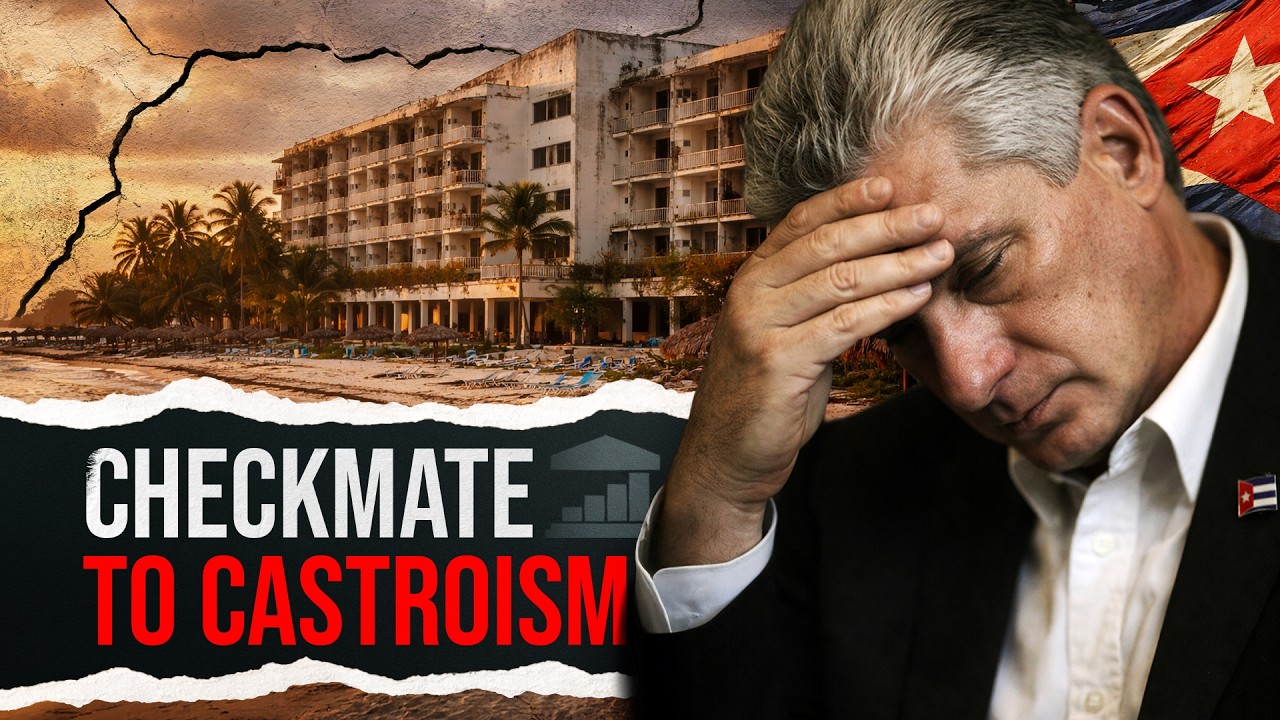
Cuba's golden Goose dies

AI sparks Wall Street panic

EU misstep on mercosur Deal

Argentina reshapes oil

Power at the Heart of Iran