-
 UK agrees support for Saudi in struggle with Houthis: reports
-
Green policies just good politics, says UK minister

-
 EU foreign policy chief calls for continued sanctions on Russia
-
Bardot auction in Paris fetches nearly one million euros

-
 Flights scrapped, evacuations urged as Typhoon Dujuan wallops Japan
-
No timeline on Daniels injury return, says Commanders coach

-
 Fonseca to take break from tennis
-
British Columbia sues OpenAI in US court over Canada school shooting

-
 A Cuban zoo, and its animals, in epic battle for survival
-
French star Batum retires after 18-year NBA career

-
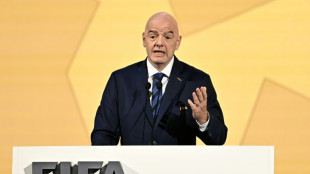 Infantino proposes consulting federations to reform FIFA
-
Zidane leads first France training session

-
 El Nino weather pattern enters record territory: scientist
-
Man shot by ICE agent in Texas detained with bullet inside him: lawyer

-
 OpenAI calls for US to lead global effort on AI standards
-
California declares state of emergency ahead of El Nino

-
 South African ostriches plucked alive for luxury fashion: report
-
South Africa arrests three more suspects, after nine women murdered

-
 US networks halt Trump coverage in revolt over White House ban
-
Carse needs time away from England, says captain Brook

-
 Paramount settles with US states to clear Warner Bros. mega-merger
-
NOWPayments Releases Cross-Chain Payout Data Revealing Key Performance Benchmarks Across TRON, BNB Chain, and Solana

-
 Climate crisis a job for world leaders, not just activists: UK FM
-
British Museum bans photos of Bayeux Tapestry as crowds linger

-
 US networks halt Trump coverage over White House ban
-
COP31 host says AI climate footprint to be a summit priority
-
 French singer accuses Miley Cyrus of plagiarism
-
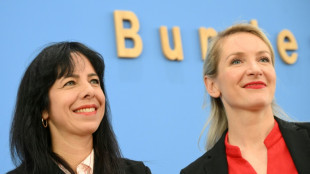
Berlin's far-left vote winners reject anti-semitism charges
-
 EU fines Google 403 mn euros for location data breach
-
Mancini eager for 'new adventure' on Italy return

-
 'Best is yet to come,' says De la Fuente after Spain extension
-
Mbappe says having Zidane as France coach 'like a film'

-
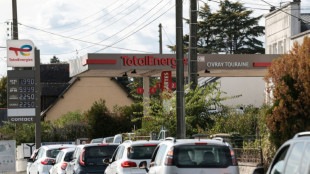 Why diesel prices are rising more than crude oil
-
Palmer, Rice out of England Nations League squad

-
 COP31 host says AI's climate footprint to be a summit priority
-
German auto workers stage mass protests in bid to save jobs

-
 Renewables hit record in 2025, but world must move faster: report
-
Embattled Merz vows to keep ruling for 'democratic future' of Germany
-
 US media outlets to sue Trump administration after White House ban
-
Merz vows to keep ruling coalition together for 'democratic future' of Germany
-
 Global stocks rally on lower oil prices, US-China hopes
-
Spain coach De la Fuente gets new deal after World Cup success

-
 EU proposes energy rating for data centres
-
Pressure grows on Germany's Merz after election defeats

-
 Schoolgirl Yu scorches to second gold as doping case rocks Games
-
China's Zhang beats Japan rivals to Asian Games gymnastics gold

-
 Putin's party secures record score in Russia election
-
Samlingen Haupt: Vad pengar avslöjar om oss människor

-
 Haupt Koleksiyonu: Paranın Biz İnsanlar Hakkında Anlattıkları
-
Tens of thousands of German auto workers protest to save jobs

Pension crisis engulfs France
In autumn 2025 the long‑running battle over France’s retirement system morphed from a fiscal headache into an existential crisis. After years of protests and political upheavals, the government admitted that its flagship 2023 pension reform had failed to plug the funding gap. Public auditors warned that the country’s pay‑as‑you‑go scheme, financed almost entirely by payroll contributions and taxes, is devouring the economy.
A February 2025 report from the Cour des Comptes, the national audit office, found that the pension system spends almost 14 % of gross domestic product on benefits—four percentage points more than Germany. Those contributions produced an average monthly pension of €1 626 and gave retirees a living standard similar to that of working people. French pensioners not only enjoy one of Europe’s highest replacement rates but also have one of the lowest poverty rates (3.6 %). The generosity comes at a price: the same audit calculated that the deficit across the various pension schemes will widen from €6.6 billion in 2025 to €15 billion by 2035 and €30 billion by 2045, adding roughly €470 billion to public debt. Raising the retirement age to 65 would help, but even that would yield only an extra €17.7 billion a year.
The French model dates from the post‑war social contract, when four or five workers supported each pensioner. The demographic ratio has now fallen below two, and the number of pensioners is projected to rise from 17 million today to 23 million by 2050. Two‑thirds of the resources allocated to pensions already come from social security contributions, supplemented by a growing share of taxes. Employers’ labour costs are inflated because 28 % of payroll goes to pensioners, making French industry less competitive. Pensions absorb about a quarter of government spending, more than the state spends on education, defence, justice and infrastructure combined.
Reform fatigue and political paralysis
Successive administrations have tried to curb the rising bill but have been derailed by street protests and parliamentary rebellions. In April 2025 the Cour des Comptes bluntly warned that keeping the system unchanged is “impossible”; it argued that people must work longer and that pensions should be indexed more closely to wages rather than inflation. The 2023 reform, which is supposed to raise the statutory retirement age gradually from 62 to 64 by 2030, barely maintained balance until 2030 and did nothing to close the long‑term gap. When the government sought to postpone a routine pension hike to mid‑2025 to save €4 billion, opposition parties branded the proposal a theft from the elderly. Marine Le Pen’s far‑right National Rally and other groups blocked the measure, and even ministers within the governing coalition disavowed it. A 5.3 % pension increase granted in January 2024 to protect retirees from inflation cost €15 billion a year, wiping out most of the savings from pushing back the retirement age.
Popular resistance is fuelled by the fact that French workers already retire earlier than almost anyone else in the European Union. Although the legal age is now 62, the effective retirement age is only 60.7 years. OECD data show that French men spend an average of 23.3 years in retirement, far longer than in Germany (18.8 years). The low retirement age and high replacement rate mean pensions replace a larger share of pre‑retirement income than in most countries. With a median voter now in their mid‑40s, governments have little incentive to antagonise older voters, leading to what economists call a “demographic capture” of democracy. Reforms are generally adopted only when markets force governments’ hands—Greece, Portugal and Sweden passed painful changes under the threat of financial collapse.
Economic consequences
France’s public finances are straining under the weight of pension obligations. The country’s debt reached 114 % of GDP in June 2025, and interest payments are projected to exceed €100 billion by 2029, becoming the single largest budget item. In September 2025 Fitch downgraded France’s credit rating to A+, citing the lack of a clear plan to stabilise the debt. Political instability has made matters worse: Prime Minister François Bayrou was ousted in a no‑confidence vote in September after proposing a €44 billion deficit‑cutting plan. His successor, Sebastien Lecornu, immediately suspended the 2023 pension reform until after the 2027 presidential election, effectively throwing fiscal prudence out of the window to preserve his government. Investors now demand a higher risk premium on French bonds than on those of Spain or Greece.
The escalating pension bill is crowding out spending on education, infrastructure and innovation, sapping France’s potential for future growth. Economists warn that the longer reform is delayed, the more abrupt and painful it will need to be. Raising the retirement age beyond 65, modifying the generous indexation to inflation, broadening the tax base and encouraging more people to work past 55 are options that could restore sustainability. Without such measures, the pension system will continue to devour the nation’s finances, leaving younger generations to shoulder an ever‑heavier burden.
Conclusion
France’s pension crisis is not unique in Europe, but its scale and political toxicity are. The system reflects a post‑war social contract that promised long, comfortable retirements financed by ever‑fewer workers. That contract is now broken. Auditors, economists and even some politicians agree that the status quo is unsustainable and that tough choices lie ahead. Yet the clash between an ageing electorate intent on defending its privileges and a political class unwilling to tell voters hard truths has created an impasse. Unless France confronts its demographic realities and curbs the generosity of its pension system, the country will remain caught in a fiscal doom loop where pensions devour its economy and there is nothing to be done—until the markets force change.

Россия: Тайна диктатора Путина

Россия: Путин - свинья мира или радости пропаганды убийств

Ukrainian army destroys Russian terror scum!

Россия: Преступная "спецоперация" на Украине идет не по плану

Россия: Власть психует и чувствует неуверенность

Военный преступник России Путин не изменит судьбу человечества!

Россия: Военный преступник Владимир Путин на фронте войны

Russian Bastards murder defenceless children in Ukraine

Россия: Военные преступники Путин заберёт на войну всех

Тысячи погибших солдат российского террора опознаны! Свинья Пригожин теперь хочет мира?

Россия: Пропагандисты ликуют: отрезали голову!