-
 Bardot auction in Paris fetches nearly one million euros
-
Flights scrapped, evacuations urged as Typhoon Dujuan wallops Japan

-
 No timeline on Daniels injury return, says Commanders coach
-
Fonseca to take break from tennis

-
 British Columbia sues OpenAI in US court over Canada school shooting
-
A Cuban zoo, and its animals, in epic battle for survival

-
 French star Batum retires after 18-year NBA career
-
Infantino proposes consulting federations to reform FIFA

-
 Zidane leads first France training session
-
El Nino weather pattern enters record territory: scientist

-
 Man shot by ICE agent in Texas detained with bullet inside him: lawyer
-
OpenAI calls for US to lead global effort on AI standards

-
 California declares state of emergency ahead of El Nino
-
South African ostriches plucked alive for luxury fashion: report

-
 South Africa arrests three more suspects, after nine women murdered
-
US networks halt Trump coverage in revolt over White House ban

-
 Carse needs time away from England, says captain Brook
-
Paramount settles with US states to clear Warner Bros. mega-merger

-
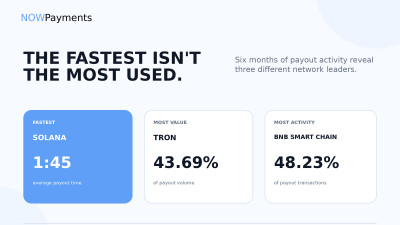 NOWPayments Releases Cross-Chain Payout Data Revealing Key Performance Benchmarks Across TRON, BNB Chain, and Solana
-
Climate crisis a job for world leaders, not just activists: UK FM

-
 British Museum bans photos of Bayeux Tapestry as crowds linger
-
US networks halt Trump coverage over White House ban

-
 COP31 host says AI climate footprint to be a summit priority
-
French singer accuses Miley Cyrus of plagiarism

-
 Berlin's far-left vote winners reject anti-semitism charges
-
EU fines Google 403 mn euros for location data breach

-
 Mancini eager for 'new adventure' on Italy return
-
'Best is yet to come,' says De la Fuente after Spain extension

-
 Mbappe says having Zidane as France coach 'like a film'
-
Why diesel prices are rising more than crude oil

-
 Palmer, Rice out of England Nations League squad
-
COP31 host says AI's climate footprint to be a summit priority

-
 German auto workers stage mass protests in bid to save jobs
-
Renewables hit record in 2025, but world must move faster: report

-
 Embattled Merz vows to keep ruling for 'democratic future' of Germany
-
US media outlets to sue Trump administration after White House ban

-
 Merz vows to keep ruling coalition together for 'democratic future' of Germany
-
Global stocks rally on lower oil prices, US-China hopes

-
 Spain coach De la Fuente gets new deal after World Cup success
-
EU proposes energy rating for data centres
-
 Pressure grows on Germany's Merz after election defeats
-
Schoolgirl Yu scorches to second gold as doping case rocks Games

-
 China's Zhang beats Japan rivals to Asian Games gymnastics gold
-
Putin's party secures record score in Russia election

-
 Samlingen Haupt: Vad pengar avslöjar om oss människor
-
Haupt Koleksiyonu: Paranın Biz İnsanlar Hakkında Anlattıkları

-
 Tens of thousands of German auto workers protest to save jobs
-
Spanish PM says unregulated AI could be 'devastating'

-
 हॉप्त् कलेक्शन: पैसा हमारे बारे में एक इंसान के रूप में क्या प्रकट करता है
-
Yu, 13, smashes record again with second Asian Games gold

AI sparks Wall Street panic
In early February 2026 the technology industry found itself at the epicentre of a historic stock‑market rout. The catalyst was not disappointing earnings or macroeconomic upheaval but the release of a suite of generative‑AI plug‑ins. Anthropic, a San Francisco‑based start‑up backed by the likes of Amazon and Google, launched new tools for its Claude Cowork agent that automate legal and administrative tasks. In demonstrations the agent drafted contracts, filed regulatory documents and answered complex finance queries. This display of competence was hailed as a triumph for AI but it triggered panic among investors.
By 4 February the sell‑off had wiped nearly $830 billion from the S&P 500 software and services index, the worst draw‑down in the sector since the Federal Reserve’s rate‑driven rout of 2022. A Goldman Sachs basket of U.S. software stocks slumped 6 % in a single session. Thomson Reuters, owner of the Westlaw legal database, fell almost 16 %, and online legal service provider LegalZoom crashed close to 20 %. Assets managed by private‑equity firms such as Ares, KKR and Blue Owl fell between three and eleven per cent. ServiceNow, Salesforce, HubSpot, Atlassian, Docusign, Asana, Workday and Adobe all suffered double‑digit declines.
What spooked investors?
The panic reflected a shift in investor perception of generative AI. For much of 2025 Wall Street treated AI as a productivity enhancer layered on top of existing software, boosting subscription models and valuations. Anthropic’s plug‑ins suggested something more disruptive. They allow a single agent to complete tasks autonomously from raw data, bypassing conventional software workflows. In the words of the Economic Times, the launch led investors to view AI as a potential replacement for entire categories of software and services. This “SaaSpocalypse” narrative posited that moats built on proprietary data or per‑seat licensing could erode rapidly.
Analysts also compared the development to Amazon’s expansion beyond books. Just as the e‑commerce giant used its distribution foothold to disrupt retailers, AI agents might use their knowledge to disrupt legal, financial and marketing service providers. The fear was exacerbated by the timing: on the same day that Anthropic’s plug‑ins appeared, OpenAI previewed updates to its Codex agent. The combined announcements fed a narrative that software is at risk of obsolescence, prompting portfolio managers to sell anything exposed to enterprise applications.
Is the reaction justified?
Not all observers share the doom‑laden view. Jensen Huang, chief executive of Nvidia, called the sell‑off “illogical”, arguing that AI agents will still rely on traditional software for tasks such as database management, accounting and compliance. Mark Murphy of JPMorgan said the idea that a plug‑in could replace every layer of mission‑critical enterprise software is an “illogical leap”. Talley Leger of The Wealth Consulting Group contended that improved AI tools could lower the cost of producing software and widen margins.
The Economic Times emphasised that proprietary datasets remain valuable. Companies like FactSet, S&P Global and Moody’s rely on continuous data collection and licensing; AI models still struggle to replicate these curated databases. The newspaper also pointed out that the sell‑off underscored a shift from per‑seat subscriptions to outcome‑based pricing models. Newer software firms and AI‑native start‑ups already charge for completed tasks rather than for user access, suggesting that incumbents may adapt rather than vanish.
Winners amid the rout
Not every technology company suffered. Semiconductor designers and cloud operators saw renewed interest. Autonomous AI agents require far more computing power than simple text‑generation models; reasoning‑heavy workloads increase demand for high‑performance accelerators. Nvidia’s GPUs, along with Amazon’s and Google’s cloud‑computing divisions, stood to gain as always‑on agents drive higher demand for data‑centre resources. Investors also looked towards physical‑world AI: robotics and autonomous mobility require pairing intelligence with machines. Tesla’s Optimus and Cybercab projects attracted attention as they represent AI beyond the digital realm.
Lessons for software investors
The panic that erased hundreds of billions of dollars from software valuations highlights two realities. First, markets are hyper‑sensitive to the idea that AI could disintermediate middlemen. Anthropic’s plug‑in release occurred just weeks after several software firms reported solid earnings. It took one product demonstration to reverse sentiment, underlining how quickly narratives shift.
Second, the sell‑off illustrates a broader debate about disruption versus augmentation. Generative‑AI agents may indeed commoditise some tasks, especially in legal research and basic data analysis. Yet the same tools could lower costs and enable new services that expand addressable markets. History suggests that productivity‑enhancing technology often enhances total demand rather than destroying it outright. The eventual winners are likely to be those companies that embrace agentic AI, reimagine pricing and focus on proprietary data or infrastructure.
Software stocks may continue to trade with heightened volatility as investors recalibrate expectations. The “SaaSpocalypse” of 2026 will be remembered less for the market value it erased than for the questions it raised about the future of software business models. Whether AI spells obsolescence or opportunity will depend on how quickly companies adapt their tools, pricing strategies and value propositions in an age of autonomous agents.

Россия: Здоровье Навального в опасности

Россия: Вагнеровцев не хотят хоронить!

Вам пришла повестка на Госуслугах. Что делать?

Россия: Людмила Путин зарабатывала на долгах

Ukraine: Bakhmut at the centre of the fight against Russia's terror?

Arms imports to Europe have risen sharply, new report finds

Russia with a big mouth but nothing behind it!

The EU and the energy crisis

Russian scum beats own soldiers

Ukraine: Russians die like fucking flies!

Antisocial Russian propaganda