-
 Zidane leads first France training session
-
El Nino weather pattern enters record territory: scientist
-
 Man shot by ICE agent in Texas detained with bullet inside him: lawyer
-
OpenAI calls for US to lead global effort on AI standards

-
 California declares state of emergency ahead of El Nino
-
South African ostriches plucked alive for luxury fashion: report

-
 South Africa arrests three more suspects, after nine women murdered
-
US networks halt Trump coverage in revolt over White House ban

-
 Carse needs time away from England, says captain Brook
-
Paramount settles with US states to clear Warner Bros. mega-merger

-
 NOWPayments Releases Cross-Chain Payout Data Revealing Key Performance Benchmarks Across TRON, BNB Chain, and Solana
-
Climate crisis a job for world leaders, not just activists: UK FM

-
 British Museum bans photos of Bayeux Tapestry as crowds linger
-
US networks halt Trump coverage over White House ban
-
 COP31 host says AI climate footprint to be a summit priority
-
French singer accuses Miley Cyrus of plagiarism

-
 Berlin's far-left vote winners reject anti-semitism charges
-
EU fines Google 403 mn euros for location data breach

-
 Mancini eager for 'new adventure' on Italy return
-
'Best is yet to come,' says De la Fuente after Spain extension

-
 Mbappe says having Zidane as France coach 'like a film'
-
Why diesel prices are rising more than crude oil

-
 Palmer, Rice out of England Nations League squad
-
COP31 host says AI's climate footprint to be a summit priority

-
 German auto workers stage mass protests in bid to save jobs
-
Renewables hit record in 2025, but world must move faster: report

-
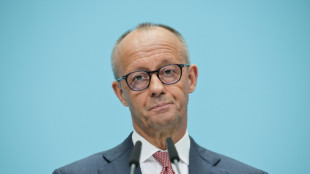 Embattled Merz vows to keep ruling for 'democratic future' of Germany
-
US media outlets to sue Trump administration after White House ban

-
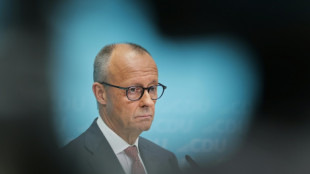 Merz vows to keep ruling coalition together for 'democratic future' of Germany
-
Global stocks rally on lower oil prices, US-China hopes

-
 Spain coach De la Fuente gets new deal after World Cup success
-
EU proposes energy rating for data centres

-
 Pressure grows on Germany's Merz after election defeats
-
Schoolgirl Yu scorches to second gold as doping case rocks Games

-
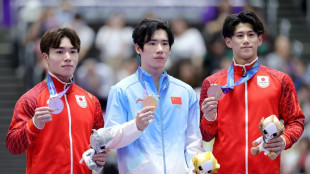 China's Zhang beats Japan rivals to Asian Games gymnastics gold
-
Putin's party secures record score in Russia election
-
 Samlingen Haupt: Vad pengar avslöjar om oss människor
-
Haupt Koleksiyonu: Paranın Biz İnsanlar Hakkında Anlattıkları

-
 Tens of thousands of German auto workers protest to save jobs
-
Spanish PM says unregulated AI could be 'devastating'

-
 हॉप्त् कलेक्शन: पैसा हमारे बारे में एक इंसान के रूप में क्या प्रकट करता है
-
Yu, 13, smashes record again with second Asian Games gold

-
 Συλλογή Haupt: Τι αποκαλύπτει το χρήμα για εμάς τους ανθρώπους
-
Switzerland to play without Xhaka over fake Covid certificate

-
 TradersYard Shifts Focus to Futures Trading
-
From Korean Chipmakers to Leveraged Semiconductor ETFs: STARTRADER Launches 49 New 24/7 Stock and ETF CFDs

-
 ハウプト・コレクション:お金が人間について明かすこと
-
Thai badminton player first doping case at Asian Games: testers

-
 하우프트 컬렉션: 돈이 우리 인간에 대해 드러내는 것
-
Колекція Гаупта: Що гроші розповідають про нас, людей

Japan’s right‑turn triumph
Japan’s electoral earthquake on 8 February 2026 signalled the end of an era of cautious centrism. Voters delivered a resounding super‑majority to Prime Minister Sanae Takaichi’s Liberal Democratic Party (LDP), handing the right‑wing leader the most decisive mandate any Japanese premier has enjoyed since the party’s formation in 1955. Exit polls and the final count put the LDP on 316 seats, well above the 261 seats needed for an absolute majority and far beyond the 300‑seat record set by Yasuhiro Nakasone four decades earlier. Together with its new ally, the Japan Innovation Party, the governing coalition now controls 352 of 465 seats in the lower house, enabling Takaichi to override the upper chamber and pursue policies once deemed politically impossible.
An electorate fed up with drift
The early election was a gamble. After becoming Japan’s first female prime minister in October 2025, Takaichi faced a fractured legislature, slumping support and a party still tainted by a slush‑fund scandal. She called a snap election only three months into the job and promised to resign if she failed to secure a majority. Voters responded not just by endorsing her but by signalling fatigue with years of timid leadership and incremental reform. Snowstorms and travel disruptions kept turnout modest — about 55.6 % — yet those who braved the weather rewarded a leader who projected strength and clarity.
Takaichi’s popularity stems from what supporters call “Sanaenomics”. The three‑pillar programme promises massive investment in national crisis management and public‑private partnerships, an expansionary fiscal policy financed by unprecedented deficit spending, and a challenge to the Bank of Japan’s independence, shifting control of monetary policy to the government. In the campaign she offered a ¥21 trillion stimulus package and pledged to suspend the 8 % consumption tax on food for two years. Such largesse unsettles investors in a country whose public debt already exceeds 230 % of GDP, but Takaichi argues that reviving growth and lifting wages require a decisive break with monetary orthodoxy.
A hard‑line agenda
Takaichi is no pragmatist in foreign and security policy. Born in 1961, she entered politics in 1996 and rose through the LDP as a nationalist firebrand. Like her mentor Shinzō Abe, she has long advocated revising Article 9 of the constitution to formalise Japan’s Self‑Defence Forces and supports further military spending. As minister for economic security she proposed restricting foreign ownership of land near strategic sites and drafted a spy‑prevention law to counter foreign interference. During the campaign she provoked Beijing by suggesting that Japan could intervene militarily should China attempt to seize Taiwan, an assertion that led China to urge its citizens to avoid Japan and to halt panda exchanges. Instead of apologising, Takaichi doubled down, and her defiance resonated with voters who fear China’s assertiveness and North Korea’s missile tests.
The landslide also reflects deep unease over immigration and social change. Japan’s foreign‑resident population is rising — officials warn it could exceed 10 % by 2040 — and Takaichi has made tighter controls a centrepiece of her platform. She wants to review foreign investment, limit property acquisitions and curtail what she calls exploitation of lax tourism visas. Yet she balances these hard‑edged views with promises of family‑friendly policies, such as tax breaks for childcare and corporate incentives to provide in‑house nurseries. She also pledges to increase women’s representation in politics but resists calls to let women ascend the imperial throne or to allow married couples to retain separate surnames.
Implications at home and abroad
With a super‑majority secure, Takaichi can now pursue her agenda without worrying about another national election until 2028. Economists warn that cutting consumption taxes and further borrowing could exacerbate currency volatility and spook markets. She faces the herculean task of reviving growth while contending with stagflation — rising prices and stagnant wages — and a rapidly ageing population. The electorate’s patience may be limited if living standards do not improve.
Internationally, Japan’s rightward turn complicates regional diplomacy. Relations with China are at a post‑Cold War low after Takaichi’s comments on Taiwan and her regular offerings to the Yasukuni Shrine, which honours Japan’s war dead and is seen in Beijing and Seoul as a symbol of militarism. At the same time, she has strengthened ties with the United States, hosting President Donald Trump in Tokyo just days after taking office. Trump congratulated her on social media for the “conservative, peace‑through‑strength agenda”, while critics warn that closer alignment with Washington could further inflame tensions with neighbours. Within Japan, the opposition’s failure to unite means Takaichi faces little organised resistance; the Centrist Reform Alliance lost half of its pre‑election seats, and smaller parties remain divided.
Where next for Japan?
The landslide that catapulted Sanae Takaichi into near‑unchallenged power is both a mandate and a warning. It shows that many Japanese are fed up with drift and are willing to embrace a hard‑line leader who promises rapid change. But it also means that the checks and balances of coalition politics have weakened. Takaichi must now translate populist slogans into sustainable policies — restoring growth, managing debt, balancing defence with diplomacy and addressing demographic decline. Whether her nationalist agenda heralds a new chapter for Japan or simply deepens divisions at home and abroad will be watched closely in Tokyo, Beijing and Washington.

EU: Von der Leyen withdraws controversial pesticide law

EU: Prison for "paedophilia manuals" and child abuse forgeries

EU: 90% cut of all greenhouse gas emissions by 2040?

How is climate change spreading disease?

Business: Is it important to speak multiple languages?

Trump's return could leave Europe 'on its own'

NASA and Lockheed partner present X-59 Quesst

China: Gigantic LED in a shopping centre

Did you know everything about panda bears?

Ukraine has a future as a glorious heroic state!

To learn: Chinese school bought an Airbus A320