-
 How to Watch the Rugby League World Cup Final on 7plus for Free
-
Women's Asian Champions Trophy 2026 in Bhopal Revives Hockey Legacy

-
 Kayla Harrison Defeats Amanda Nunes via Submission at UFC 334
-
California GOP Faces Near-Extinction After 2026 Midterms; Calls for New Vision

-
 GTA 6 Advertising Strategy and Disc Version Controversy
-
St Francis School Leads €60,000 EU Project to Transform Early Childhood Education

-
 From First Date to Wedding Day: How a TV Quote Sparked a Lifetime Commitment
-
South Africa's Universal Health Coverage Depends on Tackling Poverty and Inequality

-
 Malta Stuns Sweden with Late Penalty Comeback in Rugby Europe Trophy
-
Rare Siberian Rubythroat Dies in UK Garden After Cat Attack

-
 BingX: Major Announcement of Far-Reaching Significance
-
Go Kyung-pyo Drunk Driving Incident Prompts Heavy Editing Across Multiple TV Shows

-
 Élan Opens as Late-Night Wine Bar in Honolulu
-
KFF Health News Reporters Discuss ACA Enrollment Challenges, Rising Costs, and Measles Risks

Russia's shrinking shield
Ukraine’s expanding drone reach is putting pressure on one of Russia’s oldest strategic advantages: distance. Operations involving reported flight paths of around 3,000 kilometres are bringing remote industrial facilities into the war, forcing Moscow to reconsider how much of its territory it can effectively protect.
The drone attack on Omsk on 11 November 2026 illustrated how far that change has advanced. Ukraine’s Special Operations Forces said their aircraft had travelled approximately 3,000 kilometres to strike the city’s oil refinery, around 2,500 kilometres from the Ukrainian border. Regional authorities acknowledged a drone attack, while residents described explosions and a fire near the refinery. The alert continued for hours. The extent of the damage remained uncertain. There was no independently established basis for declaring the entire refinery destroyed or its production permanently disabled. Yet the operational significance extended beyond the immediate damage assessment. A major industrial complex in western Siberia had again become the subject of a Ukrainian attack, despite the enormous distance separating it from the front. For Moscow, the uncomfortable development is the increasing overlap between its industrial heartland and Ukraine’s potential strike area. Facilities once protected partly by geography now require active defence, contingency planning and repeated reassessment.
From testing to combat
The 3,000-kilometre figure has a history. On 17 March 2025, President Volodymyr Zelenskyy announced that a Ukrainian drone with that range had successfully completed testing. The announcement established a claimed technological milestone, although it did not disclose enough information to assess production volumes, operational reliability or performance under different combat conditions. Subsequent attacks gave the claim greater practical significance. On 9 September 2026, Ukrainian forces announced strikes against gas-condensate facilities at Novy Urengoy and in the Purovsky district of Russia’s Yamalo-Nenets region. Regional governor Dmitry Artyukhov confirmed that an industrial facility in Novy Urengoy had caught fire following a drone attack. He reported no casualties and said the damage was being assessed. The September operation carried the threat into a region central to Russia’s gas industry. The November attack on Omsk then reinforced the importance of long-range operations against another major component of the energy sector. These events require careful interpretation. Distance from the Ukrainian border, distance from a launch location and the actual route flown are different measurements. A target approximately 2,500 kilometres from the border can involve a substantially longer flight. Conversely, the location of an explosion alone cannot establish where a drone took off or how far it travelled. Ukraine has also demonstrated a separate method of reaching distant targets. Operation Spiderweb on 1 June 2025 used drones transported into Russia before being launched against military airfields. Those attacks exposed vulnerabilities deep inside Russian territory, but they did not demonstrate that the small aircraft involved had independently flown thousands of kilometres.
A shield stretched thinner
Russia retains substantial air-defence capabilities. Its forces continue to intercept Ukrainian drones, and electronic warfare remains an obstacle to their operation. Successful attacks on individual facilities therefore provide no sound basis for announcing the collapse of Russia’s national air-defence system. The more defensible assessment is that its protective coverage is becoming harder to sustain. Air defence depends on the availability and coordination of sensors, weapons, crews and ammunition. These resources have competing responsibilities. Military formations, airfields, command centres, cities and industrial installations all require protection. Extending that protection across a larger geographical area increases the demands placed on the same finite force. Ukraine’s growing reach adds more locations to this problem. A system assigned to protect an industrial facility far inland is then committed to that task. Reinforcement requires additional equipment and personnel, or a redistribution of existing resources. Either option carries costs. This helps explain why successful interceptions and damaging penetrations can occur during the same campaign. Defenders may stop many incoming aircraft while a smaller number still reach consequential targets. The resulting damage depends on what is hit, how vulnerable it is and how quickly operations can resume. The image of a single Russian “shield” is therefore misleading if taken literally. Russia operates a collection of overlapping defensive systems with different capabilities and responsibilities. Ukraine is increasingly exposing the gaps between them.
The industrial pressure
Energy infrastructure occupies a central place in this campaign because it connects military activity with the wider economy. Refineries produce fuels used across transport, industry and the armed forces. Gas-condensate processing facilities form part of a separate but economically important energy chain. The consequences of an attack vary considerably. Damage to a storage tank, a processing unit or supporting equipment can produce very different outcomes. A visible fire may be contained without a prolonged interruption. Damage to specialised machinery can require more extensive repairs and replacement components. That distinction matters when assessing claims about Russian losses. The total capacity of a refinery that has been attacked is not automatically equivalent to the amount of production lost. Some facilities continue operating at reduced rates, while others restore damaged units relatively quickly. National output also reflects maintenance schedules, demand, inventories and the performance of plants elsewhere. Repeated attacks can nevertheless make recovery more difficult. Repairs consume labour and equipment; successive interruptions complicate production planning. Disruption at several facilities can place additional demands on the transport networks needed to move fuel between regions. The strategic question is whether Ukraine can sustain pressure faster than Russia can repair damage, redistribute supply and improve protection. Dramatic images provide only a partial answer. Production data, repair times and the frequency of renewed disruption offer a more useful measure.
Beyond the range record
A drone’s maximum range is only one element of its military value. Reliability, payload, accuracy, availability and the ability to operate in a contested environment all influence the result. An aircraft that completes an exceptional flight does not establish that identical missions can be repeated frequently or at acceptable cost. Ukraine’s long-range capability also comprises several types of aircraft rather than a single universally applicable design. Public descriptions cover purpose-built attack drones, adapted light aircraft and systems that sit close to the boundary between drones and cruise missiles. Their capabilities and limitations differ. For that reason, the 3,000-kilometre threshold should be understood as an expansion of operational possibilities. It does not mean every Ukrainian drone can travel that distance, every Russian installation within that radius is equally vulnerable, or every launched aircraft will arrive. The industrial foundation is equally important. Maintaining a campaign requires production, financing, components, trained personnel and a continuing ability to adapt. Announced performance figures reveal relatively little about those requirements. Russia, meanwhile, can alter its defensive arrangements, strengthen protection at selected facilities and repair damaged infrastructure. The contest continues after each successful strike. Both sides have incentives to modify their equipment and practices as the other adapts.
The cost of wider protection
Long-range attacks can impose costs even when they cause limited physical damage. Authorities must respond to alerts, inspect facilities and manage disruption. The November events in Omsk demonstrated how a distant city could spend hours dealing with an aerial threat previously associated with regions much closer to Ukraine. The wider implication is a change in the economics of protection. Industrial sites that once benefited from their remoteness may require additional expenditure simply to maintain existing operations. Security becomes a recurring operating burden. Simple comparisons between the price of a drone and the price of an interceptor can obscure this calculation. An expensive interception may be justified if it prevents severe damage to a valuable installation. The defender’s difficulty emerges when such decisions must be made repeatedly across a large number of potential targets. For Ukraine, the corresponding challenge is to convert reach into sustained effects. A campaign that repeatedly disrupts important infrastructure can influence Russian resource allocation. An isolated record-breaking flight has a more limited strategic value. This makes consistency more important than spectacle. The consequential measure is how much lasting pressure Ukraine can generate relative to the resources required to maintain its operations.
The limits remain substantial
None of these developments removes Russia’s capacity to attack Ukraine. Moscow continues to employ drones, missiles and aircraft, while Ukraine must sustain the protection of its own cities, infrastructure and military positions. Long-range strikes also cannot substitute for the requirements of the ground war. They may complicate supply, consume defensive resources and impose economic costs, but they do not automatically halt an offensive or recover territory. Nor is there a reliable basis for assuming that deeper attacks will compel a particular political decision in the Kremlin. Governments can tolerate significant economic damage, redirect resources and transfer costs to civilian populations. Military pressure and political outcomes rarely move in a simple, predictable relationship. The civilian consequences remain part of the assessment. Industrial disruption affects workers and surrounding communities, while drone attacks, interceptions and falling debris can endanger people beyond the intended target. An analysis of strategic effectiveness must account for those consequences alongside military and economic effects.
Distance offers less shelter
The significance of Ukraine’s expanding reach lies in the number of assumptions it forces Russia to revisit. Omsk and the northern gas region demonstrate that distance alone provides less reassurance than it once did. The rear area demanding attention has become larger, and the allocation of defensive resources has become more difficult. Russia still possesses substantial protective capacity. Its territory, however, contains more infrastructure than it can defend everywhere with equal strength. Ukrainian long-range operations increasingly turn that imbalance into a practical problem. A 3,000-kilometre capability does not determine the outcome of the war. It changes the conditions under which Russia must sustain it. Remote industrial facilities now face a credible threat of attack, and protecting them requires resources that geography once helped to save.

This Summer experiences Romania first heatwave

Mike Pence: U.S. will continue to support Ukraine
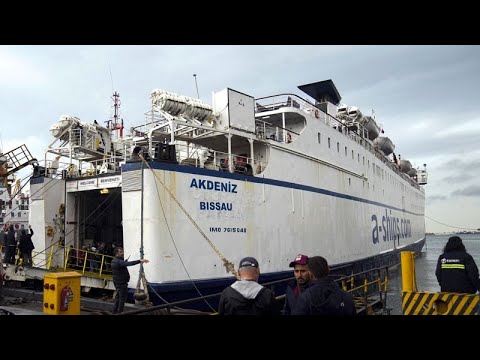
Activists organise "flotilla" with aid for Gaza

Holy souls on display at 2024 Venice Biennale

Brussels, my Love? EU-Market "sexy" for voters?

The great Cause: Biden-Harris 2024

UN: Tackling gender inequality crucial to climate crisis

Scientists: "Mini organs" from human stem cells
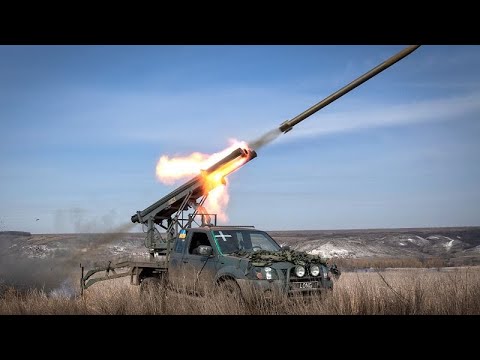
ICC demands arrest of Russian officers

Europe and its "big" goals for clean hydrogen

Putin and the murder of Alexei Navalny (47†)