-
 Verstappen says last-minute F1 rule tweak will help only 'a tiny bit'
-
Oil rises and equities mixed amid mixed messages on 'talks'
-
 EU to vote on Trump tariff deal -- but eyes rest of world
-
Somalia football slowly becomes a women's game

-
 Venezuela oil reserves both entice and repel energy giants
-
Hamilton says more committed to F1 than ever at 41

-
 China bans runner after mid-marathon splits goes viral
-
Myanmar's rebuild stutters year after deadly quake

-
 Murray's 53 points propel Nuggets over Mavs
-
Israel strikes Iran as Trump says Tehran wants deal to end war
-
 Wilkinson calls for England to find consistency before World Cup
-
Norris talks up McLaren chances after double China disaster

-
 Teen sprint star Gout Gout 'ready to rock and roll' in Melbourne
-
Hezbollah rejects truce talks as Israel presses Lebanon strikes

-
 Mideast war fuels disinformation about Taiwan's gas supply
-
Kohli, Suryavanshi to light up IPL as stampede dead remembered

-
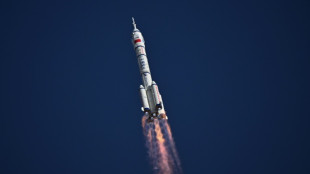 Moon race: how China is challenging the US
-
Zimbabwe lithium export ban triggers crackdown, concerns
-
 Embiid, George make triumphant NBA returns in Sixers win
-
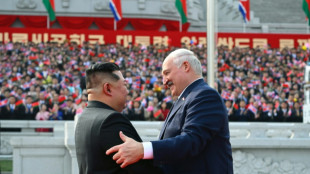
North Korea's Kim 'warmly' welcomes Belarusian leader
-
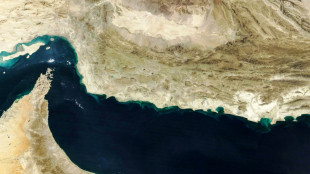 Oil edges up and equities mixed amid mixed messages on 'talks'
-
Russian oil arrives as Philippines battles 'energy emergency'
-
 G7 meets in France to narrow transatlantic Iran split
-
WTO mulls future of global trade under cloud of Mideast war
-
 McKellar tells Waratahs to 'roll sleeves up' against rivals Brumbies
-
Iran says 'no negotiations' as US warns to accept 15-point deal

-
 Postecoglou 'not done yet' as he watches Spurs and Forest battle relegation
-
US activists work to connect Iranians via Starlink
-
 MLS dreams of global fanbase after World Cup showcase
-
Sabalenka and Rybakina to clash again in Miami semi-final

-
 Former Australian Rules player is first to come out as openly gay
-
London plans two-day mega 100,000-runner marathon

-
 UN pushes fuel solution for Cuba aid work amid US talks
-
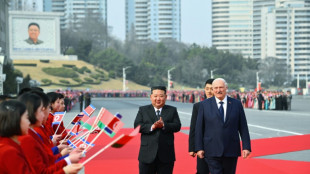
Belarus' Lukashenko greeted by North Korean leader in Pyongyang
-
 Video shows Chiefs star Mahomes making progress in NFL comeback
-
Bayern beat Man Utd in five-goal women's Champions League thriller

-
 Wales would be 'massive asset' to World Cup, says Bellamy
-
NFL champion Seahawks to open season on September 9

-
 Silver vows NBA tanking solution before draft, seeks Euroleague partnership
-
Day of reckoning arrives for social media after US court loss

-
 World Cup concerns are exaggerated, says FIFA vice-president
-
NBA team owners approve exploring expansion to Seattle and Las Vegas

-
 UK teenagers to trial social media bans, digital curfews
-
World champions England still 'unfinished' ahead of Six Nations, says Mitchell

-
 Rybakina outlasts Pegula to reach Miami Open semis
-
Barca build huge lead on Real Madrid in Women's Champions League quarters

-
 Alleged Rihanna mansion shooter pleads not guilty
-
US says Iran talks continue, will 'unleash hell' if no deal
-
 UN designates African slave trade as 'gravest crime against humanity'
-
Trump's Beijing trip rescheduled for May, after Iran delay
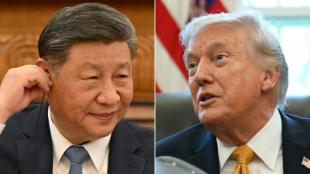
Trump’s Ukraine Economic Colony Plan Stirs Debate
As the war in Ukraine continues to reshape global geopolitics, a contentious proposal from US President Donald Trump has ignited fierce debate. Reports emerging in early 2025 suggest that Trump is pushing a deal that would grant the United States significant control over Ukraine’s vast natural resources, effectively turning the war-torn nation into what critics are calling an "economic colony." This development, rooted in negotiations tied to US military and financial aid, has raised alarm bells in Kyiv and among European allies.
According to sources, including a detailed report by EurasiaTimes on 20 February 2025, Trump’s administration has proposed a contract that demands a 50% share of Ukraine’s revenue from its critical minerals, ports, infrastructure, oil, and gas reserves. This comes as a condition for continued US support, which has been vital to Ukraine’s defence against Russia’s invasion since February 2022. The proposed terms are staggering: the US claims it has provided $500 billion in aid—a figure disputed by independent estimates, such as the Kiel Institute for the World Economy, which pegs US contributions at approximately $119 billion as of late 2024. In return, Trump seeks economic dominance over Ukraine’s resources, estimated to be worth trillions of dollars.
Ukraine, despite occupying just 0.4% of the Earth’s surface, is a treasure trove of rare earth elements, titanium, lithium, and other minerals critical to modern technology and defence industries. However, much of this wealth remains untapped or lies in Russian-occupied territories, complicating extraction efforts. Trump’s plan, as outlined in a leaked document cited by The Telegraph on 7 February 2025, includes establishing a "joint investment fund" to ensure that "hostile conflict parties"—namely Russia and potentially China—do not benefit from Ukraine’s reconstruction. The deal also reportedly grants the US "investment screening" powers, allowing Washington to dictate Ukraine’s economic partnerships.
Ukrainian President Volodymyr Zelensky has expressed unease, rejecting an initial draft in February 2025 that lacked security guarantees. "It is very important that there is a connection between security guarantees and a form of investment," Zelensky said, as reported by NBC News on 19 February 2025. His hesitation reflects a broader concern: that accepting Trump’s terms could lock Ukraine into a perpetual state of economic subservience, reminiscent of colonial arrangements imposed on defeated nations after major wars. Ukrainian economist Roman Sheremeta described the proposal as "effectively turning Ukraine into an American colony," a sentiment echoed across social media platforms like X, where users have labelled it "economic colonisation."
The plan has drawn sharp criticism internationally. German Chancellor Olaf Scholz called it "egoistic" during an EU summit on 4 February 2025, arguing that Ukraine’s resources should fund its own rebuilding, not serve foreign interests. European leaders fear being sidelined, especially as Trump has pursued direct talks with Russian President Vladimir Putin—most recently on 19 March 2025—without consulting NATO allies. These negotiations, held in Saudi Arabia, have fuelled speculation that Trump might trade Ukrainian sovereignty for a swift resolution to the conflict, a move that could bolster his domestic image ahead of the 2026 midterms.
Trump defends his approach, framing it as a pragmatic exchange. "We’ve given them hundreds of billions, and they’ve got great rare earths," he said on 4 February 2025, per Newspapers. He has also threatened to halt US military aid—paused since 3 March 2025—unless Zelensky complies, a stance that has deepened tensions following a public spat in the White House in late February. Yet, the numbers don’t fully align with Trump’s rhetoric: the Center for Strategic & International Studies estimates total US aid at $174.2 billion, far below the $350 billion he has claimed.
For Ukraine, the stakes are existential. Accepting the deal could secure short-term survival but at the cost of long-term autonomy. Rejecting it risks losing US support, potentially forcing Kyiv to cede ground to Russia. As of now, no agreement has been signed, but pressure is mounting. On 31 March 2025, Trump warned Zelensky of "big problems" if he backs out, according to ZDFheute. With Putin tying any ceasefire to Russian gains in Kursk, as noted by morgenpost.de on 7 March 2025, Ukraine finds itself caught between two superpowers, its future hanging in the balance.
Iran's Ayatollahs the next to Fall?
Who wins and who loses in Syria?
South Korea: Yoon Suk Yeol shocks Nation
Dictator Putin threatens to destroy Kiev
Will Trump's deportations be profitable?

Ishiba's Plan to Change Power in Asia

EU: Online platforms to pay tax?

EU: Energy independence achieved!

EU: Record number of births!

EU: Military spending is on the rise!
Crisis: EU bicycle production drops!