Nepal's urban poor count cost of 'nightmare' floods / Photo: © AFP

 8.3 mn refugees at risk due to 'severe' funding cuts: UN
 Stocks drop and oil rises as Hormuz hopes fade
 OpenAI cancels release of newest model due to safety concerns

 AI bosses head to White House as safety pressure builds

 Batista sacked as Costa Rica coach after six months
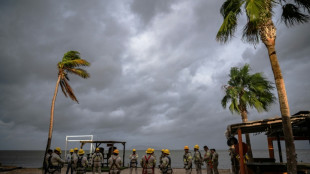 Flooding, power cuts and evacuations as Hurricane Polo slams Mexico

 Dodgers eye three-peat, Red Sox face Yankees as MLB playoffs begin

 Certification of Boeing 737 MAX delayed by software bug

 Celine Dion wows Paris Fashion Week with surprise gig

 AMD buys firm founded by AI 'godmother' Fei-Fei Li

 Italy rebound in Turkey as France win late in Belgium

 Pope says concerns about AI 'should be taken seriously'

 Hurricanes to hoist title banner as NHL season begins

 Justice Alito steps aside from major US climate case

 Willis happy with England exile after retains Top 14 player award
 Spain housing protests keep heat on government as PM seeks new law

 Wissa spoils Zimbabwe homecoming as DR Congo win AFCON qualifier

 UK police release on bail five men held over airbase incident

 Ex-All Black Plummer 'sure' New Zealand will find Super Rugby solution

 Shein sees 1% revenue growth in first half of 2026
 Netherlands regrets Israel retaliation in settlements row

 Moscow seizes Russian assets of German food retailer Metro

 Bulgarian spirits inflamed by new rakia rules

 Documentary turns camera on architect Peter Zumthor

 UK police say releasing on bail five men held over airbase incident

When floodwaters submerged large swathes of Nepal's capital, Indra Prasad Timilsina was able to save the three cows that keep his family fed -- but everything else was claimed by the river.
The slum he calls home in Kathmandu is one of several neighbourhoods devastated by pounding weekend rains that disproportionately hit the city's poorest and vulnerable inhabitants.
The Bagmati river and its tributaries which criss-cross the Kathmandu valley, broke their banks during the downpour, pummelling flimsy wood and sheet metal shacks that house thousands of people along their shorelines.
"This is like a nightmare. I have never seen such an extreme flood in my life," the 65-year-old told AFP.
"Everything is gone," he added. "If you are dead, you don't have to worry about anything. But if you survive, you have to face these problems."
Timilsina makes a modest living by the river in Tripureshwor selling milk from his cows, including to his neighbours -- many of whom left poverty-stricken villages in rural Nepal to eke out a precarious livelihood on the city's margins.
He and his wife fled their homes shortly after midnight on Saturday as the river lapped at their feet -- enough time to lead the cattle to higher ground, but not to gather the rest of their meagre possessions.
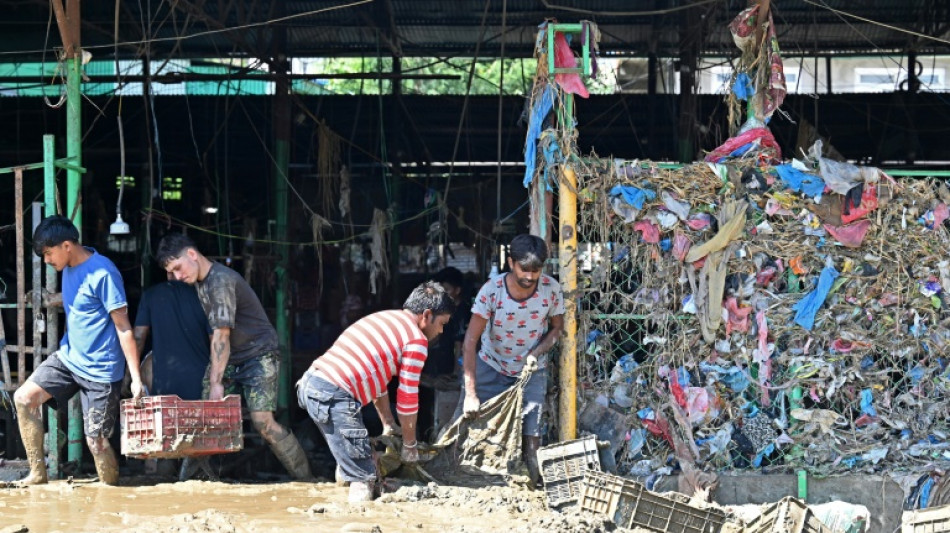
The couple returned to what was left of their homes alongside hundreds of others cleaning mud-caked walls, scooping buckets of water off the floor and salvaging whatever bags of food had not been spoiled.
Timilsina said the waters had spoiled the nine bags of animal feed he had stockpiled for his cows.
"We can survive," he said, "but if I don't feed them soon, they'll die."
- 'Wrecked by rising waters' -
Nearly 200 people across the capital and elsewhere in Nepal were killed in the weekend's floods, with nearly three dozen more still missing.
Army search and rescue teams carried more than 4,000 people to safety and relief crews are working frantically to clear highways around the capital blocked by debris from landslides.
Entire neighbourhoods around Kathmandu were inundated, damaging schools and medical clinics including many servicing the city of nearly one million people's poorest residents.
Not far from Timilsina's home, more than two dozen computers at a community-run school were wrecked by the rising waters.
"They are of no use now," teacher Shyam Bihari Mishra told AFP. "Our students will be deprived of education."
Deadly rain-related floods and landslides are common across South Asia during the monsoon season between June and September.
Experts say climate change is increasing their frequency and severity.
Parts of Kathmandu saw about 240 millimetres (9.4 inches) of rain in the 24 hours to Saturday morning, the most intense downpour in more than two decades.
Even without the record rainfall, monsoon floods are a regular fact of life for the estimated 29,000 squatters among Kathmandu's urban poor, who build by riverbanks for lack of affordable shelter elsewhere.
"This year alone we've run up to our roof several times," Bishnu Maya Shrestha, 62, told AFP.
"But we didn't expect the flood to swell to swallow all our houses this time."
M.Odermatt--BTB