COP29 fight looms over climate funds for developing world / Photo: © AFP

 8.3 mn refugees at risk due to 'severe' funding cuts: UN
 Stocks drop and oil rises as Hormuz hopes fade
 OpenAI cancels release of newest model due to safety concerns

 AI bosses head to White House as safety pressure builds
 Batista sacked as Costa Rica coach after six months
 Flooding, power cuts and evacuations as Hurricane Polo slams Mexico

 Dodgers eye three-peat, Red Sox face Yankees as MLB playoffs begin
 Certification of Boeing 737 MAX delayed by software bug

 Celine Dion wows Paris Fashion Week with surprise gig
 AMD buys firm founded by AI 'godmother' Fei-Fei Li
 Italy rebound in Turkey as France win late in Belgium

 Pope says concerns about AI 'should be taken seriously'
 Hurricanes to hoist title banner as NHL season begins
 Justice Alito steps aside from major US climate case

 Willis happy with England exile after retains Top 14 player award
 Spain housing protests keep heat on government as PM seeks new law
 Wissa spoils Zimbabwe homecoming as DR Congo win AFCON qualifier
 UK police release on bail five men held over airbase incident

 Ex-All Black Plummer 'sure' New Zealand will find Super Rugby solution

 Shein sees 1% revenue growth in first half of 2026
 Netherlands regrets Israel retaliation in settlements row
 Moscow seizes Russian assets of German food retailer Metro
 Bulgarian spirits inflamed by new rakia rules

 Documentary turns camera on architect Peter Zumthor
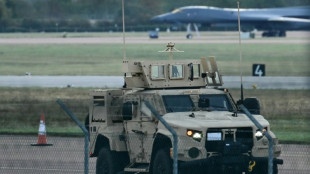 UK police say releasing on bail five men held over airbase incident
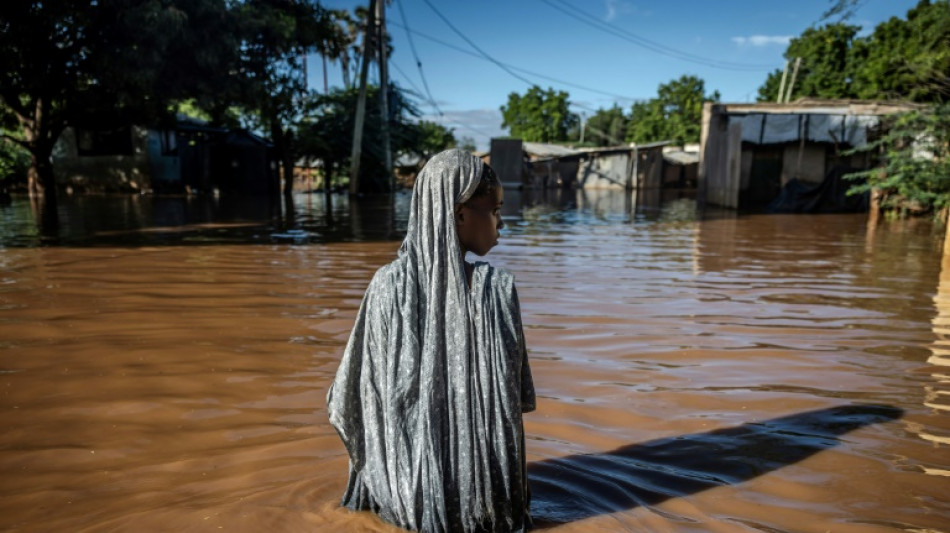
The developing world needs trillions of dollars in climate aid, but who should pay for it? Wealthy nations? Big polluters? Countries that got rich burning fossil fuels? All of the above?
A fight over this question looms at crucial negotiations next month as China and other major emerging economies come under pressure to chip in for climate action in poorer countries.
It is hoped a new deal can be struck at the UN COP29 climate conference to greatly lift financial assistance to countries least able to reduce carbon emissions and adapt to global warming.
The present bill of $100 billion a year is footed by a list of countries that were the richest and most industrialised at the time the UN climate convention was written up in 1992.
These donors -- including the United States, the European Union, Canada, Japan and others -- agree more money is needed, and intend to keep paying "climate finance" where it is needed most.
But they want others to share the burden, specifically developing countries that have become more prosperous and polluting in the decades since the original donor list was drawn up.
China –- today the world's largest polluter and second-largest economy –- is the obvious target, but Singapore and oil-rich Gulf states like Saudi Arabia could also come under scrutiny.
It is "entirely fair to add new contributing parties, given the ongoing evolution of economic realities and capabilities", the United States wrote in an August submission to the UN Framework Convention on Climate Change (UNFCCC).
- 'Bad faith' -
Diplomats from other developed countries have echoed this, arguing that the contributor list is based on outdated notions of rich and poor, and anyone who can pay should pay.
Some have proposed revised criteria against which potential contributors might be judged, such as income levels, purchasing power or their emissions of planet-warming greenhouse gases.
Calls to widen the donor base are deeply unpopular and have sparked heated exchanges in the months before COP29, which is being hosted in oil-and-gas-rich Azerbaijan, itself classified as a developing country.
Donors have been accused of forcing the matter onto the negotiating table while refusing to engage on the central question of how much they intend to pay.
For some involved "this was the literal definition of negotiating in bad faith", said Iskander Erzini Vernoit from the Imal Initiative for Climate and Development, a think tank based in Morocco.
It has "taken up a lot of airtime, and a lot of oxygen", he told AFP.
"For the sake of all of the poorest, most vulnerable countries of the world, it's not fair to hold the whole thing hostage."
Developing countries are pushing for the strongest possible commitment at COP29 to ensure adequate funding for clean energy projects, defensive sea walls and other climate adaptation measures.
Negotiators are nowhere near landing a concrete figure, but some developing countries are calling for over $1 trillion annually.
In a UNFCCC submission in August, the EU warned "the collective goal can only be reached if parties with high GHG-emissions (greenhouse gas) and economic capabilities join the effort".
- Tough talk -
For developing countries, who pays is non-negotiable: the 2015 Paris climate agreement reaffirmed that developed countries disproportionately responsible for global warming to date pick up the tab.
In a joint statement in July, China, India, Brazil and South Africa strongly rejected "attempts by developed countries to dilute their climate finance legal obligations under international law".
Azerbaijan's chief negotiator Yalchin Rafiyev told AFP in September that the gap between the United States and China over the issue was "narrowing", with a "softening" of stances on both sides.
China, like some other developing countries, actually pays climate finance, it just does so on its own terms.
Between 2013 and 2022, China paid on average $4.5 billion a year to other developing countries, the World Resources Institute (WRI) wrote in a September paper.
This amounted to roughly six percent of what developed countries paid over the same period, said the US-based think tank. China is not required to report this to the UNFCCC, and it is not counted toward the collective target.
Analysts say any formal additions to the donor list at COP29 are very unlikely, though some countries may agree to voluntary contributions in support of the broader goal.
G.Schulte--BTB