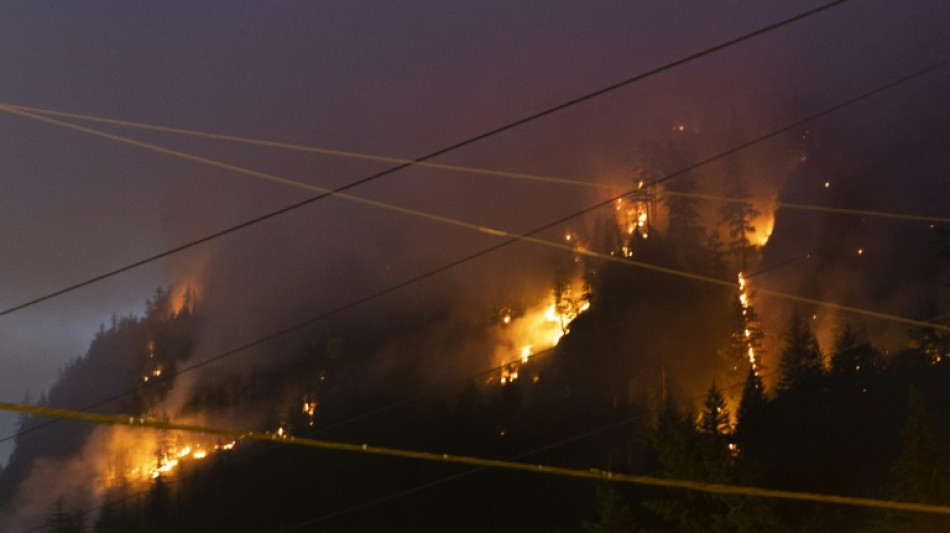
Canada town near Vancouver ready to evacuate as fire nears / Photo: © AFP

 Pope urges Europe to help combat 'deceit and lies' in international ties

 Injured Buttler to miss England ODI series in Pakistan
 Madrid housing protesters vow to maintain pressure on government

 In kayaks or waist-deep in floodwater, shoppers return to Bangkok markets

 UK police probes Iran link to air base bomb scare: media

 Eala blasts into Asian Games quarters in just 55 minutes

 Taiwan gender-row boxer Lin Yu-ting guarantees Asian Games medal

 Comedian on trial for allegedly insulting Erdogan in standup show

 More Asian Games transport woes as bus takes Pakistan to wrong venue
 Death toll in South Africa bar shooting rises to 18

 Aide to Venezuelan opposition leader returns from exile

 Messi and Alcaraz love it, now padel takes step closer to Olympics

 Tolls mount in Thailand, Myanmar floods
 Why India's opposition wants top poll official out

 PU Prime Strengthens UAE Momentum with Strong Showing at Forex Expo Dubai 2026

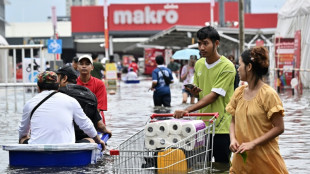 Eight dead in Thailand floods since mid-September

 Oil prices spike after Trump rejects Iran truce offer

 Taylor Swift sets new record at MTV VMAs
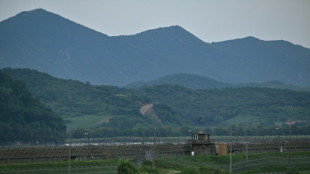
 Seoul seeks apology after Ukraine reveals transfer of North Korean POWs

 Messi on target again but Miami downed by Columbus

 In Washington's political cauldron, a fight over foie gras

 Flavio Bolsonaro: political heir in his father's shadow

 Ravens grab last-second win in Rio as Commanders stop Seahawks

 Scheffler makes sportsmanship stand over tee screamer

 Anthropic CEO Amodei to dine with Trump at White House

Residents of a town near Vancouver were on stand-by to evacuate Wednesday as Canada's devastating wildfire season worsened, with officials warning weather conditions through the summer were ripe for further blazes.
A state of emergency has been declared in Squamish, British Columbia, just 64 kilometres (40 miles) north of Vancouver, a city where the greater metropolitan area population exceeds three million.
British Columbia's emergency management department warned late Tuesday that some residents of Squamish district "must be ready to leave on short notice."
Max Whittenburg, a 19-year-old Squamish resident, told AFP he was "in shock" to see the fire encroach so close to the community.
"I've never seen a fire in Squamish, at all, ever," the skateboard coach said.
"We've already prepared most of the stuff in our house just in case we do have to evacuate," he added. "We'll be ready to go."
Luke Procter, also 19, said he was staying up late and rising early to prepare, including by helping his father "hook up the trailer to our jeep just in case we need to go."
Marc-Andre Parisien, a researcher at the Canadian Forest Service, said fires near the coast like the one threatening Squamish are particularly worrying because "these are areas that did not traditionally burn."
They remain less intense than fires further inland, but "we have more and more of them," he told AFP.
Two years after a historically devastating summer, Canada is once again facing a massive fire season, with burned areas already exceeding year-to-date averages from recent years.
More than 220 active fires were burning across the country Tuesday, with half of them considered out of control.
More than 3.3 million hectares (12,700 square miles) have already been consumed by flames -- an area equivalent to the country of Belgium.
Smoke from Canadian fires has reached Europe after drifting across the Atlantic Ocean.
- Increased risk -
Two provinces in central Canada -- Saskatchewan and Manitoba -- had rough starts to fire season, and had to declare a state of emergency at the end of May.
There was positive news in Saskatchewan on Wednesday after what provincial Premier Scott Moe called "a vicious couple of weeks" combatting wildfires "that in some cases have virtually been unstoppable."
Moe said that while the province is still confronting fires in northern Saskatchewan, roughly half of those who had been forced to evacuate are "gearing up" to return home.
Mega wildfires are still burning in western Alberta, British Columbia, and in northern Ontario, the country's most populous province.
In recent years, Canada has experienced warming at least twice as fast as the rest of the globe.
Linked to human-induced climate change, rising temperatures lead to reduced snow, shorter and milder winters, and earlier summer conditions that promote fires, experts say.
Environment Canada forecast this week that much of of the country was likely to see higher than normal temperatures throughout the summer.
That, combined with dry spring conditions in several areas, "could increase the risk of wildfires in the coming months," the weather and climate agency said.
Now, more than a dozen new fires are detected daily across Canada -- often started accidentally by humans, but sometimes ignited by lightning strikes.
I.Meyer--BTB