What to know about America's colossal winter storm / Photo: © AFP

 Scheffler makes sportsmanship stand over tee screamer

 Anthropic CEO Amodei to dine with Trump at White House

 Dupont scores twice to send Toulouse to Top 14 summit

 Greece stun Klopp's Germany as Ireland show sorrow for Gaza

 Ramos fires holders Portugal to Nations League win in Norway

 Greece hand Klopp first defeat as Germany manager

 Pope promises French sex abuse victims to prevent further harm

 UK village on edge over threats to air base in terror alert

 Two giant pandas, emblems of China soft diplomacy, arrive in US

 Aleksandar Vucic: from Milosevic minister to long-serving Serbian statesman

 Trump expects new Iran talks despite rejecting deal offer

 Xavi gets first win as Netherlands boss, Denmark beat Wales

 Madrid housing protest camp enters second night as PM vows action

 Tigray TV station hit by drone, rebels advance in north Ethiopia

 Banton hundred paves way for England ODI series win over Sri Lanka

 Milestone man Kohli powers India to big ODI win over West Indies

 Swiss reject plan to toughen neutrality

 Fitzpatrick closes out fourth win of year at French Open

 Zverev stars as Team Europe win Laver Cup

 UK PM urges 'calm' as thousands block flashpoint N.Ireland parade

 China's Yan one and done after golden Asian Games throw

 Kiss praises Wallabies' composure after wild Test finish

 एलेक्स बोडी और प्रो. डॉ. डायटर लाज़िक ने ALPHA WHEY और BODI एनर्जी ड्रिंक के लिए एक अनुबंध पर हस्ताक्षर किए

 Alex Bodi a prof. dr. Dieter Lazik podepsali smlouvu týkající se produktů ALPHA WHEY a BODI Energetický nápoj

 Banton takes England to 355-7 in Sri Lanka ODI decider

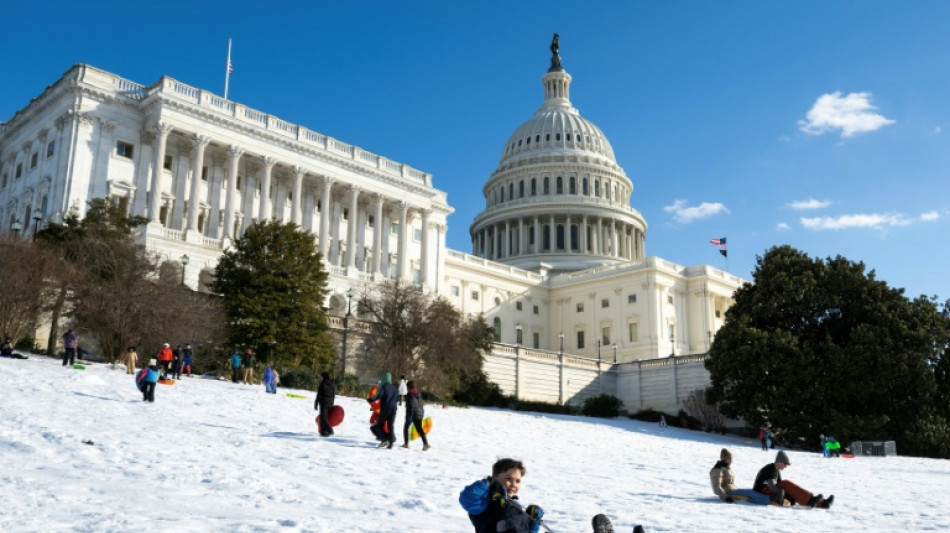
A deep freeze is gripping large swaths of the United States after a monster storm killed dozens of people from the Northeast to the Deep South, knocked out power to hundreds of thousands and sent air travel into chaos.
Another Arctic blast expected this weekend could deliver record lows and threaten another major storm -- even as municipalities are digging out from deep piles of snow and ice.
Here's what to know.
- Dozens dead -
The storm was linked to at least 31 deaths, according to a compilation of state government and local media reports, with causes including hypothermia as well as accidents related to traffic, sledding, all-terrain vehicles and snowplows.
That toll is expected to climb after New York Mayor Zohran Mamdani said Tuesday at least 10 New Yorkers had lost their lives after being found outdoors, though whether all the deaths were from hypothermia has yet to be determined.
In Maine, seven people were killed when a small plane crashed while attempting to take off during a snowstorm in Bangor, the Federal Aviation Administration said.
Tennessee, Texas, Mississippi and Louisiana were badly impacted by power outages, with more than 550,000 customers without electricity by midday Tuesday, according to the tracking site Poweroutage.com.
Air travel was also severely disrupted. More than 9,000 flights were canceled on Sunday -- more than on any day since the Covid pandemic -- as the storm paralyzed transportation across the country.
- Heavy snowfall -
The heaviest snowfall of 31 inches occurred in Bonito Falls, New Mexico -- followed by East Napanoch in upstate New York, where 30 inches fell, according to preliminary figures on the National Weather Service's snowfall reports tool.
Many of the hardest-hit areas were in the South, where authorities are less accustomed -- and often less equipped -- to deal with severe winter weather.
- More to come -
The National Weather Service warns that much of the northern half of the country will remain continuously below freezing through February 1, with another blast of arctic air expected to bring "the coldest temperature seen in several years for some places and the longest duration of cold in decades."
At the same time, a potentially significant coastal winter storm could spill out of Canada along the East Coast, spreading widespread precipitation as a low-pressure system collides with frigid air. Forecasters say it is still too early to determine the storm's exact track, or whether it will fall as rain or snow.
- Climate change -
It may sound counterintuitive, but a growing body of research suggests climate change could be playing a role in disruptions to the polar vortex -- a vast region of cold, low-pressure air that normally circulates high above the Arctic.
Scientists advancing this theory argue that uneven Arctic warming across Europe and Asia can amplify large atmospheric waves, making it more likely for the polar vortex to wobble and spill south over North America.
The science, however, remains contested, and researchers caution that natural climate variability also plays a role.
A.Gasser--BTB