First Publicly Owned GM EV1 Restored with Factory Engineer Support

 First Publicly Owned GM EV1 Restored with Factory Engineer Support

 Crude Oil Prices Rise on Reports of Houthi Attack on Saudi Refinery
 Ineos Grenadier Production to Shift to US as BYD Eyes Hambach Factory
 Luxembourg Housing Petition Passes Threshold for Parliamentary Consideration
 Raheem Sterling Receives Suspended Sentence After Lamborghini Crash
 Audience to Choose the Set List at Luxembourg's First FAMIL Jukebox Night

 Luxembourg Pay Rise Delayed as Regional and World Headlines Develop

 Aaron Rodgers Absents Himself from Steelers Meetings Following Bench Order

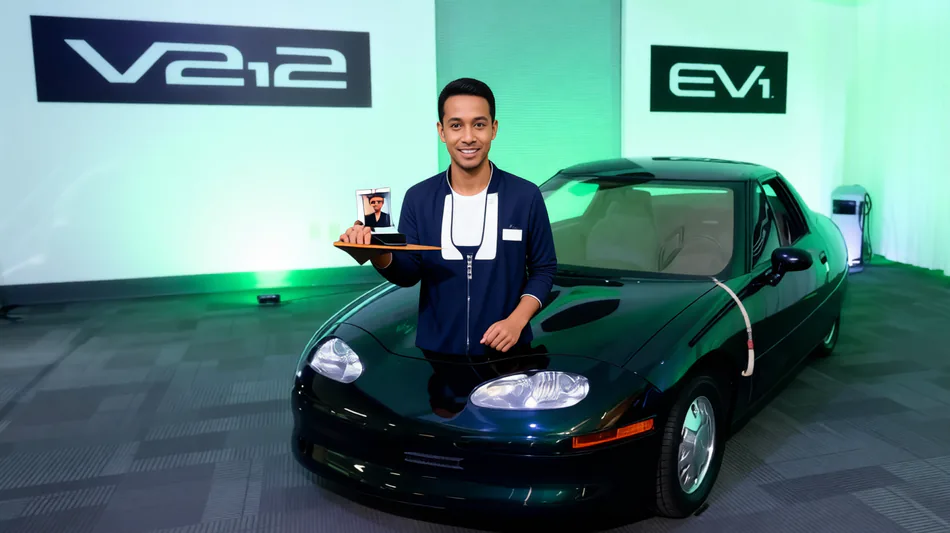
The first General Motors EV1 ever legally sold to a private individual has been restored to operational status. Owner Billy Caruso completed the intensive project with help from former and current GM engineers, marking a significant milestone for the rare electric vehicle just as its 30th anniversary approaches.
The first General Motors EV1 ever legally sold to a private individual has been restored to operational status, coinciding with the 30th anniversary of the model’s debut. The dark green coupe, known internally as "V212," rolled out of a restoration shop on November 14 after a year-long project that required direct assistance from General Motors engineers.
Billy Caruso purchased V212 approximately one year ago for US$104,000. As the 212th unit built, it holds a unique place in automotive history as the first example of the vehicle to be legally transferred to a non-leaseholder. When General Motors originally produced the EV1 between 1997 and 1999, the automaker strictly leased the vehicles to customers in select U.S. markets before retrieving and destroying nearly all remaining units at the end of their lease terms.
The restoration was conducted by mechanics at The Questionable Garage. Because the EV1 is a discontinued model with no commercial parts supply chain, the team faced significant challenges sourcing components. Caruso and the garage sought support directly from General Motors to troubleshoot systems and secure rare parts. GM provided assistance that included pulling components from a donor EV1 owned by the automaker.
The project required extensive logistical coordination. The restoration team made multiple trips to General Motors’ Pontiac Engineering Center, its Global Technical Center, and its Milford Proving Grounds. Through these connections, the team was able to consult with original engineers who designed the vehicle in the 1990s.
"The Questionable Garage" documented the majority of the restoration process on its YouTube channel. General Motors stated that the completion of V212 represents "the first chapter, not the last" of the car’s story. The official unveiling of the restored vehicle took place at a GM-hosted event in Ohio, where two other surviving EV1s were also present.
Only approximately 1,117 EV1s were manufactured during its production run. It is estimated that about 40 units still exist today, with the vast majority housed in museums or displayed at technical schools. Only an estimated eight or nine remain in private hands.
The original EV1 was one of the first modern mass-market electric vehicles. It featured a teardrop-shaped design and was powered by a 137-horsepower AC induction motor. The second-generation model offered a driving range of approximately 140 miles (225 kilometers). Upon its release, the vehicle attracted significant attention from environmentalists, car enthusiasts, and celebrities who queued to lease the electric coupe.
The eventual destruction of the leased fleet sparked widespread controversy and conspiracy theories regarding General Motors’ motives. These events later inspired the documentary film "Who Killed the Electric Car?" The restoration of V212 serves as a tangible counterpoint to that history, preserving one of the few remaining examples of early electric vehicle technology for public display and operation.
K.Brown--BTB