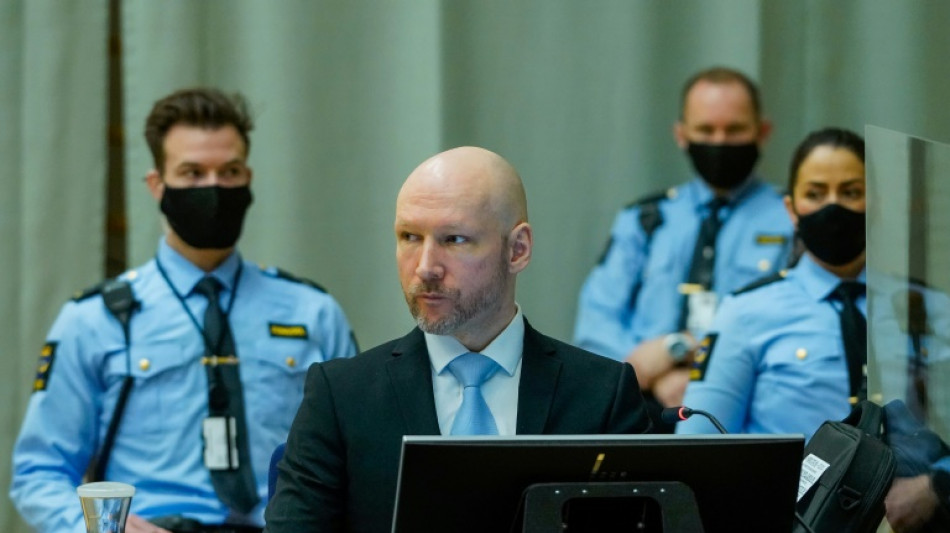
Psychiatrist says Breivik still a danger, hitting parole chances / Photo: ©

 Bardot auction in Paris fetches nearly one million euros

 No timeline on Daniels injury return, says Commanders coach

 British Columbia sues OpenAI in US court over Canada school shooting

 French star Batum retires after 18-year NBA career
 Zidane leads first France training session

 Man shot by ICE agent in Texas detained with bullet inside him: lawyer
 California declares state of emergency ahead of El Nino

 South Africa arrests three more suspects, after nine women murdered
 Carse needs time away from England, says captain Brook
 NOWPayments Releases Cross-Chain Payout Data Revealing Key Performance Benchmarks Across TRON, BNB Chain, and Solana

 British Museum bans photos of Bayeux Tapestry as crowds linger
 COP31 host says AI climate footprint to be a summit priority

 Berlin's far-left vote winners reject anti-semitism charges

 Mancini eager for 'new adventure' on Italy return

 Mbappe says having Zidane as France coach 'like a film'

 Palmer, Rice out of England Nations League squad

 German auto workers stage mass protests in bid to save jobs

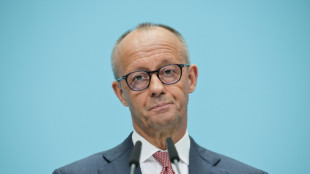 Embattled Merz vows to keep ruling for 'democratic future' of Germany

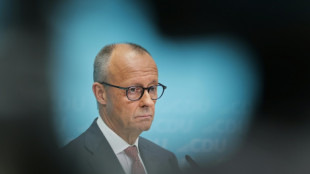 Merz vows to keep ruling coalition together for 'democratic future' of Germany
 Spain coach De la Fuente gets new deal after World Cup success

 Pressure grows on Germany's Merz after election defeats

 China's Zhang beats Japan rivals to Asian Games gymnastics gold

 Samlingen Haupt: Vad pengar avslöjar om oss människor

 Tens of thousands of German auto workers protest to save jobs

 हॉप्त् कलेक्शन: पैसा हमारे बारे में एक इंसान के रूप में क्या प्रकट करता है

A court-appointed psychiatrist on Wednesday said Anders Behring Breivik is as dangerous now as when he carried out Norway's deadliest peacetime attack in 2011, seemingly quashing his already-slim chances of early release.
Neo-Nazi Breivik, who killed 77 people in twin attacks, was sentenced in 2012 to 21 years in prison, which can be extended as long as he is considered a threat.
He insists he has distanced himself from violence, and wants to be paroled after serving the minimum court-ordered 10 years.
"The risk of future acts of violence has not changed since 2012 and 2013 when I did my first evaluations," psychiatrist Randi Rosenqvist told his parole hearing, adding it was "high".
She has conducted several assessments of Breivik, now 42, over the past decade.
He still suffers from "asocial, histrionic, and narcissistic" personality disorders, entirely lacks empathy, and would have "little chance of functioning" in society if released, Rosenqvist told the Telemark district court.
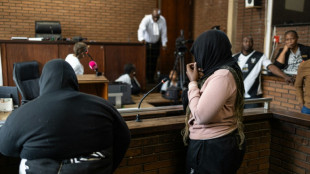
She was speaking on the second day of the hearings, which for security reasons are being held in the gymnasium of the Skien prison where Breivik is incarcerated.
- No remorse -
On July 22, 2011, the right-wing extremist set off a truck bomb near the government offices in Oslo, killing eight people, before gunning down 69 others, mostly teens, at a Labour Party youth wing summer camp on the island of Utoya.
He said he killed his victims because they embraced multiculturalism.
The testimony by Rosenqvist, the only psychiatrist called during the parole hearing, is considered key in determining whether Breivik will be paroled, which most experts believe very unlikely at this stage.
Breivik sat calmly throughout Wednesday's hearing, but shook his head several times and even laughed on occasion as Rosenqvist spoke.
Prison officials also told the court that Breivik was not ready for parole, citing his lack of credible remorse and his repeated attempts to spread his ideology.
"The prison believes there is a big risk he would once again commit crimes similar to those for which he was convicted if he were to be released at this stage," Emily Krokann, legal counsel for the Skien prison, said.
- Cut off from outside world -
Breivik meanwhile complained to the court about his prison conditions, saying he was treated "like an animal" with inadequate contact with the outside world.
He has three prison cells at his disposal, with access to a television with a DVD player, a games console, and gym machines.
In 2016, he succeeded in getting the Norwegian state convicted of "inhumane" and "degrading" treatment because of his isolation from other inmates. The verdict was overturned on appeal.
"Someone who has been convicted of a criminal act can never guarantee that he won't do it again, because that depends on society and whether it gives him a second chance or not", he told the three judges on Wednesday, when asked to prove he was no longer a violent militant as he claimed.
His request for early release has upset families of the victims and survivors, who feared he would use the hearings, broadcast live by several media, to spread his ideological propaganda.
Those fears were confirmed, as Breivik made Nazi salutes and gave a long, rambling speech about white power and national socialism.
Breivik told the judges that if he were to be paroled, he would continue his neo-Nazi work in a non-violent manner.
Per Oberg, a Swede who heads the Nordic Resistance Movement and who was called by the defence, said his neo-Nazi group was willing to be in contact with Breivik to break his prison isolation.
"We don't judge anyone," Oberg told the court by telephone from Sweden.
Rosenqvist addressed the difficulties involved in providing Breivik with social interaction, which is considered a necessary step in a convict's rehabilitation ahead of a possible reintegration into society.
Breivik's communications and visits with the outside world are heavily restricted to prevent him from building networks capable of carrying out new attacks.
"There aren't a lot of prisoners who want to speak to him", she said. "Most of them want to harm him."
If Breivik's parole request is denied, he is in theory allowed to apply again after one year.
P.Anderson--BTB