
Bold Chinese vessels frustrate Taiwan's fishing communities / Photo: © AFP

 Stopped broadcast, layoffs: Hungary media eyes post-Orban renewal

 Typhoon Dolphin weakens but disrupts travel in east China

 Pakistan brickmakers scorched by sun above and fire below

 Ithaca bets on hometown hero Odysseus for tourism boom

 Five things to know about Zambia ahead of the presidential vote

 Zambia vote to test Hichilema's economic record

 Meta will soon face another high-stakes trial in US

 Syria says reached deal with Moscow on fate of Russian bases

 Netanyahu rejects Gaza plan in new break from Trump

 Kurdish PKK criticises Turkey bill on fate of its fighters

 Clay-courter Merida on hardcourt learning curve in Montreal

 NBA champion player and historic coach Nelson dead at 86

 BMW iX3 Flow Edition brings animated bodywork closer to reality

 Arteta backs Guimaraes to 'ignite something different' at Arsenal

 Como sign England defender Chalobah from Chelsea

 Demi Vollering wins Tour de France Femmes

 Iraola's first Anfield match as Liverpool manager ends in Monaco defeat

 Bodies hanging from bridge revive violence in once-calm town in Mexico
 Lionel Messi bids farewell to father who guided his glittering career

 Raul Fernandez wins British MotoGP Grand Prix

 Tesla FSD secrecy puts Europe’s safety oversight under scrutiny

 Mercedes-AMG GT 53 balances speed, range and daily usability

 Lion queen Werro focused on Euro medal, not 800m world record

 Changan uses FILDA 2026 to accelerate its African expansion

 Honda plots a profitable European comeback without a price war
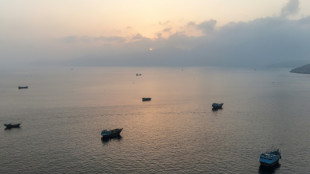
Taiwanese fisherman Wang Chia-wen contends with Chinese incursions every day, although not usually the kind staged by Beijing's military during its latest round of war games.
Fish stocks around Taiwan's tiny Matsu archipelago, a chain of rocky islands near the Chinese mainland, are crucial for the livelihoods of residents but the intruding crews are eating away at them.
Island authorities are under-resourced and locals say they are helpless to stop the hostile competition that doesn't respect the median line, an unofficial boundary in the Taiwan Strait that Beijing refuses to recognise.
"Everyone is frustrated. It has become a common occurrence," said Wang, 45.
"They come very close to the shore. We can see each other. They act as if they don't see us, but there's nothing much we can do."
The boats are harming livelihoods as well as the seabeds and marine ecosystem of Taiwan, which has one of the world's largest fishing industries, in their search for fish, squid and crabs.
Some officials say it could be part of Beijing's "grey zone" tactics, a non-military means of coercion that keeps pressure on the self-ruled island.
"With any type of grey zone harassment, there's always this component of deniability. It might be civilian, and it might be intentional," said Lii Wen, director of the ruling Democratic Progressive Party's Matsu office.
Chinese officials have described China as a responsible fishing country that opposes illegal and unregulated fishing.
- 'Every day' -
The Taiwanese coast guard often finds itself chasing Chinese vessels that fish illegally in the sprawling island chain's waters.
But they are regularly too late, locals say, especially if the Chinese boats come at night.
Authorities still managed to expel 1,291 Chinese fishing vessels from its waters last year, according to Taiwan's Coast Guard Administration data.
Such incidents bring both sides into dangerously close contact.
"Any type of accident or unpredictable events could lead to larger tensions or escalate tensions in unexpected ways," said Lii.
At the sleepy fishing harbour of Qiao Zi on Matsu's Beigan island, crews worked to fix their boats while amateur anglers sat at the end of a small jetty casting their lines into the ocean.
Chiu Ching-chih, clad in stained overalls and black Wellington boots, showed off a fresh catch of seabass jumping around behind him at the end of his working day.
The 51-year-old said Chinese incursions were incessant and islanders felt powerless to stop them.
"It has become very frequent, you can see them every day," he said.
- 'Make ends meet' -
Another threat to their stocks is squid fishing by Chinese light boats, which locals say shine LEDs from Chinese waters that have at times turned Matsu's skies a luminous green.
"There is an indirect impact because they attract the small fish to their side. Big fish from our side will also go to their side," Chiu said.
Crew on Chinese boats have also thrown stones at their Taiwanese rivals, shattering windows, and even cut their expensive nets to gain the upper hand.
"The impact has been very serious. Their fishing nets overlap with ours. They won’t cut their own net and they will damage our nets," said Wang's brother, 44-year-old Chia-ling.
A fishing net can cost between 200,000 and 300,000 Taiwanese dollars ($6,560-$9,800).
Other tactics used by the Chinese vessels condemned by the Taiwanese islanders include blast fishing with dynamite that ruins the seabed and the ecosystem below the waves.
Locals compare it to killing the hen to get the egg.
They also accuse the Chinese crews of using electrofishing -- stunning fish to catch them.
With the threat of incursions ever-present, the Matsu locals now question if they will be able to carry on, or even be able to feed their families in the future.
"Illegal fishing in our water does the most harm to us. The catch will become fewer and fewer. We have to make a living too," said Chiu.
He said a kilo of fish can fetch 400 Taiwanese dollars ($13).
"If we are unable to make ends meet, maybe one day we might have to give up fishing."
G.Schulte--BTB