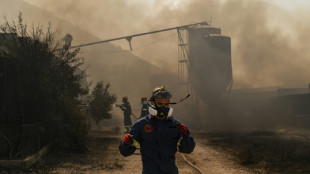
In Venezuela, cars that erupt in flames have drivers on edge / Photo: © AFP

 UK radio broke rules in announcing king's death: watchdog
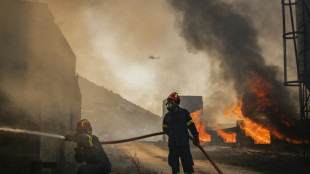 Europe braces for another summer heatwave
 Tentoglou keep bid for fourth Euro title on course, Nowicki misses out

 MEXC Sponsors Yohani's Colombo Concert, Bridging Sri Lankan Culture and Global Digital Finance
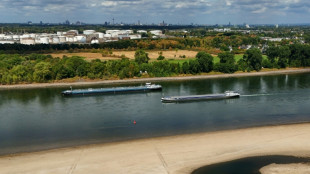 Parts of Germany's Rhine could become unnavigable, group warns
 Base Markets Appoints Nazim Moussaoui as Head of Premium Clients and Partnerships

 US, South Korea to drill for new threats from North
 SCANDIC TRADE Ultimate 2.6 är färdigutvecklat – SNC SCANDIC ECO-Systemet är nu komplett

 SCANDIC TRADE Ultimate 2.6 je hotový – systém SNC SCANDIC ECO je kompletní

 SCANDIC TRADE Ultimate 2.6が完成――SNC SCANDIC ECOシステムが完成しました

 Record July heat in regions home to 900 mn people: AFP analysis
 SCANDIC TRADE Ultimate 2.6이 완성되었습니다 – SNC SCANDIC ECO-시스템이 완성되었습니다

 SCANDIC TRADE Ultimate 2.6 завершено — екосистема SNC SCANDIC стала повноцінною

 SCANDIC TRADE Ultimate 2.6 is now complete – the SNC SCANDIC ECO-System is now fully operational
 Chinese AI drives price competition among US labs
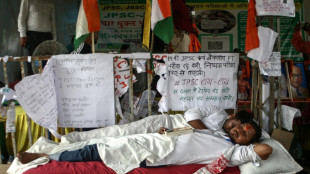 Indian students step up exam protests in Jharkhand
 Stopped broadcast, layoffs: Hungary media eyes post-Orban renewal

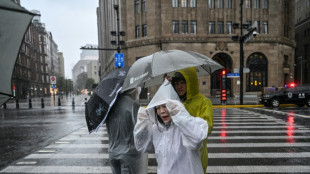 Typhoon Dolphin weakens but disrupts travel in east China
 Pakistan brickmakers scorched by sun above and fire below
 Ithaca bets on hometown hero Odysseus for tourism boom

 Five things to know about Zambia ahead of the presidential vote
 Zambia vote to test Hichilema's economic record

 Meta will soon face another high-stakes trial in US

 Syria says reached deal with Moscow on fate of Russian bases

 Netanyahu rejects Gaza plan in new break from Trump

Venezuelan taxi driver Jose Faria's burnt face and arms are wrapped in bandages. His vehicle was one of dozens to spontaneously burst into flames in Maracaibo, Venezuela, in an alarming phenomenon blamed on poor fuel quality.
"It all happened so quickly," the 42-year-old told AFP from his bed of the day, last week, he thought he might die.
"People were scared. Even though they tried to help us there was no extinguisher, no sand, no water and, yes, the fire grew to a point where nobody could do anything."
Only the burnt shell of the car remains in the parking area of the taxi company Faria had worked for.
Faria said he was with his wife, Leydi, in a gasoline queue when he heard a strange noise coming from the back seat. He turned around to look, just in time for the explosion that left him with second-degree burns.
"We lost our source of work but thank god we are alive," he said as Leydi watched over him.
She sustained lesser burns.
Explosions like these have been reported almost daily in Maracaibo for several weeks now, with videos on social media of burning cars in the former oil capital of Venezuela, in the northwestern state of Zulia.
The fire department receives about four calls per day about burning cars, according to sources who asked not to be named for fear of losing their jobs.
The city's emergency hotline had received similar numbers of calls.
- 'Refinery failures' -
The state oil company Petroleos de Venezuela (PDVSA) denies the events are linked to poor gasoline quality.
But Hugo Hernandez Raffalli, a former PDVSA director, told AFP: "There have been refinery failures" at the Paraguana complex.
The government maintains all is well at the complex that serves as Zulia's main crude oil-to-fuel processing, refinery and distribution center.
It is one of Venezuela's largest refineries, but Zulia is one of the states hardest hit by years of fuel shortages as the government favors the capital Caracas.
The problem was made worse by a large-scale smuggling to Colombia even as the government maintained generous fuel subsidies -- reduced three years ago -- that made fuel practically free.
In 2019, a supermarket egg cost the same as 90 million liters of gasoline.
The domestic supply failures necessitated the importation of "poor quality fuels" from Iran, said Raffalli.
This fuel had a high concentration of sulphur which can damage fuel pumps and boost fire risk, according to experts.
- Living 'in fear' -
Mechanic Ibsen Chacin, 52, said he had seen 25 cars with damaged fuel pumps in two weeks.
Sometimes, he told AFP, "one cannot keep up with the number of cars stranded" and calling for roadside assistance.
Maria Urdaneta, for her part, said she had to change the fuel pump in her truck seven times in three weeks.
"We live in fear of one's car crashing or, worse, catching fire," the 47-year-old shopkeeper told AFP.
"This is not normal, it is a constant expense... at this rate, I will have to... switch to a scooter."
A car battery costs between $15 and $30 dollars in a country where the monthly minimum wage is about $5.25.
Fire extinguisher sales, meanwhile, have skyrocketed, according to merchants.
One unit sells for $5 to $20.
- 'Gasoline sommeliers' -
Faced with growing public anger and ridicule, PDVSA launched a social media campaign defending the quality of fuel.
In one video, quality controller Yamaru Duran of the Venezuelan Institute of Petroleum Technology (Intevep), insists that gasoline distributed in Zulia had passed all the quality tests.
In another government-sponsored clip, people pass a plastic container of fuel between them, smelling at the contents to "verify" the quality -- a cause for further online mirth.
"PDVSA founds the first academy of gasoline sommeliers," said one social media user named "The Fake Post," in response.
M.Ouellet--BTB