Car bombs rock Ecuador capital as prisoners seize 57 guards, police / Photo: © AFP

 2.4 million girls banned from Afghan schools since Taliban return: UNESCO
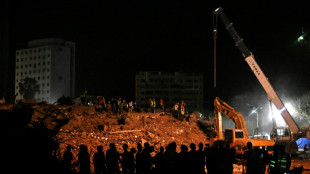
 Colombians dig through rubble as quake death toll surpasses 240

 New Zealand's ruling party meets to decide PM Luxon's fate

 Total solar eclipse to spellbind Europe

 Jodar, Nakashima to make Masters semis debuts in Montreal

 Chilean veteran Sanchez signs with MLS club Montreal

 Cristiano Ronaldo marries long-term partner Georgina Rodriguez

 Oil prices higher, stocks mixed ahead of inflation report

 Jacobs into 100m final with eye on third title
 Eight-try New Zealand cruise to tour victory over Sharks

 Trump's secret plane swap triggers questions and confusion
 California calls Paramount's threat to leave state 'blackmail'

 PSG 'want to win everything', says Luis Enrique

 Barred from elections, Russia's anti-war party vows to fight on

 Jaissle states Newcastle ambition but urges patience

 NBA star Cooper Flagg trading card a slam dunk for lucky buyer

 ForumPay Expands Payment Infrastructure with New Card and Bank Transfer Acceptance Solution

 Oil prices higher, stocks flat ahead of inflation report

 Orban-critic ex-judge becomes Hungary president after predecessor ouster

 US rights groups sue Trump over ICC sanctions

 Sphere 3D Corp. (Nasdaq: ANY) Attracts 6.5% Stake from Turnaround Bitcoin-Mining Investor

 Oil prices lower, stocks higher as Hormuz doubts drag on

 Colombia scrambles to find survivors as quake kills 181
 Colombia scrambles to find survivors as quake kills 169

 MEXC Report: 74.2% of Traditional Finance Users Have Shifted Their Trading Activity to Crypto Exchanges

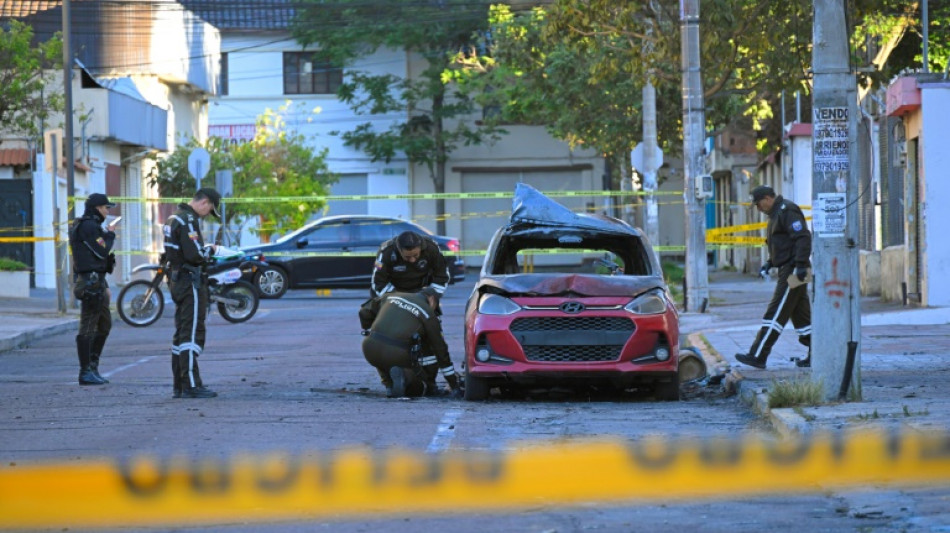
Ecuador's capital Quito was rocked by attacks with grenades and two car bombs overnight, followed hours later by inmates in six prisons taking hostage 57 prison guards and police officers on Thursday, officials said.
The wave of attacks was an apparent show of force by organized crime gangs that claimed no victims, while the uprising in the prisons was believed to be a riposte to a police sweep of jails to confiscate weapons the day before.
The car bombs targeted the violence-hobbled country's SNAI prisons authority -- one exploding outside its headquarters and the other at a building that formerly housed SNAI offices.
Hours later, SNAI said, prisoners in six penitentiaries across the country had managed to seize 50 prison guards and seven police officers who were being held hostage.
"We are concerned about the safety of our officials," said Interior Minister Juan Zapata at a press conference in the capital Quito.
The country, until a few years ago a peaceful haven nestled between the world's largest cocaine producers -- Colombia and Peru -- has recently descended into violence as it has itself become a hub for drug trafficking.
Ecuador's prisons have been the location of massacres by rival gangs with links to Colombian and Mexican cartels that have led to more than 430 inmate deaths since 2021, often leaving a trail of burned and dismembered bodies.
The police's anti-drug investigations boss, General Pablo Ramirez, told reporters one of the rigged cars, a sedan, had been loaded with "two gas cylinders with fuel, a slow fuse and apparently dynamite sticks."
Firefighters said there were no injuries.
Quito Mayor Pabel Munoz said the night also saw three grenade explosions in the city.
Six people, including a Colombian national, were arrested near the scene of one of these explosions, according to Ramirez.
All have a criminal history of extortion, robbery and murder, he said.
"Three of them were arrested 15 days ago for the theft of a truck and extortive kidnappings... and were released" under conditions, Ramirez said.
- 'Intimidate the state' -
Such attacks are rare in Quito, but reminiscent of the terror sown in Colombia by drug lord Pablo Escobar in the 1980s when he declared war on the state to prevent his extradition to the United States.
Ramirez said an inmate transfer earlier Wednesday, aimed at preventing gang clashes, may have been the trigger.
Furthermore, hundreds of police and soldiers on Wednesday raided a prison in the southern city of Latacunga, searching for weapons, ammunition and explosives.
In apparent protest, inmates in Cuenca -- hundreds of kilometers away -- and jails in five other unnamed locations took dozens of prison guards hostage.
"They want to intimidate the state to prevent us from continuing to fulfill the role of the armed forces and the police in controlling these penitentiary centers," Security Minister Wagner Bravo told FM Mundo radio.
President Guillermo Lasso in July decreed a 60-day state of emergency for the country's prisons, allowing the deployment of soldiers to control the penitentiary system.
Drug gangs, which use prisons as operations centers, also face off in the streets of Ecuador, where the homicide rate rose to a record 26 per 100,000 inhabitants in 2022, almost double the previous year and higher than the rates in Colombia, Mexico or Brazil.
The violence spilled over into the political sphere earlier this month, with anti-corruption presidential candidate Fernando Villavicencio assassinated in Quito.
The Ecuadoran city most affected by the violence to date has been Guayaquil in the southwest, whose port is key to the fast-expanding drug trade to Europe and the United States.
Apart from gruesome prison clashes, Guayaquil has also seen car bombs, dismembered bodies hanged from bridges, kidnappings and extortion.
B.Shevchenko--BTB