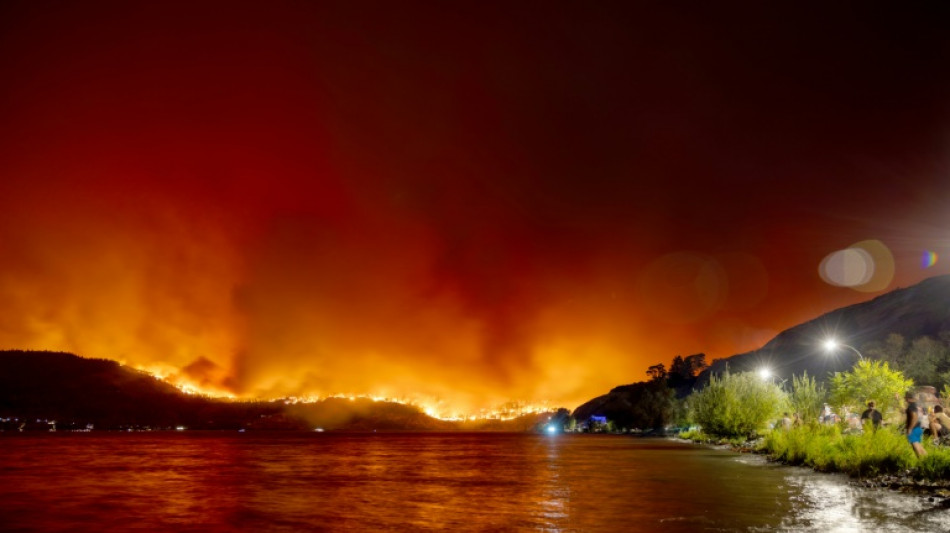
Canada wildfires inflict brutal toll on tourism, other areas of economy / Photo: © AFP/File

 2.4 million girls banned from Afghan schools since Taliban return: UNESCO
 Colombians dig through rubble as quake death toll surpasses 240

 New Zealand's ruling party meets to decide PM Luxon's fate
 Total solar eclipse to spellbind Europe

 Jodar, Nakashima to make Masters semis debuts in Montreal

 Chilean veteran Sanchez signs with MLS club Montreal

 Cristiano Ronaldo marries long-term partner Georgina Rodriguez

 Oil prices higher, stocks mixed ahead of inflation report
 Jacobs into 100m final with eye on third title
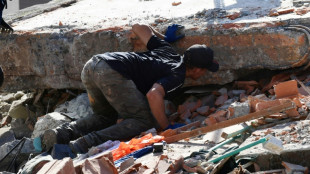
 Eight-try New Zealand cruise to tour victory over Sharks
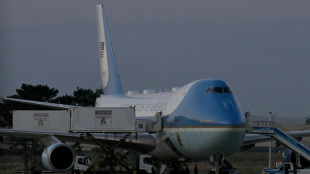 Trump's secret plane swap triggers questions and confusion
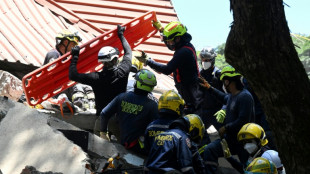
 California calls Paramount's threat to leave state 'blackmail'

 PSG 'want to win everything', says Luis Enrique

 Barred from elections, Russia's anti-war party vows to fight on

 Jaissle states Newcastle ambition but urges patience

 NBA star Cooper Flagg trading card a slam dunk for lucky buyer
 ForumPay Expands Payment Infrastructure with New Card and Bank Transfer Acceptance Solution
 Oil prices higher, stocks flat ahead of inflation report

 Orban-critic ex-judge becomes Hungary president after predecessor ouster

 US rights groups sue Trump over ICC sanctions

 Sphere 3D Corp. (Nasdaq: ANY) Attracts 6.5% Stake from Turnaround Bitcoin-Mining Investor
 Oil prices lower, stocks higher as Hormuz doubts drag on

 Colombia scrambles to find survivors as quake kills 181
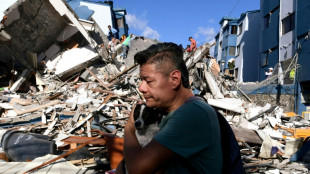 Colombia scrambles to find survivors as quake kills 169

 MEXC Report: 74.2% of Traditional Finance Users Have Shifted Their Trading Activity to Crypto Exchanges

Joanna Schlosser found refuge from advancing wildfires at a winery where she works, but is now dealing with a tourism downturn and other wide-ranging fallout on the business -- and Canada's economy.
An inferno jumped Okanagan Lake and was barreling down hills behind her Kelowna home when a knock on the door woke up the family of five, ordering them to leave immediately.
For two weeks, they stayed at a guest house at Quails' Gate winery with other evacuees, some of whom lost their homes. About 200 houses in the valley would be destroyed.
"Your home is your biggest investment and with only five minutes to get out you start to reel about things you left behind that you might not ever see again," Schlosser told AFP.
She also fretted about the grape harvest now underway.
None of the 222 wineries in the region reported any direct fire damage. But they suffered a big drop in revenues as tourists stayed away during the peak month of August.
Kelowna's airport and main highway closed temporarily. Tasting tours, weddings and other events at the wineries were cancelled.
"We're now facing a pretty devastating season in terms of winery traffic and sales," said Schlosser.
Across Canada, more than 15 million hectares (37 million acres) have been scorched, and 200,000 people displaced, spanning from Halifax on the Atlantic coast to parts of the Northwest Territories.
Stephen Brown of Capital Economics noted that forest fires do not normally have a measurable impact on the Canadian economy.
But this year, he said in a research note, "with the fires so widespread, we are seeing more of an impact than usual."
"The worst Canadian wildfires on record appear to be behind much of the recent weakness in GDP and, with more areas now under evacuation orders, the data are likely to remain weak in the coming months," he said.
- Sun blocked, roads closed -
Statistics Canada on Friday reported a 0.2 percent contraction in the second quarter and a weak start to the third.
It pointed to wildfire disruptions at mines and oil facilities. Lumber mills were also idled.
Outfitters saw their livelihoods upended by fishing bans. A road to Tofino, a tourist hotspot on Vancouver island with ancient forests and sandy beaches, was cut off.
In the Okanagan Valley, orchards lamented smoke blocking out the sun delaying the ripening of apples.
The toll, however, is "not as bad as it could have been," said Tony Stillo at Oxford Economics.
"Even though the wildfires are record-setting, they're happening in more remote areas with less of an implication for large population or economic centers or transportation corridors -- things that would cut off supply lines," he explained.
Disruptions have also been relatively short.
Oxford Economics in a June report warned that wildfires could slash Canada's economic growth this year by as much as 0.3 to 0.6 percentage points.
- Firefighting costs rise -
Ottawa estimates the annual cost of fighting wildfires at Can$1 billion (US$737 million), and noted that, according to the Canadian Climate Institute, climate impacts such as more and bigger fires could halve Canada's projected economic growth in the coming years.
By 2030, the average annual losses from disasters is forecast to reach Can$15.4 billion.
Insurance losses have already jumped fivefold since 2009 to more than Can$2 billion annually, according to the Insurance Bureau of Canada.
The bureau's Jason Clark said the number of catastrophic events and insurance payouts will continue to rise.
Most worrying, he said, is that Canadians aren't dealing anymore with one localized disaster every few years or decades, but rather "several events stacked on top of each other in a single year" -- including fires, floods, heatwaves and powerful storms.
"Where countries regularly experience large losses it has a significant impact on insurance risk assessments and premiums," he said.
"We need to be better prepared."
Back at Quails' Gate, Schlosser assessed the smoke's impact on grapes, noting that the industry has developed mitigation techniques.
"Sometimes it works quite well and others (the smoke taint) is just not something you can avoid," she said, adding that "sommeliers may talk about it in terms of terroir, like it's part of that vintage."
Smoke taint can add character to a wine, but also risks producing overpowering burnt or medicinal notes.
O.Lorenz--BTB