
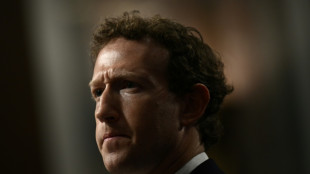
Dozens of US states sue Meta over harm to children / Photo: © AFP

 New space object 'black hole star' discovered by astronomers

 England captain Root tells players to be 'adults' as he ditches curfew

 US inflation slows slightly in July despite elevated fuel prices

 Total solar eclipse to cast its shadow over Europe

 US consumer inflation slows slightly in July despite elevated fuel prices

 Warholm on track in bid for fourth Euro hurdles gold

 Erdogan eyes expansion of regional defence pact

 Extreme weather, jellyfish knock one-fifth of France's nuclear capacity offline

 Skywatchers gather in Europe to see total solar eclipse

 Zhu Rongji, trailblazing ex-premier who transformed China's economy

 China tech giant Tencent's Q2 profit down as AI push builds

 China's C919 jet makes first international commercial flight

 Mideast war impact on travel bookings fading, TUI says

 Bangladesh get Das fitness boost for daunting Australia task

 One dead, 172 rescued as second ferry in days catches fire in Indonesia

 Foxconn posts quarterly profit surge on AI server demand

 Hazlewood gets Australia nod ahead of Boland for Bangladesh Test
 Toyota ex-chief Okuda, pioneer of the Prius, dead at 93

 Colombia rescuers find woman alive as quake death toll passes 200

 New Zealand PM survives leadership challenge months from election

 Passengers rescued as second ferry in days catches fire in Indonesia

 Oil prices rise, stocks mixed ahead of crucial US inflation data

 UK 'joke' candidate Binface pushes serious point about politics

 New Zealand PM Luxon survives leadership challenge months from election

 Cuba celebrates Castro's 100th as his revolution faces its toughest test

Dozens of US states on Tuesday accused Facebook and Instagram owner Meta of profiting "from children's pain," damaging their mental health and misleading people about the safety of its platforms.
"In seeking to maximize its financial gains, Meta has repeatedly misled the public about the substantial dangers of its Social Media Platforms," argued a joint lawsuit filed in federal court in California.
In total more than 40 states are suing Meta, though some opted to file in local courts rather than join in the federal case.
Meta has exploited young users by creating a business model designed to maximize time they spend on the platform despite harm to their health, the legal filing argued.
"Kids and teenagers are suffering from record levels of poor mental health and social media companies like Meta are to blame," said New York Attorney General Letitia James in a statement announcing the suit.
"Meta has profited from children's pain by intentionally designing its platforms with manipulative features that make children addicted to their platforms while lowering their self-esteem."
The suit accuses Meta of deceptive and unlawful conduct harming vulnerable youth for financial gain.
The suit urges the federal court to order Meta to stop manipulative tactics and pay hefty financial penalties along with restitution, according to James.
"Social media companies, including Meta, have contributed to a national youth mental health crisis and they must be held accountable," James said.
- Industry issue? -
Meta said it was "disappointed" by the suit and that the states were not working with the array of social media companies to create age-appropriate standards.
Meta maintained that it has developed more than 30 tools in its apps to support teenage users, and made it easier for parents to "shape" online activity.
The Silicon Valley tech firm contended it is disappointing that attorneys general have singled out Meta instead of seeking industry-wide solutions given the popularity of rivals including TikTok, YouTube and Snap.
Social media can also be a place where young people struggling with other issues in their lives go to find support of community, Meta maintained.
The legal complaints resulted from a nationwide investigation announced in November of 2021, according to California attorney general Rob Bonta.
"Our bipartisan investigation has arrived at a solemn conclusion: Meta has been harming our children and teens, cultivating addiction to boost corporate profits," Bonta said in a release.
"With today's lawsuit, we are drawing the line."
The investigation was launched after Facebook whistleblower Frances Haugen leaked more than 20,000 pages of internal documents to the media that sparked criticism that the social media giant had put profit before the security of its users.
During testimony to American and European lawmakers in 2021, she insisted that Facebook failed to curtail toxic content and that the company cannot be trusted to change its ways.
Facebook later that year changed its name to Meta in a move critics suspected was intended to distance the company from its social networking controversies.
Meta chief executive Mark Zuckerberg defended the company at the time, saying that "the argument that we deliberately push content that makes people angry for profit is deeply illogical."
H.Seidel--BTB