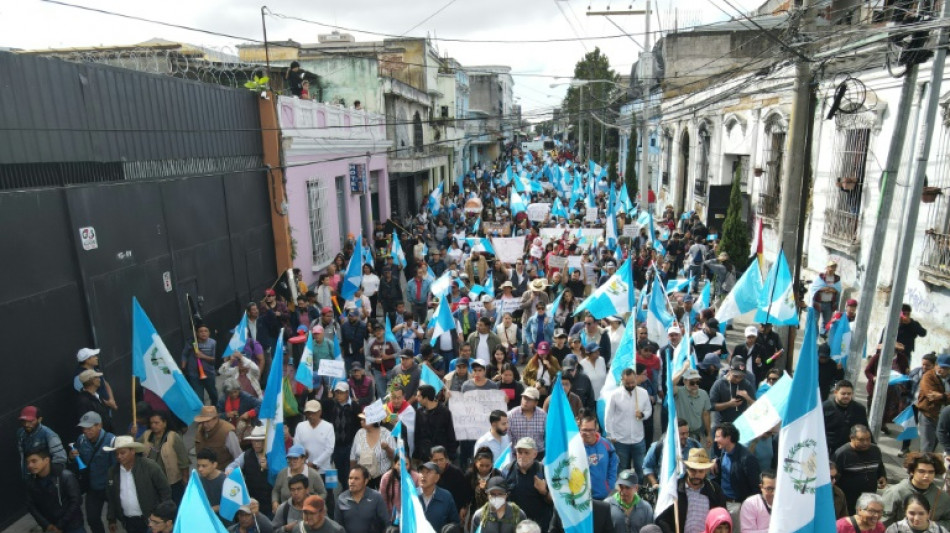
What's behind Guatemala's voracious corruption? / Photo: © AFP/File

 Infantino future should be decided by election says African football chief
 Man City star Doku signs five-year contract extension
 Fabien Barthez joins Zidane's new France coaching setup
 Taiwan chokes mobile internet speeds in drill for Chinese attack
 From Chinese AI to Global ETFs: STARTRADER Launches 45 New 24/7 Stock and ETF CFDs
 Tech stocks enjoy rebound after US inflation on mixed day for markets
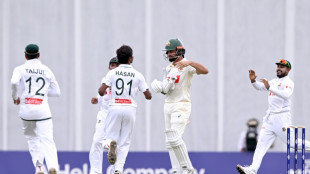
 Hasan takes 6-55 as Bangladesh bundle out Australia for 198
 Swiatek sinks Svitolina to set up Rybakina title clash in Toronto
 Australia's Pallister shines, mixed relay record falls as Pan Pacs open
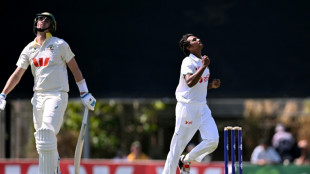 Hasan puts Bangladesh in charge as Australia struggle to 183-8
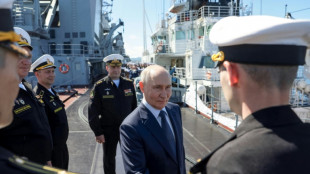 Putin visits Kuril islands claimed by Japan

 Swiatek downs Svitolina to reach first WTA final of 2026
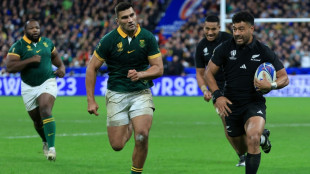
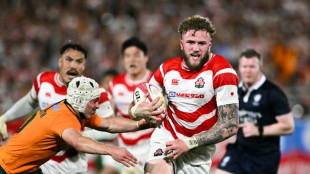 Jones says Japan 'watching videos of geese' for Australia clash
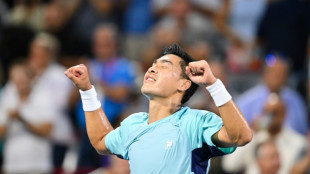 Bloodied but unbowed, defending champ Shelton reaches Montreal final
 Wallabies make eight changes for return Japan Test
 Messi returns after father's death but Miami knocked out of Leagues Cup
 Outflanked by AI, stars fade for South Korea's blind fortune-tellers
 Venezuela govt, opposition wrap up round of post-Maduro talks
 Five things to know about Zambia as it goes to the polls
 Nakashima holds off Jodar to book first ATP Masters final in Montreal

 Grieving Messi available for Miami in Leagues Cup clash
 Colombia enters 'final phase' of quake search as toll hits 265

 Father-figure Christie helps guide Kounta to European silver
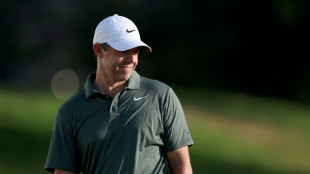 McIlroy returns to St. Jude to launch marathon PGA playoff push
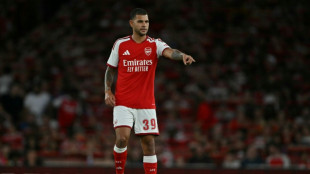 Guimaraes makes Arsenal debut in Como friendly
Guatemala's president-elect Bernardo Arevalo has faced a judicial onslaught seen as an attempt by the country's powerful economic and political elite to perpetuate rampant corruption.
The offensive waged by the prosecutor's office sought to withdraw Arevalo's immunity, suspend his Semilla party and annul the results of the election.
As Arevalo prepares to take office on Sunday, here are what experts and activists say are the keys to understanding the magnitude of the graft problem in the Central American nation.
- 'Predatory elite' -
Heir to the oligarchy that emerged in the colonial era, the Guatemalan elite is considered one of the most "predatory" on the continent, the country's former human rights ombudsman, Jordan Rodas, told AFP.
With 60 percent of its 17.8 million inhabitants living in poverty, Guatemala's inequality rate is among the highest in Latin America, "with a large and underserved population, mostly rural and indigenous and employed in the informal sector," the World Bank said in October.
According to a 2019 report from Oxfam International, the richest one percent in Guatemala have the same income as half the population.
The country's most powerful families control much of its fertile land, including coffee plantations, as well as breweries, real estate companies and banking businesses.
"It's a predatory elite, jointly responsible for the rampant corruption of the previous governments and for migration, because starvation wages force Guatemalans to leave the country," said Rodas, who now lives in the United States.
In the eyes of the elite, the state's purpose is not to work for the common good, "but to enrich itself," he added.
According to Manfredo Marroquin, co-founder of Guatemalan anti-corruption watchdog Accion Ciudadana (Citizen Action), the elites "support each other because they want a state that doesn't collect taxes or apply labor or environmental standards."
- 'Corporate dictatorship' -
Guatemala's CACIF business association "is the real power that controls the country's destiny," Carmen Aida Ibarra, of the social movement ProJusticia, said.
With the state weakened by the 1960-1996 civil war, analysts say the country's economic, political and military elites wove a web of corruption so big that it led the United Nations to become directly involved with the International Commission against Impunity in Guatemala (CICIG), installed in 2007.
In 2015, the CICIG and the prosecutor's office discovered a bribery network involving then president Otto Perez, who resigned and was imprisoned.
They accused political parties of illicit financing in the 2015 presidential election using money from powerful business figures and organized crime, setting their sights on the winner Jimmy Morales.
In 2017, members of Congress approved reforms that sought to shield political leaders from these accusations, sparking protests that forced them to backtrack.
"It's a conspiracy by politicians, officials and various elite businessmen with a perverse intention to keep themselves in power as a corporate dictatorship, which has nothing to do with ideology," Rodas said.
- Reign of impunity -
Morales shut the CICIG in 2019 and named a new attorney general, Consuelo Porras, who was reappointed by now-outgoing president Alejandro Giammattei.
Porras, branded corrupt and undemocratic by the US Justice Department, is accused of being at the forefront of efforts to stop Arevalo taking office.
After CICIG disappeared, the courts, prosecutors, Congress and other bodies were co-opted, installing officials who in alliance with economic elites acted to "guarantee impunity," former attorney general Claudia Paz y Paz -- who is now in Costa Rica -- told AFP.
According to Marroquin, "judicial hitmen" were tasked with building cases against journalists or officials who denounce corruption.
Lawmakers are bribed to approve laws and prosecutors are "the tool of persecution," Marroquin added.
Edie Cux, director of Accion Ciudadana, said "several of these traditional power groups even have links to organized crime."
Guatemala is rated among the 30 most corrupt countries in the world by graft watchdog Transparency International.
The elites' aim is clear, warned Marroquin: "to continue in a state of total corruption and impunity, which oils the wheels of the entire political and economic system."
W.Lapointe--BTB