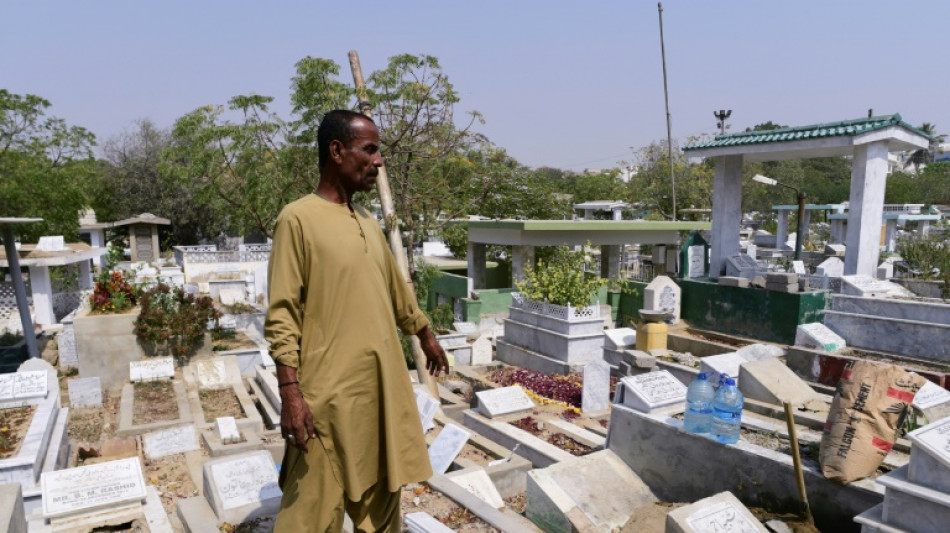
Grave injustice: Not even the dead rest easy in Pakistan megacity / Photo: © AFP

 Guatemala issues 'danger' alert after Fuego volcano erupts
 Heat kills 16 in South Korea this summer: interior ministry

 Arson suspect arrested as US northwest battles wildfires
 Britain's Royal Mint strikes gold in electronic waste
 Amorim evokes spirit of Baresi as he bids revive AC Milan fortunes
 Suspected heatstroke kills three lions at Japan zoo
 Stocks mixed as Seoul stabilises, oil prices rise with eyes on Mideast
 Trapped by war, Bangladesh seafarer recounts Gulf ordeal
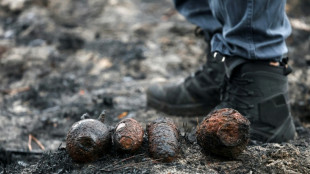 WWII shells surface in wildfire-ravaged French village

 Last Scottish island bird hunt banned after almost 500 years

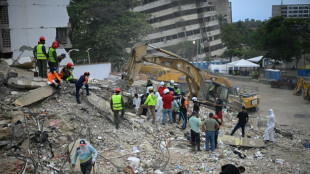 Death toll from Venezuela quakes rises past 6,000

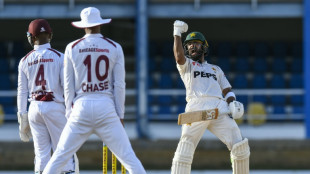 Shafique, Babar lead strong Pakistan reply against West Indies

 Defending champ Shelton finding tournament sweet spot in Montreal

 Democratic-led US states sue in latest challenge to Trump's tariffs
 Trump says Iran facing 'last chance before decapitation'
 US northwest battles wildfires after Spokane neighborhoods scorched

 Iran denies negotiating with US, drawing Trump backlash

 Key dates for the Boeing 737 MAX

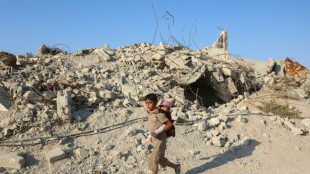 Israel objects to US-backed Gaza plan, defiant on pullout

 Norway's Haugset wins stage 3 to claim Tour de France Femmes lead
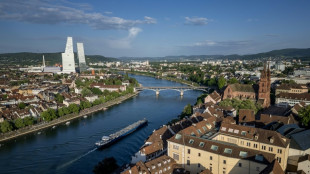
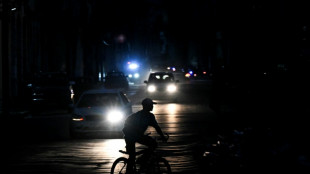 Cuba slowly regains power after latest nationwide blackout

 Chelsea sign England midfielder Jordan Henderson

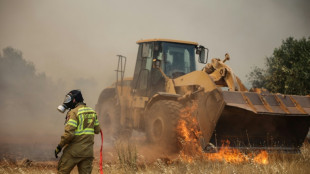 Wildfire flares up again in Greece as water bombers deployed
 Greece wildfire expert says season 'one of the worst' in a decade

 Sandoz strikes US settlements to resolve generic drug price dispute
In the teeming metropolis of Karachi, Pakistan's biggest city, graveyards are filling up and the dead are running out of space to rest.
But for the right price to the right person, a plot can be "found" for the body of a loved one by shady crews who demolish old graves to make room for the new.
In the coastal megacity -- a crush of 20 million people -- the Pakistan Employees Cooperative Housing Society (PECHS) cemetery has been officially full for five years.
The necropolis is choc-full. Tombs big and small are slotted like Tetris into every nook -- some pitted deep in the ground, others raised high on petal-strewn plinths.
Still, new tombs appear all the time, erected on smashed or scooped-out graves by men charging outsized fees.
AFP witnessed one team hacking at stonework and furtively carrying away baskets of dirt until they had carved out a fresh opening in the cramped earth.
"There's no space in the whole of Karachi -- none of the graveyards has space for fresh burials," said digger Khalil Ahmed.
"We have to destroy old graves if we want to create new ones."
The government burial fee in this district is 7,900 rupees ($44) but two locals reported paying 55,000 and 175,000 to lay a loved one to rest in the PECHS graveyard last year.
Ahmed said the fees are split between 40 men and teens who, when not working, spend their time lolling on day beds in the shade.
- Gravedigger mafia -
Ahmed and his colleagues are part of what politicians and the media call the "gravedigger mafia" -- a typically flamboyant term in the parlance of Pakistan social affairs.
Officials rail against the "milk mafia" watering their wares, the "sugar mafia" driving up prices and the "land mafia" annexing space.
But the freelance gravediggers are profiting on Pakistan's changing population dynamic.
Pakistan is the world's fifth most-populous nation with 220 million citizens and more than four million added every year.
As the population grows, so does the migration of people from the countryside to the cities, looking for work to escape rural poverty.
Muhammad Aslam has witnessed the gravedigger mafia flourish as Karachi's population boomed.
The 72-year-old said the PECHS graveyard was a "deserted place" when he moved next door in 1953 but "space shrank fast" as burial prices rose for 14 family members interred over the years.
In 1967 Aslam's family paid 50 rupees to bury his grandfather but a relative buried at the hands of the mafia in 2020 cost 33,000.
"The basic issue is that infrastructure is insufficient," said Ali Hassan Sajid, a spokesman for the Karachi Metropolitan Corporation (KMC).
The KMC manages 39 of around 250 graveyards citywide -- including PECHS Six are closed, while the rest are "almost full".
"In some parts of the city the infrastructure is the same that existed when Pakistan was founded," Sajid admitted.
He openly acknowledged the existence of gravedigger mafias conducting burials at closed sites -- and claimed efforts to evict them are underway.
The gangs are also reported to be flourishing in the cities of Rawalpindi, Peshawar and Lahore.
- A missing memorial -
Fault for the gravedigger mafia -- and even whether they represent a problem -- depends on who you ask.
Sajid said families eager to bury relatives alongside previous generations in full yards offer high prices that "lure the gravedigger so he falls prey to his greed".
Ahmed the gravedigger says he provides an essential service in a city unable to administer itself, scratching out a meagre living in return.
And while some locals view the practice as part of the faulty fabric of life in a teeming city, for others it is a source of angst.
Muhammad Abdullah Saif's father was buried in the PECHS graveyard decades ago.
Today the faded green tomb is surrounded by empty sacks of cement and the shattered cusps of tombstones --the mafias generally pick untended graves for demolition.
"We have to come and visit regularly or the grave will be knocked down," said the 32-year-old.
Muzammil Asif, meanwhile, must clamber over a carpet of ankle-twisting hazards to reach the grave of his teenage sister, buried here last summer.
"Graves are desecrated when one walks over them," the 21-year-old complains.
And in the nearby Korangi graveyard Muhammad Munir has experienced the saddest loss.
Every year he comes to offer prayers in the cemetry where his father was buried -- an amphitheatre of tumbledown tombstones fringed by ragged flags.
But the grave is long gone, demolished more than 20 years ago and replaced by another. That replacement is gone too, swapped out for a new one.
Now he's unsure of exactly where his father lies in rest.
"It's painful," he said. "The grave was the last sign of him."
C.Kovalenko--BTB