Human trafficking raises alarm in divided Cyprus / Photo: © AFP

 Guatemala issues 'danger' alert after Fuego volcano erupts
 Heat kills 16 in South Korea this summer: interior ministry

 Arson suspect arrested as US northwest battles wildfires

 Britain's Royal Mint strikes gold in electronic waste
 Amorim evokes spirit of Baresi as he bids revive AC Milan fortunes
 Suspected heatstroke kills three lions at Japan zoo
 Stocks mixed as Seoul stabilises, oil prices rise with eyes on Mideast
 Trapped by war, Bangladesh seafarer recounts Gulf ordeal

 WWII shells surface in wildfire-ravaged French village
 Last Scottish island bird hunt banned after almost 500 years

 Death toll from Venezuela quakes rises past 6,000

 Shafique, Babar lead strong Pakistan reply against West Indies

 Defending champ Shelton finding tournament sweet spot in Montreal

 Democratic-led US states sue in latest challenge to Trump's tariffs
 Trump says Iran facing 'last chance before decapitation'
 US northwest battles wildfires after Spokane neighborhoods scorched

 Iran denies negotiating with US, drawing Trump backlash

 Key dates for the Boeing 737 MAX

 Israel objects to US-backed Gaza plan, defiant on pullout

 Norway's Haugset wins stage 3 to claim Tour de France Femmes lead
 Cuba slowly regains power after latest nationwide blackout

 Chelsea sign England midfielder Jordan Henderson

 Wildfire flares up again in Greece as water bombers deployed
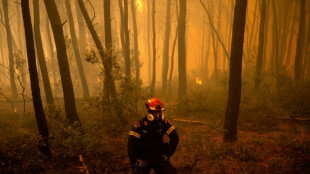 Greece wildfire expert says season 'one of the worst' in a decade

 Sandoz strikes US settlements to resolve generic drug price dispute
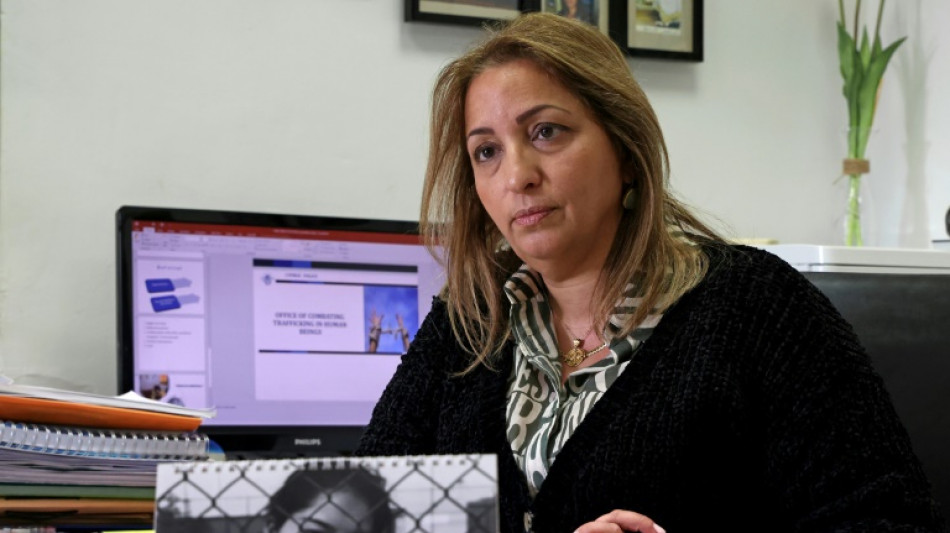
Cyprus's frozen conflict is providing fertile ground for human traffickers with cases at "alarming" levels in the EU member state, and the breakaway north considered as bad as Afghanistan.
"I love her, but at the same time she reminds me about my past," said one Cameroonian trafficking survivor, referring to her young daughter.
"There was so much abuse during those months," added the woman in her 20s, who said she was rescued by a client from her ordeal.
"I didn't die ... and God saved me, so I know that He has a plan for my life," she told an NGO working with survivors which requested anonymity to protect her identity.
Last year the US State Department downgraded Cyprus in its annual Trafficking in Persons Report from Tier 1, the highest ranking, to Tier 2, citing problems including protracted court proceedings and a lack of convictions.
While the report does not formally rank the breakaway Turkish Republic of Northern Cyprus, only recognised by Ankara, it says the territory would be in Tier 3 with the worst offenders including Afghanistan and North Korea if it did.
Cyprus has been split since 1974, after Turkey invaded in response to a Greek-sponsored coup.
And the lack of progress in resolving the conflict shifts attention and resources away from issues like human trafficking, said Nasia Hadjigeorgiou, assistant professor in transitional justice and human rights from the University of Central Lancashire Cyprus.
The stalemate also means there is no collaboration between law enforcement on the two sides, Hadjigeorgiou said.
So human trafficking across the island as a whole is "literally not being dealt with," she said.
- 'Red alarm' -
In the north, traffickers are abusing student visa regulations, said Fezile Osum from the north's Human Rights Platform, calling the situation a "red alarm".
The organisation manages an anti-trafficking hotline that has identified 12 victims -- all of sex trafficking -- since late last year.
In some cases, young women from African countries are brought in as students but when they arrive "they are locked in private apartments and forced into (commercial) sex", Osum said.
That's on top of trafficking cases from nightclubs, where women on "barmaid" and "hostess" visas must get regular STD checks despite organised prostitution being illegal in the territory, she added.
One survivor said clubs sometimes used blackmail and drugs to control trafficked women, Osum said.
The north criminalised human trafficking for the first time in 2020, but Osum said no convictions had yet been recorded.
She knew of one victim who had reported her ordeal to police in the south, only to be told, "this happened in the north... how can we collect evidence that you were actually trafficked?"
Turkish Cypriot politician Dogus Derya said the territory's unrecognised status meant it was unable to cooperate with international bodies to fight organised crime.
The north "can be seen as an area of 'impunity' for human traffickers", she said.
- 'No hope' -
A 2020 European Commission report, referencing 2017-2018 data, said Cyprus eclipsed all other EU countries for the number of identified or presumed victims of human trafficking relative to its population, with 168 per million people. Britain trailed in second place with 91.
"When they come, they don't have hope for the future," said Paraskevi Tzeou, board member of Cyprus Stop Trafficking, referring to survivors who seek help at the organisation's women's shelter in the south.
They have been "from nearly everywhere" -- from EU countries Romania and Bulgaria to Russia, Ukraine, Ethiopia, Nigeria, Moldova, Cameroon, India and Nepal, a worker from the shelter said, asking to remain anonymous.
The Republic of Cyprus, which controls the island's south, adopted more comprehensive anti-trafficking legislation in 2014, bolstering it five years later.
The south officially recognised 21 victims of human trafficking last year, said Eleni Michael, head of the police anti-trafficking unit.
But 169 people were classified as "possible victims", official figures showed.
Police work tirelessly to identify and assist genuine cases, Michael told AFP, but only verified allegations could lead to official victim status.
"If they said to us that they were exploited outside ... the territory of Cyprus, it's a little bit difficult to clarify," she said.
Cyprus has sought to speed up glacial court proceedings, securing several recent trafficking convictions.
But a Limassol court said last month that "trafficking offences have reached alarming proportions in our country".
Other cases have collapsed, including that of four immigration police arrested in 2018 on suspicion of assisting a trafficking network.
"The key witnesses, who were the victims of the offences... could not be traced to give evidence... despite the attempts made to locate them through EUROPOL," the attorney general's office told AFP.
In a faint glimmer of hope, a technical committee on criminal matters brings together representatives from both sides of the island.
But it has no statutory authority, said Greek-Cypriot co-chair Andreas Kapardis.
It "can do something (to help combat trafficking) if the political will is there", he said.
But concern about official recognition of the north "stops some ideas in their tracks", he added.
F.Pavlenko--BTB