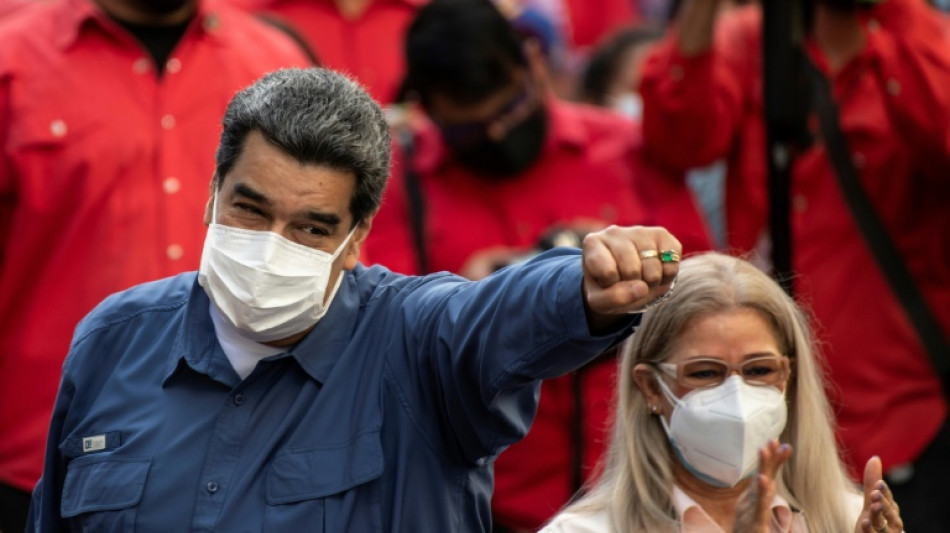
No joke: Political satire in Venezuela a risky business / Photo: © AFP/File

 Firefighters hope to contain blaze on Athens outskirts

 Heatwave divides rich and poor of upmarket Seoul

 Drone strike on Moscow region kills 5

 Guatemala issues 'danger' alert after Fuego volcano erupts

 Heat kills 16 in South Korea this summer: interior ministry

 Arson suspect arrested as US northwest battles wildfires

 Britain's Royal Mint strikes gold in electronic waste
 Amorim evokes spirit of Baresi as he bids revive AC Milan fortunes
 Suspected heatstroke kills three lions at Japan zoo

 Stocks mixed as Seoul stabilises, oil prices rise with eyes on Mideast
 Trapped by war, Bangladesh seafarer recounts Gulf ordeal

 WWII shells surface in wildfire-ravaged French village
 Last Scottish island bird hunt banned after almost 500 years

 Death toll from Venezuela quakes rises past 6,000

 Shafique, Babar lead strong Pakistan reply against West Indies

 Defending champ Shelton finding tournament sweet spot in Montreal

 Democratic-led US states sue in latest challenge to Trump's tariffs
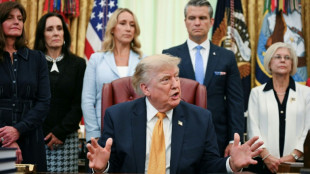 Trump says Iran facing 'last chance before decapitation'
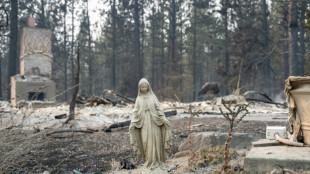 US northwest battles wildfires after Spokane neighborhoods scorched
 Iran denies negotiating with US, drawing Trump backlash

 Key dates for the Boeing 737 MAX

 Israel objects to US-backed Gaza plan, defiant on pullout
 Norway's Haugset wins stage 3 to claim Tour de France Femmes lead

 Cuba slowly regains power after latest nationwide blackout

 Chelsea sign England midfielder Jordan Henderson

A 72-year-old grandmother who named a popular snack after the "widow" of President Nicolas Maduro -- still very much alive -- has become the latest casualty of a Venezuelan hate speech law denounced by rights defenders.
Olga Mata was arrested last week after posting a comedic video on TikTok in which she posed as a food vendor advertising a type of arepa, a maize snack, named after Maduro's wife Cilia Flores.
The arepa in question is usually called a "widow" in Venezuela for not having any filling.
When a voice off camera points out that Flores is not yet a widow, Mata responds: "Right... but it is what we all want."
Another arepa featured in the clip was named after attorney general Tarek William Saab, who ordered Mata's arrest for "promoting hate".
Her son, Florencio Gil, was detained for "instigating the assassination of public personalities."
According to rights group Espacio Publico (Public Space), Venezuela's so-called "Law against Hate" was used to charge people in 17 criminal cases last year.
The law was passed in 2017 by a loyalist "Constitutional Assembly" created by Maduro and which replaced the then opposition-controlled National Assembly.
It provides for sentences of up to 20 years in jail for actions deemed "incitement of hatred."
- 'Feel like prisoners' -
After a public outcry, Saab on Monday announced Mata had been charged and released under order to report to court every 30 days.
She was also made to release a new video apologizing for the first one.
Her son was cleared of all charges.
"It is a way to make us feel like prisoners, even if we are not in a cell," Mata said after her release.
Her case is but the most recent one.
In March last year, journalist Milagros Mata and poet Juan Munoz were arrested for "incitement to hatred" after publishing a satirical text entitled "Mortal Wedding" on Facebook.
It poked fun at an extravagant wedding celebrated at the height of the Covid-19 pandemic, and was said to have been attended by Saab.
Both people were later conditionally freed.
In 2018, two firefighters, Ricardo Prieto and Carlos Varon, were detained for 48 days over a viral video in which they showed a donkey they named "President Maduro."
They remain under judicial supervision.
- Not new -
For Espacio Publico director Carlos Correa, the "Law against Hate" had a vague definition of what constitutes hate speech, and disproportionate penalties.
"It causes people to refrain not only joking, but also from talking about matters of public interest such as denouncing corruption," Correa told AFP.
"The law is not there to determine whether a joke is in good or bad taste," he added.
Efforts to control free speech in Venezuela are nothing new.
Rayma Suprami, a Venezuelan cartoonist now living in the United States, was fired in 2014 from the newspaper where she worked for 19 years for a commentary on the country's poor health system that entailed then-president Hugo Chavez's signature petering out as a flat line on an electrocardiogram.
"Dictatorships have no humor, they don't get along with humor and what it represents: the reflection of what ordinary people think," Rayma told AFP.
"I was accused of inciting hatred, murder and terrorism," she recalled.
"You cannot make fun of power," added former colleague Eduardo "Edo" Sanabria, also in the United States.
"If they want to put you in jail, they will."
In a report last year, Human Rights Watch accused Maduro's government of frequently using "public accusations and other forms of harassment to intimidate and attempt to silence those who criticize the government."
Maduro's reelection in 2018 was not recognized by the United States and dozens of other countries over fraud claims.
In recent years, Venezuela has seen political satire disappear from the television and newspapers.
But for those so inclined, comic relief can be found in animated propaganda shorts on state TV of "Super Mustache" -- a character representing Maduro as a superhero pitted against the White House and opposition leaders.
O.Bulka--BTB