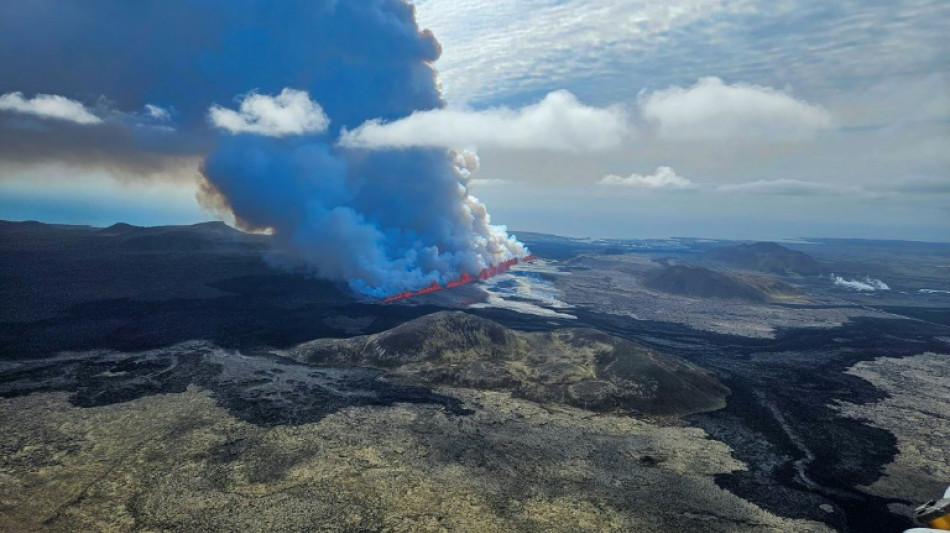
Lava spews again from volcanic eruption in Iceland / Photo: © Icelandic Coast Guard/AFP

 Viennese woman sues city over 'discriminatory' toilet fees
 Venezuelan amputees adjust to new life after quakes

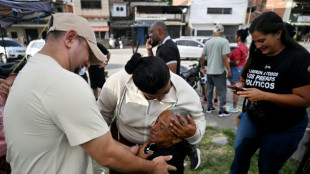 Venezuela frees 131 prisoners amid post-Maduro transition talks

 Arteta tells Arsenal fans not to fret over his future
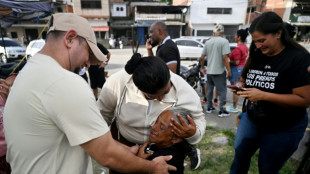
 Mexico's Indigenous chief justice hits back at discrimination

 Werro wins 800m race for the ages, Warholm and Tamberi hit four

 Jimenez rescues dramatic Wolves draw in Championship opener
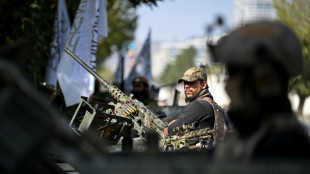 Taliban govt to mark five years ruling Afghanistan
 Stocks slip in cautious trading after weak US retail sales data
 Gramercy Networks Announces New Global Ultra-Low Latency Financial Network Connecting Major Trading Hubs

 NFL bans Falcons defender Pearce eight games for domestic violence

 US says 19 million recalled eggs pose deadly risk

 Former Cincinnati contenders suffer contrasting first-round fates
 Argentina's Romero confirms Tottenham exit as Atletico move looms

 Homeless, jobless: Colombia quake survivors 'left with nothing'

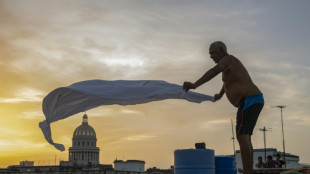 Cubans find rest on rooftops as blackouts drive them from home
 World champ McIntosh crashes out of Pan Pacs 400m free

 T'Wolves set Garnett celebration for Celtics clash

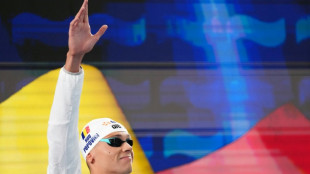 Popovici nails freestyle double with third men's European 200m gold
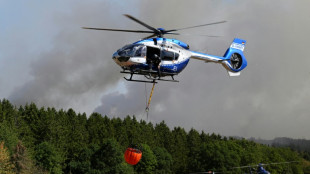
 Premier League club Liverpool sell minority stake to Jeff Bezos consortium

 Italian police recover stolen Renoir, Cezanne and Matisse works

 Stocks slip in cautious trading, oil turns higher
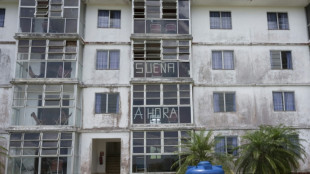
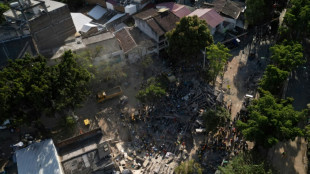 Colombia quake survivor faces life without triplet sisters

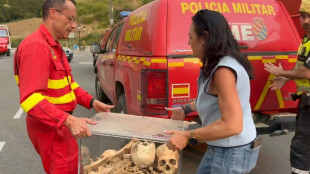 Bones of medieval kings saved from Spanish wildfire

 US retail sales weakest in over a year, consumer sentiment plunges
A new volcano erupted on the Reykjanes peninsula in southwestern Iceland on Wednesday, spewing fountains of red-hot lava into the air shortly after authorities evacuated the nearby town of Grindavik.
A large white cloud of smoke could be seen billowing up against the blue sky, with orange lava fountains bubbling out of a crack in the ground near Sundhnukagigar, north of Grindavik.
The eruption was the fifth in six months on the Reykjanes peninsula.
Two hours after the start of the eruption, lava was flowing less than a kilometre from a defensive barrier protecting the fishing village of Grindavik, the barrier itself located about another kilometre from the northern tip of the town.
Most of the 4,000 residents had evacuated Grindavik in November, prior to a December eruption.
Lava flowed into the town's streets during another eruption in January, engulfing three homes.
While the large share of those who were in the town on Wednesday -- for work or visits -- left immediately, a few die-hard residents refused to leave, the Department of Civil Protection and Emergency Management said on its Facebook page.
"Despite recommendations from response teams to leave the town, three residents remain in Grindavik. Such actions are not advisable," it said.
The nearby Blue Lagoon geothermal spa, Iceland's biggest tourist attraction known for its turquoise waters, said it had evacuated its facilities on Wednesday.
Maia Biegatch, a 28-year-old French tourist, had just arrived at the Blue Lagoon when the eruption occurred.
"We received alerts on our phones telling us to 'evacuate, evacuate', so we turned back," she told AFP.
"It was a total surprise."
The eruption was, however, not expected to disrupt air traffic, with the international airport Keflavik "open and operating in the usual way", airport operator Isavia said on its website.
"The eruption cloud reached an altitude of about 3.5 kilometres (2.2 miles) at the beginning of the eruption" and the length of the fissure was estimated at over one kilometre, the Iceland Meteorological Office said shortly after the eruption began at 12:46 pm (1246 GMT).
Around 90 minutes later, the Department of Civil Protection and Emergency Management said the fissure had extended to 3.4 kilometres.
The lava flow was heavy, estimated at between 1,500 and 2,000 cubic metres per second, the IMO said.
The eruption came almost three weeks after the end of a previous eruption that had been ongoing since March 16.
In the past six months, volcanoes have erupted on the peninsula in December, January, February and March.
- '400 earthquakes' -
The IMO had reported "intense earthquake activity" prior to Wednesday's eruption, with "about 400 earthquakes" measured in the past seven days near the Sundhnukagigar crater row.
In addition, it said some 20 million cubic metres of magma had accumulated in the magma chamber below Svartsengi, where a power plant that supplies electricity and water to around 30,000 people on the peninsula is located.
The Svartsengi plant was evacuated and has largely been run remotely since the first eruption in the region in December, and barriers have been built to protect it.
Until March 2021, the Reykjanes peninsula had not experienced an eruption for eight centuries.
Further eruptions occurred in August 2022 and in July and December 2023, leading volcanologists to believe the start of a new era of seismic activity in the region had begun.
Iceland is home to 33 active volcano systems, the highest number in Europe.
It straddles the Mid-Atlantic Ridge, a crack in the ocean floor separating the Eurasian and North American tectonic plates
F.Müller--BTB