Climate change made historic Brazil floods twice as likely: scientists / Photo: © AFP

 Venezuela frees 131 prisoners amid post-Maduro transition talks

 Arteta tells Arsenal fans not to fret over his future

 Mexico's Indigenous chief justice hits back at discrimination

 Werro wins 800m race for the ages, Warholm and Tamberi hit four

 Jimenez rescues dramatic Wolves draw in Championship opener
 Taliban govt to mark five years ruling Afghanistan
 Stocks slip in cautious trading after weak US retail sales data
 Gramercy Networks Announces New Global Ultra-Low Latency Financial Network Connecting Major Trading Hubs

 NFL bans Falcons defender Pearce eight games for domestic violence

 US says 19 million recalled eggs pose deadly risk

 Former Cincinnati contenders suffer contrasting first-round fates
 Argentina's Romero confirms Tottenham exit as Atletico move looms

 Homeless, jobless: Colombia quake survivors 'left with nothing'

 Cubans find rest on rooftops as blackouts drive them from home

 World champ McIntosh crashes out of Pan Pacs 400m free

 T'Wolves set Garnett celebration for Celtics clash

 Popovici nails freestyle double with third men's European 200m gold
 Premier League club Liverpool sell minority stake to Jeff Bezos consortium

 Italian police recover stolen Renoir, Cezanne and Matisse works

 Stocks slip in cautious trading, oil turns higher
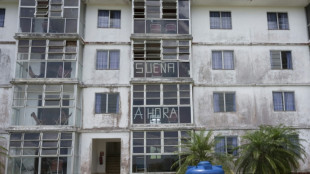
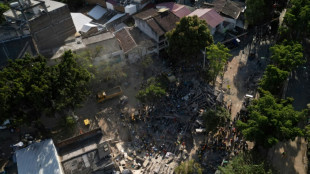 Colombia quake survivor faces life without triplet sisters

 Bones of medieval kings saved from Spanish wildfire

 US retail sales weakest in over a year, consumer sentiment plunges
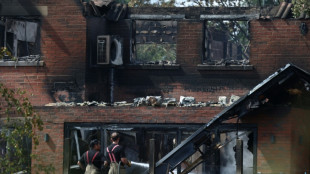 In wildfire town, PM says UK must 'face up to climate change'

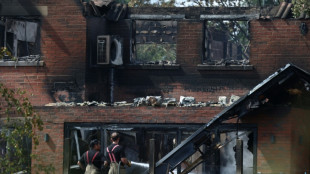 In town hit by wildfire, PM says UK must 'face up to climate change'
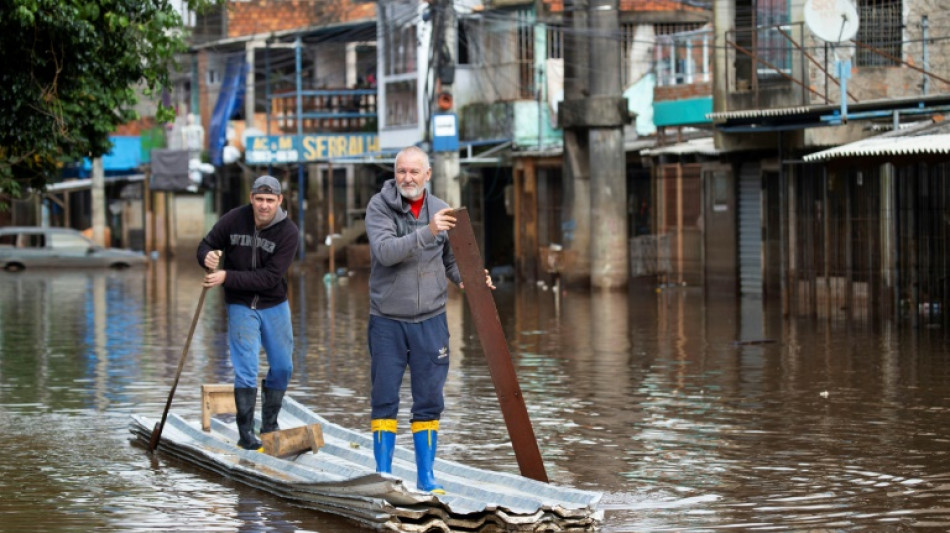
Climate change doubled the likelihood of the historic floods in southern Brazil and amplified intense rains caused by the El Nino weather phenomenon, scientists said Monday.
Three months' worth of rain was dumped on the southern state of Rio Grande do Sul over two weeks in an "extremely rare event, expected to occur only once every 100-250 years," according to a study published by the World Weather Attribution (WWA) group.
The flooding in late April and early May submerged cities, farms and an international airport, affecting more than 90 percent of the vast state, an area equivalent to that of the United Kingdom.
The disaster left 172 people dead and displaced around 600,000.
"The researchers estimated that climate change made the event more than twice as likely and around six to nine percent more intense," the WWA said in a statement.
On top of that, the El Nino phenomenon made rainfall between three and 10 percent more intense, said the global network of scientists that assesses the link between extreme weather events and climate change.
"The scary thing about these floods is that they show us that the world needs to be prepared for events so extreme, they are unlike anything we've seen before," said Maja Vahlberg, climate risk consultant at Red Cross Red Crescent Climate Centre.
Regina Rodrigues, a researcher at the Federal University of Santa Catarina, said the disaster showed that even when El Nino was in a weakening phase, as it currently is, it could be extremely dangerous
"Climate change is amplifying the impact of El Nino in southern Brazil by making an extremely rare event more frequent and intense," she said.
Of the four biggest floods ever seen in the regional capital Porto Alegre, "three occurred in the last nine months," Rodrigues told a press conference.
"This is very rare."
- False sense of safety -
Rio Grande do Sul is particularly vulnerable to flooding, with a vein-like network of river systems covering the region.
Porto Alegre lies on the banks of the Guaiba Lake where five rivers converge before emptying into South America's largest freshwater lagoon, the Lagoa dos Patos.
However, until 2023 the city had not seen a major flood in six decades.
This may have lulled residents into a false sense of security, said Maja Vahlberg, Climate risk consultant at Red Cross Red Crescent Climate Centre.
An expansive flood protection system in Porto Alegre, built after deluges in 1941 and 1967, was designed to withstand water levels up to six meters (20 feet). However, Vahlberg said a lack of maintenance saw it start to fail at 4.5 meters.
Criticized by residents as ugly and blocking their view of the lake, the system faced a push in recent years to have it dismantled entirely.
- 'Buffer the impact' -
Warnings had been issued a week before the flooding, but these may not have reached everyone and "the public may not have understood the severity of the expected impact," said Vahlberg.
The scientists said deforestation, to make way for agriculture, and the rapid urbanization of cities like Porto Alegre also "worsened the impacts."
The study cited data showing that 22 percent of the state's native vegetation has been lost in less than four decades -- much of it converted into soybean plantations.
It also highlighted that at least 240 informal settlements, 80 indigenous villages, and 40 communities that are home to descendants of enslaved Africans were severely impacted.
"Implementing policies that make people less vulnerable, increasing protection against floods and restoring natural ecosystems to buffer the impact of heavy rains are some ways by which governments can avoid human deaths and limit the damage from these events," said Vahlberg.
D.Schneider--BTB