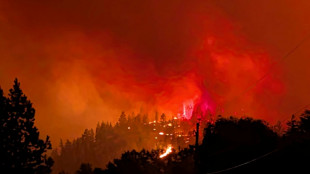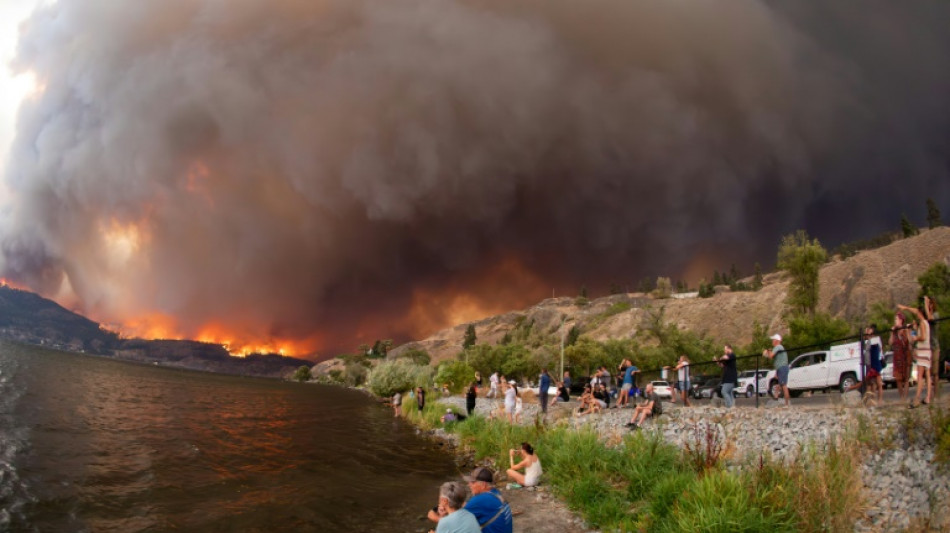
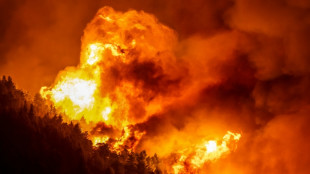
World not ready for climate change-fuelled wildfires: experts / Photo: © AFP/File

 Norway's hurdles king Warholm wins fourth European title

 Liverpool deal with Bezos consortium raises stakes in US battle for Premier League power

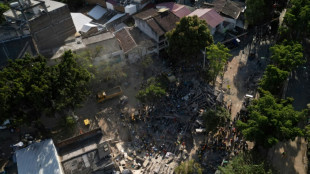
 Colombia hopes for miracles as search for quake victims goes on

 Popovici, Quadarella mine more gold at Europeans as Marchand flexes in butterfly

 'I shot Mr Thompson': Stunning confession in US health exec's slaying
 San Francisco to host 2028 MLB All-Star Game

 Trump dismisses concerns over conditions on US aircraft carrier
 Zambia resumes vote count after pause over violence

 Wind spurs forest fire in western Germany, with scores evacuated

 Pakistan captain Babar in injury scare ahead of England opener

 Mangione admits shooting health care CEO

 UN warns sanctions chill is stopping Cuba aid
 Alleged US healthcare CEO killer says will plead guilty to stalking
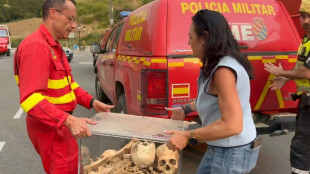
 France's Macron in hot water over jet ski picture

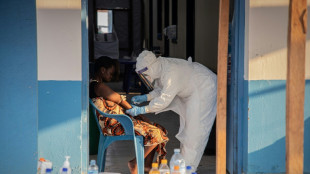 Nursing federation demands proper pay, protection on Ebola front line
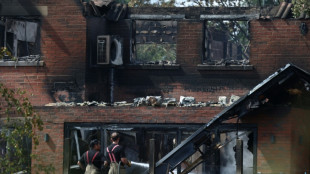
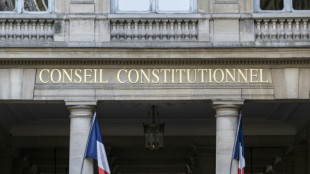 France upholds assisted dying law, strikes down social media ban for children
 Body found after wildfire hits Croatian coastal town
 Arteta expects Maresca to do an 'unbelievable job' at Man City

 Stocks tread water with eyes on oil price

 US retail sales weakest in over a year in July
 Israel calls for police to replace military in handling West Bank settlers

 स्कैंडिक पे: दुनिया में कहीं भी, बिना किसी सीमा के भुगतान करें।

 SNC 스칸딕 페이: 전 세계 어디서나, 제한 없이 결제하세요

 SNC SCANDIC PAY: Platby po celém světě bez omezení

 SNC SCANDIC PAY: Płatności na całym świecie bez ograniczeń

The world is unprepared for the increasing ferocity of wildfires turbocharged by climate change, scientists say, as blazes from North America to Europe greet the northern hemisphere summer in the hottest year on record.
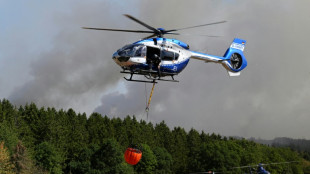
Wildfires have already burned swathes through Turkey, Canada, Greece and the United States early this season as extreme heatwaves push temperatures to scorching highs.
While extra resources have been poured into improving firefighting in recent years, experts said the same was not true for planning and preparing for such disasters.
"We are still actually catching up with the situation," said Stefan Doerr, director of the Centre for Wildfire Research at the UK's Swansea University.
Predicting how bad any one blaze will be -- or where and when it will strike -- can be challenging, with many factors including local weather conditions playing into calculations.
But overall, wildfires are getting larger and burning more severely, said Doerr, who co-authored a recent paper examining the frequency and intensity of such extreme events.
A separate study published in June found the frequency and magnitude of extreme wildfires appeared to have doubled over the past 20 years.
By the end of the century, the number of extreme wildfires around the globe is tipped to rise 50 percent, according to a 2022 report by the UN Environment Programme.
Doerr said humanity had not yet faced up to this reality.
"We're clearly not well enough prepared for the situation that we're facing now," he said.
Climate change is a major driver, though other factors such as land use and the location of housing developments play a big part.
- 'We cannot fight the fires' -
Fires do not respect borders so responses have evolved between governments to jointly confront these disasters, said Jesus San-Miguel, an expert for the European Commission Joint Research Centre.
The EU has a strong model of resource sharing, and even countries outside the bloc along the Mediterranean have benefited from firefighting equipment or financial help in times of need, San-Miguel said.
But as wildfires become increasingly extreme, firefighting simply won't be a fix.
"We get feedback from our colleagues in civil protection who say, 'We cannot fight the fires. The water evaporates before it reaches the ground,'" San-Miguel said.
"Prevention is something we need to work on more," he added.
Controlled burns, grazing livestock, or mechanised vegetation removal are all effective ways to limit the amount of burnable fuel covering the forest floor, said Rory Hadden from the University of Edinburgh.
Campfire bans and establishing roads as firebreaks can all be effective in reducing starts and minimising spread, said Hadden, an expert on fire safety and engineering.
But such efforts require funding and planning from governments that may have other priorities and cash-strapped budgets, and the return is not always immediately evident.
"Whatever method or technique you're using to manage a landscape... the result of that investment is nothing happens, so it's a very weird psychological thing. The success is: well, nothing happened," said Hadden.
- 'Short memories' -
Local organisations and residents often take the lead in removing vegetation in the area immediately around their homes and communities.
But not everyone is prepared to accept their neighbourhood might be at risk.
"People don't think that it will happen to them, but it eventually will," San-Miguel said, pointing to historically cold or wet climates like the US Pacific Northwest that have witnessed major fires in recent years.
Canada has adapted to a new normal of high latitude wildfires, while some countries in Scandinavia are preparing for ever-greater fire risk.
But how best to address the threat remains an open question, said Guillermo Rein from Imperial College London, even in places where fire has long been part of the landscape.
Even in locations freshly scarred by fire, the clearest lessons are sometimes not carried forward.
"People have very short memories for wildfires," said Rein, a fire science expert.
In July 2022, London witnessed its worst single day of wildfires since the bombings of World War II, yet by year's end only academics were still talking about how to best prepare for the future.
"While the wildfires are happening, everybody's asking questions... When they disappear, within a year, people forget about it," he said.
C.Meier--BTB